Pool Fencing Ideas: 10 QLD-Compliant Designs & Costs
QLD pool fence rules explained plus 10 compliant pool fencing ideas — heights, gates, non-climbable zones, material costs and design inspiration for Brisbane pools.
Published · Updated
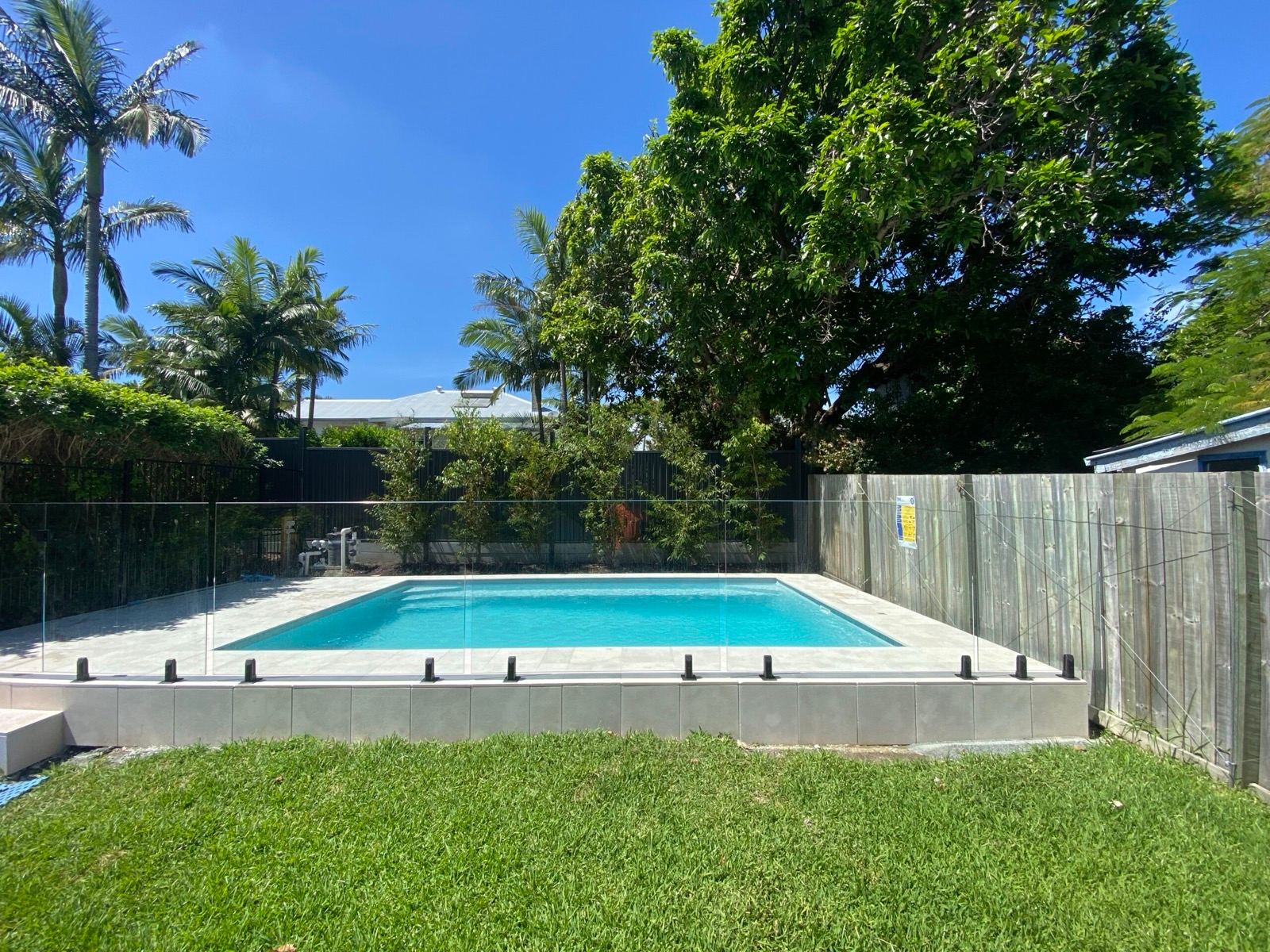
Direct answer
Pool fencing has a reputation problem: most people picture the same bent aluminium panels from the hardware store, or a row of glass and nothing else. It doesn't have to be that way — and in Queensland, where pool barrier laws are among the strictest in the world (for good reason), the real challenge is finding a fence with genuine style that's also fully compliant.
Both halves matter here: the QLD pool fence rules you must meet, and ten genuinely interesting fence ideas that meet them. Plus what each material costs per metre, how frameless glass stacks up against flat-top metal, and the compliance questions we field on nearly every site visit.
QLD pool fence rules: the non-negotiables
Every pool barrier in Queensland must meet the Queensland Development Code Mandatory Part 3.4 (QDC MP 3.4), which adopts the Australian Standard AS 1926.1. Get the design past these points before you fall in love with a look:
- Minimum height of 1200mm measured from finished ground level on the outside of the fence
- No more than 100mm gap between the bottom of the fence and the ground
- Vertical gaps no wider than 100mm between rails, slats or panels
- A non-climbable zone (NCZ) — a 900mm arc measured from the top of the fence must be clear of anything climbable on the outside: no horizontal rails within it, no pot plants, BBQs, pool pumps, aircon units or tree branches
- Self-closing, self-latching gate that opens away from the pool, latching automatically from any position, with the release at least 1500mm above ground
- Boundary fences used as pool barriers must generally be at least 1800mm high on the pool side, with a 900mm non-climbable zone at the top inside
- A compliant CPR sign displayed near the pool
- Registration and certification — every QLD pool must be on the state pool safety register (failing to register can attract fines above $2,300), and a licensed inspector issues a Form 23 pool safety certificate, required whenever you sell or lease the property
Those are the headline rules. The full standard has extra detail around windows opening into the pool area, doors, retaining walls and glazing, and a licensed pool safety inspector is the person who signs off that a barrier actually complies. When we build a pool, the fence is part of the scope from day one — not a scramble at handover, which is exactly when non-compliance gets expensive.
Frameless glass vs flat-top metal: which pool fence to choose
Most buyers land on one of two barriers, so it's worth pricing them side by side. Frameless glass gives you an all-but-invisible barrier for around $436 a metre installed; flat-top aluminium is the compliant budget default at about $165 a metre — roughly two-and-a-half times cheaper for the same legal protection.
| Frameless glass | Flat-top metal (aluminium) | |
|---|---|---|
| Look | Invisible barrier, uninterrupted sightlines across the yard | Clean vertical pickets, modern in matte black |
| Installed rate | ~$436 /m | ~$165 /m |
| Maintenance | Regular cleaning — spots and splashes show on glass | Very low; the powder coat just wipes down |
| Pros | No visual break, feels like the pool has no edge; premium resale look | Cheapest compliant option; light, corrosion-resistant, quick to install |
| Cons | Dearest per metre; needs cleaning to stay looking sharp; core-drilled spigots | Pickets read as a fence, not a feature; limited privacy |
The honest summary: glass buys you the view, metal buys you compliance for the least money. Plenty of yards use both — glass along the side you look at from the house, metal down the boundary where no one's looking. You don't have to pick one material for the whole run.
Ten pool fencing ideas (that are QLD compliant)
None of this means your fence has to be dull. Here are ten ideas we like from Australian pool fence builders — every one can be built to meet the standard above.
1. Perforated aluminium
Aluminium is the most popular pool fence material, but you've probably never seen it like this. Australian-made custom perforated panels (like those by Pool Perf) add pattern and privacy to the most common fence material — a stylish twist that still lets light through.
2. Blade fencing
Characterised by horizontal "blades", this aluminium (or timber) style mixes art and function — just remember the non-climbable zone rules mean horizontal elements need careful placement on the pool-facing side. (Style credit: Fencespot.)
3. Tubular aluminium
Instead of blades or flat pickets, rounded aluminium tubes give the same protection with a softer look — no pointy edges, which parents of small kids appreciate. (Style credit: Nextgen Aluminium.)
4. Bamboo
Natural and renewable, bamboo suits eco-conscious builds and tropical landscaping. It's sturdy, long-lasting, and feels warmer than metal alternatives — pair it with dense planting (outside the NCZ!) for a resort feel.
5. Aluminium slat fences
Narrow horizontal slats offer more privacy than open fencing while letting light and airflow through. Slat spacing must respect the 100mm gap rule, and climbability rules apply — a good fabricator will detail it compliantly. (Style credit: Aluminium Slats.)
6. Stylised aluminium
Sometimes all you need is a detail: tapered picket tops that discourage climbing while adding visual rhythm, or staggered-height vertical struts that read as designer while pricing close to a standard aluminium fence. (Style credits: Nextgen Aluminium; Rosbons Pool Safety Inspections.)
7. Jumbled spear fence
One memorable build used 374 "jumbled spears" at alternating heights — clean, open visuals that look quirky up close and elegant at a distance. The tips aren't sharp, but the effect is striking. (Style credit: SGA Balustrades.)
8. Copper and wood
Mixing warm timber with copper produces a fence that lifts the whole pool area — and copper's patina changes over the years, so the fence becomes one-of-a-kind. This combination has won fencing awards, and it's easy to see why. (Style credit: Dolphin Fencing.)
9. Steel and wood
Flowing curved lines, mixed materials and changing elevation — nothing standard about it. A striking option where the fence is a feature, not a boundary. (Style credit: Dolphin Fencing.)
10. Wrought iron
Rustic, rugged and extremely long-lasting. Wrought iron alongside brick and timber decking gives a heritage feel you don't see around modern pools — and it takes paint colours beautifully. (Style credit: Redhill Wrought Iron.)
And the classics still earn their place: frameless or semi-frameless glass for uninterrupted views, and flat-top aluminium in black (the modern default) — both fully compliant when installed to standard.
A note on timber styles. If you're drawn to a natural look, timber pool fences come in three main builds: butted (palings flush side-by-side — the most budget-friendly, and compliant when rails sit at least 900mm apart or a 60° wedge is used), lapped (each paling overlapped for full privacy), and lapped-and-capped (a top cap that hides every gap for the most finished look). All three can be built to the QLD standard.
Pool fence materials compared
| Material | Typical installed cost | Privacy | Maintenance | Best for |
|---|---|---|---|---|
| Flat-top aluminium | $75 – $130 /m | Low | Very low | Budget-friendly compliance |
| Frameless glass | $250 – $600 /m | None (that's the point) | Regular cleaning | Uninterrupted pool views |
| Semi-frameless glass | $200 – $350 /m | None | Regular cleaning | Glass look, smaller budget |
| Slat/blade aluminium | $150 – $300 /m | Medium–high | Low | Privacy + modern look |
| Timber/bamboo | $100 – $250 /m | Medium–high | Oiling/sealing | Natural, tropical styles |
| Steel/wrought iron | $200 – $450 /m | Low | Rust care (coastal) | Heritage and statement fences |
Those are indicative Brisbane market ranges from independent fencers — fence length, number of gates and site conditions all move the number. For a typical backyard pool, budget $3,000–$10,000+ for fencing depending on material. When the fence is scoped with the pool it's priced against our live installed rates instead (shown further down); there it sits as one line among the wider pool installation costs for the project.
Cheap pool fencing options that still pass
The cheapest compliant pool fence is flat-top aluminium — around $165 a metre installed at our current rates, or roughly $75–$130 a metre if you engage a standalone fencer for a simple run. Nothing else legal comes in lower. A few honest ways to keep the number down without failing an inspection:
- Run metal on the boundary, glass only where it counts. You look at maybe one side of the pool from the house. Spend the glass budget there and pick up flat-top aluminium everywhere else.
- Keep the fence line simple. Every corner, step and change of level adds panels, posts and labour. A straight run is the cheapest compliant run.
- Butted timber palings are the lowest-cost natural look, compliant when the rails are spaced 900mm apart or a 60° anti-climb wedge is fitted.
- Don't cut the gate. A cheap gate that stops self-latching is the single most common reason a pool fails re-inspection — it's not the place to save $150.
What we'd steer you away from: temporary or removable "child fences" as a permanent barrier, and second-hand glass panels that no longer come with the compliance certification an inspector wants to see.
Fencing on retaining and drop-edge walls
On sloping SEQ blocks the fence often doesn't sit on flat ground — it's fixed to the top of a retaining wall or a raised drop-edge (bond-beam) wall around the pool. That changes both the engineering and the price. Panels core-drilled or bracket-fixed to a wall run roughly $220–$660 a metre depending on the panel type (metal at the lower end, structural glass at the top) and the fixing detail the engineer specifies.
Two things catch people out here. First, the 1200mm height is measured from the higher finished ground level, so a wall that steps down on the outside can push your effective fence height well past 1200mm — more panel, more cost. Second, the retaining wall itself can't create a foothold inside the non-climbable zone; a wide capping or a garden bed built up against the fence can turn a compliant barrier into a climbable one. This is exactly the kind of detail we work through at design, because retrofitting it after the shell is in is painful. The wall design and the fence line get planned together for that reason — the same coordination we apply to steps, coping and pool landscaping around the shell.
Planning the fence line with the pool build
The fence is the last thing installed and the first thing an inspector checks, which is why leaving it to the end causes so much grief. A few of the fails we've watched catch other builds out:
- A gate that swings toward the pool. Gates must open away, every time. Re-hanging one after the paths are poured is a bad day.
- A garden tap, pool pump or aircon unit inside the non-climbable zone. It's a legal foothold for a toddler, so the inspector fails it — and now the plumbing or the fence has to move.
- Boundary timber fences with the horizontal rails on the pool side. Those rails are a ladder. They either get sheeted over or the barrier line moves inboard, eating into deck space.
- Windows opening into the pool area. Any openable window within reach of the pool needs a restrictor limiting it to a 100mm gap, or compliant secure screens — cheaper to spec before the frames go in.
- The 100mm ground gap on a sloping block. Ground that falls away under a straight fence opens gaps wider than 100mm; the fence has to step with the ground.
Because we scope, price and certify the fence alongside the pool, the fence line, the gate swing, the pump location and the deck levels all get resolved on the plan — not discovered at inspection.
Pool fencing cost: our live installed rates
Pool fencing cost is quoted per installed metre and set by the barrier type — frameless glass sits at the top of the range, flat-top aluminium at the bottom. The market table above shows independent-fencer ranges. These are our actual current rates, straight from the system we price every pool project with. We install two barrier types alongside the pool build: frameless glass for uninterrupted views, and flat-top metal (aluminium) as the budget-friendly compliant option.
| Installed price | 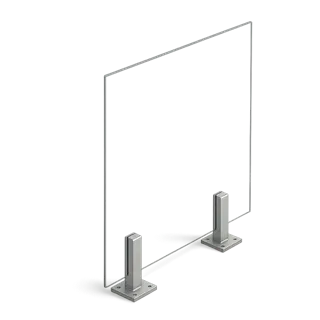 Frameless glass Frameless glass | 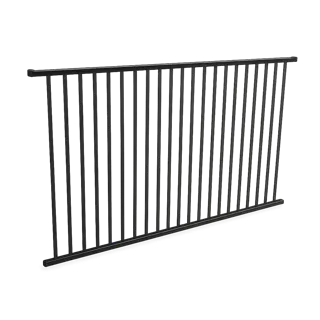 Flat-top metal Flat-top metal |
|---|---|---|
| Fencing, per metre | $462 | $198 |
| Self-closing gate, per unit | $495 | $330 |
| Panels on a retaining wall, per metre | $297 – $737 | $385 – $605 |
| Earthing (where required) | $40/m | $150 per job |
| Timber post upgrade, per metre | — | $66 |
| Typical pool: 20m fence + 1 gate | $9,735 | $4,290 |
Live rates from our quoting system — glass and metal fencing installed to QLD pool-barrier standards alongside your pool build.
Because the fencing is scoped and certified as part of the pool project, there's no end-of-build scramble to find a fencer before your pool is legally allowed to hold water.
Pool fencing FAQs
How high does a pool fence need to be in QLD?
Minimum 1200mm from finished ground level outside the fence, with no more than a 100mm gap at the bottom. Boundary fences doing pool-barrier duty generally need to be 1800mm high on the pool side.
How much does pool fencing cost per metre in QLD?
Flat-top aluminium runs about $165 a metre installed at our current rates (roughly $75–$130 with a standalone fencer for a simple run), and frameless glass about $436 a metre. Panels fixed to a retaining or drop-edge wall run $220–$660 a metre depending on panel type and fixing.
What's the cheapest compliant pool fence?
Flat-top aluminium is the lowest-cost legal option — around $165 a metre installed. It's compliant, durable and looks clean in black, and you can always upgrade sections (glass on the view side, say) later.
Can I install my own pool fence in QLD?
You can build your own barrier, but it must fully comply with QDC MP 3.4, and a licensed pool safety inspector still has to certify it before a Form 23 certificate is issued. DIY doesn't lower the standard — most inspection fails we see are self-installed gates that don't self-latch or fences with gaps over 100mm.
Can my boundary fence be part of the pool fence?
Yes, if it meets the higher standard — generally 1800mm high with a 900mm non-climbable zone at the top on the pool side. Many existing timber boundary fences need modification, especially where horizontal rails sit on the pool side.
Do I need a pool safety certificate?
You need a Form 23 pool safety certificate when selling or leasing a property with a pool. All QLD pools must also be on the state pool safety register, and the barrier must comply at all times regardless of whether a current certificate is on file.
Does MFP Easy install fencing with the pool?
Yes — frameless glass and flat-top metal, at the live rates shown above, installed and certified as part of the pool project so compliance isn't a scramble at the end. It's one of the items we scope at your free site visit.
The right fence makes the pool — book a free site visit and we'll scope a compliant fence that actually suits your home.