Plunge Pool Prices Australia: Installed Costs 2026
What plunge pools actually cost installed in Australia — live all-inclusive prices for every 3m–5m model, plus what drives the price and what cheap quotes leave out.
Published · Updated
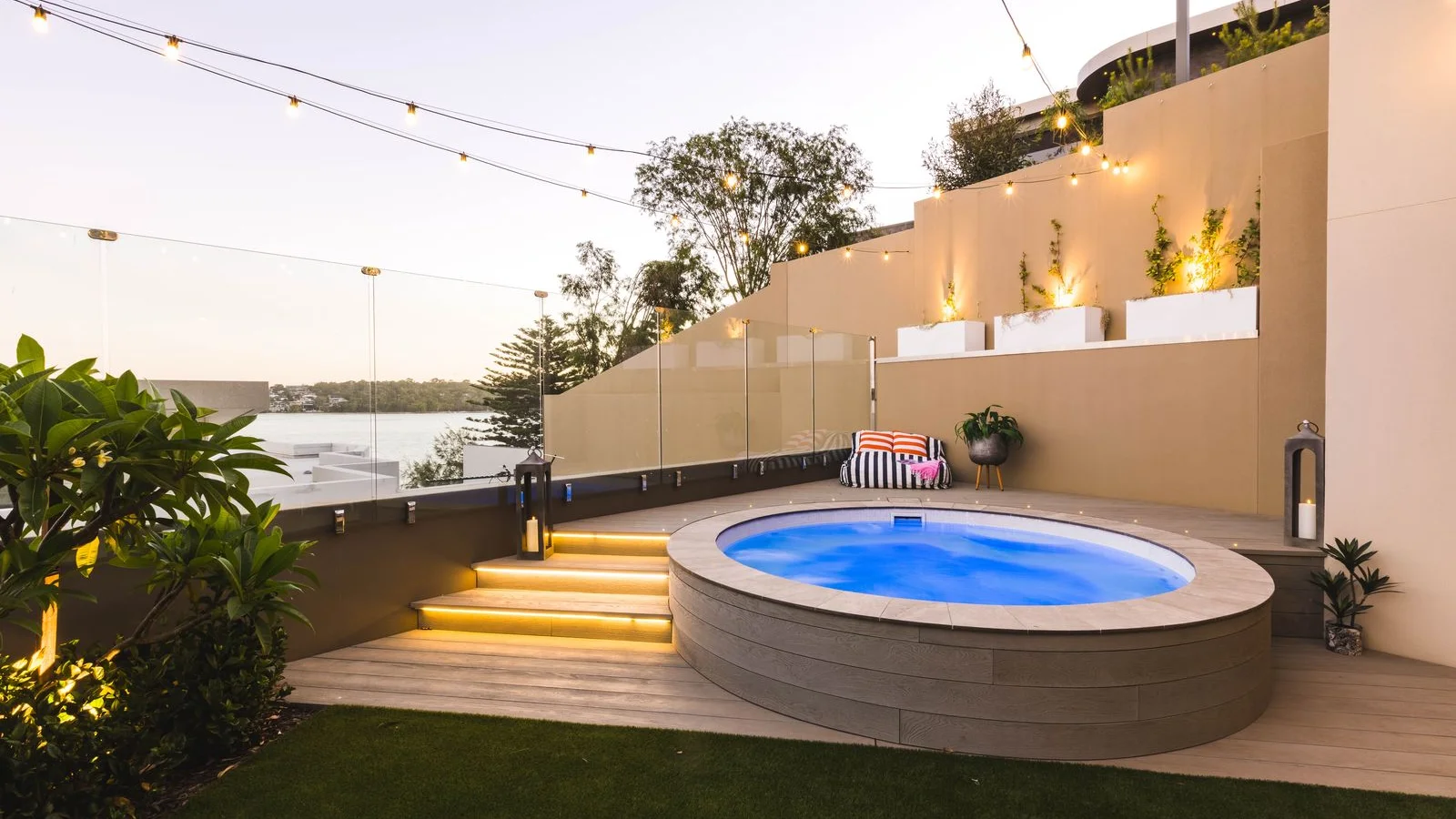
Direct answer
If you've been quoted anywhere from $25,000 to $90,000 for a plunge pool, you're not imagining the spread — "plunge pool" covers everything from a bare shell dropped in your yard to a fully engineered, council-approved installation. This guide shows what plunge pools actually cost installed in South East Queensland, with live prices from our quoting system — the same numbers we put on contracts — plus how fibreglass compares with concrete and above-ground options, and what heating and running costs look like.
What is a plunge pool?
A plunge pool is a compact swimming pool, usually 3–5 metres long and around 2–3 metres wide, designed for cooling off, floating and relaxed swimming rather than laps. They suit small blocks, courtyards, townhouses and tight-access sites where a traditional 8m+ pool physically won't fit — and because they hold far less water, they're cheaper to heat, chlorinate and run.
Most modern plunge pools are rectangular, which makes the best use of a tight footprint and keeps fencing simple, though round designs exist too, and round and rectangular plunge pools split on use: a rectangle gives the longer waterline and a graded shallow end, a round pool tucks into corners and courtyards a rectangle cannot reach. The smallest practical size is about 3m x 3m — our Terrace 3 — which still gives two adults room to float comfortably while fitting into a space not much bigger than a double carport.
Plunge pool prices: live installed costs
These are our current all-inclusive installed prices for every plunge model in the range. They update automatically when our pricing changes, so what you see here is what you'd see on a proposal today.
Prices are live all-inclusive installed prices (pool, standard installation, filtration and handover) for standard site conditions in South East Queensland.
Every price includes excavation, crane hire, the Aqua Technics shell with Graphene Nano-Tech®, premium filtration, mineral chlorinator, LED lighting, council approval fees, engineering certification and lifetime structural and interior surface warranties. The only extras are site conditions (rock, steep slopes, tight access) and optional upgrades like heating — all assessed at a free site visit before you sign anything. If the upfront number is the hurdle, finance is available through our partner Handypay.
Why installed price is the only number that matters
A "$25,000 plunge pool" advertised online is almost always shell-only or DIY-kit pricing. By the time you add excavation ($3,000–$8,000), crane hire ($1,000–$3,000), plumbing and filtration ($4,000–$8,000), concrete surround, fencing compliance, council fees and certification, the real number lands in the same range as a professionally installed pool — without a single party accountable for the result. When you compare quotes, compare the finished, swimmable, council-approved number.
Concrete vs fibreglass plunge pools
The other big fork in the road is construction type. Concrete (including precast "tank-style" plunge pools) and fibreglass get to a finished pool very differently:
| Fibreglass plunge pool | Concrete plunge pool | |
|---|---|---|
| Typical installed price (SEQ) | ~$45,000–$60,000 | Usually $60,000–$80,000+ |
| Build time on site | Shell craned in, swimmable within days | Weeks to months of forming, spraying, curing, tiling |
| Interior surface | Smooth gelcoat, gentle on skin, resists algae | Render or tiles; rougher, needs resurfacing every 10–15 years |
| Chemical use | Lower — inert surface doesn't react with water | Higher — concrete raises pH and demands more balancing |
| Design flexibility | Fixed range of engineered shapes | Fully custom shapes possible |
| Warranty | Lifetime structural + lifetime interior surface (Aqua Technics) | Varies by builder |
Concrete earns its premium when you need a fully custom shape on an extreme site. For a standard plunge pool footprint, fibreglass gets you swimming faster, for less, with lower ongoing chemical and maintenance costs — provided the shell is a good one, because a quality shell and a cheap one are not the same purchase.
What about above-ground plunge pools?
Above-ground and semi-inground plunge pools — including water-tank conversions, corrugated steel and stainless designs — are popular because the sticker price looks lower and excavation is minimal. They can make sense as a shorter-term option, but go in with clear eyes:
- Fencing still applies. In Queensland, any pool holding more than 300mm of water needs a compliant barrier and council approval — above-ground included. The walls of the pool rarely satisfy the barrier rules on their own.
- The gap narrows fast. Once you add decking or stairs for access, a proper filtration setup and compliant fencing, many above-ground installs end up within striking distance of an inground plunge pool that adds far more to the property.
- Semi-inground is the sweet spot on slopes. A fibreglass shell partially recessed into a sloping block, with the exposed side clad or decked, delivers the above-ground look with inground engineering.
Plunge pool vs spa vs swim spa
Lots of buyers weigh a plunge pool against a spa or swim spa, and they solve different problems:
- A spa is for hot soaking — small, heated to 36–38°C, high running costs per litre, and not somewhere you cool off in a Brisbane summer.
- A swim spa offers jets for stationary swimming in an acrylic unit, but prices typically overlap with a full plunge pool installation, and it looks like an appliance rather than a landscaped pool.
- A plunge pool is a real pool: kids can play in it, you can cool off in February, and with a heat pump you can hold it at spa-adjacent warmth in winter for far less energy than heating a full-size pool. Some owners add spa jets to a plunge shell for the best of both.
And if you're chasing the cold-plunge recovery trend — a plunge pool does that job unheated for most of the year in SEQ.
Heating a plunge pool
This is where the small water volume really pays off. A plunge pool holds roughly 10,000–20,000 litres versus 40,000+ for a family pool, so a modest heat pump can extend your season dramatically. For most plunge pools, the 9kW Sunlover Oasis (from about $4,100 installed) is enough to keep the water swimmable for the majority of the year in South East Queensland; larger units suit bigger pools or people who want fast heat-up times.
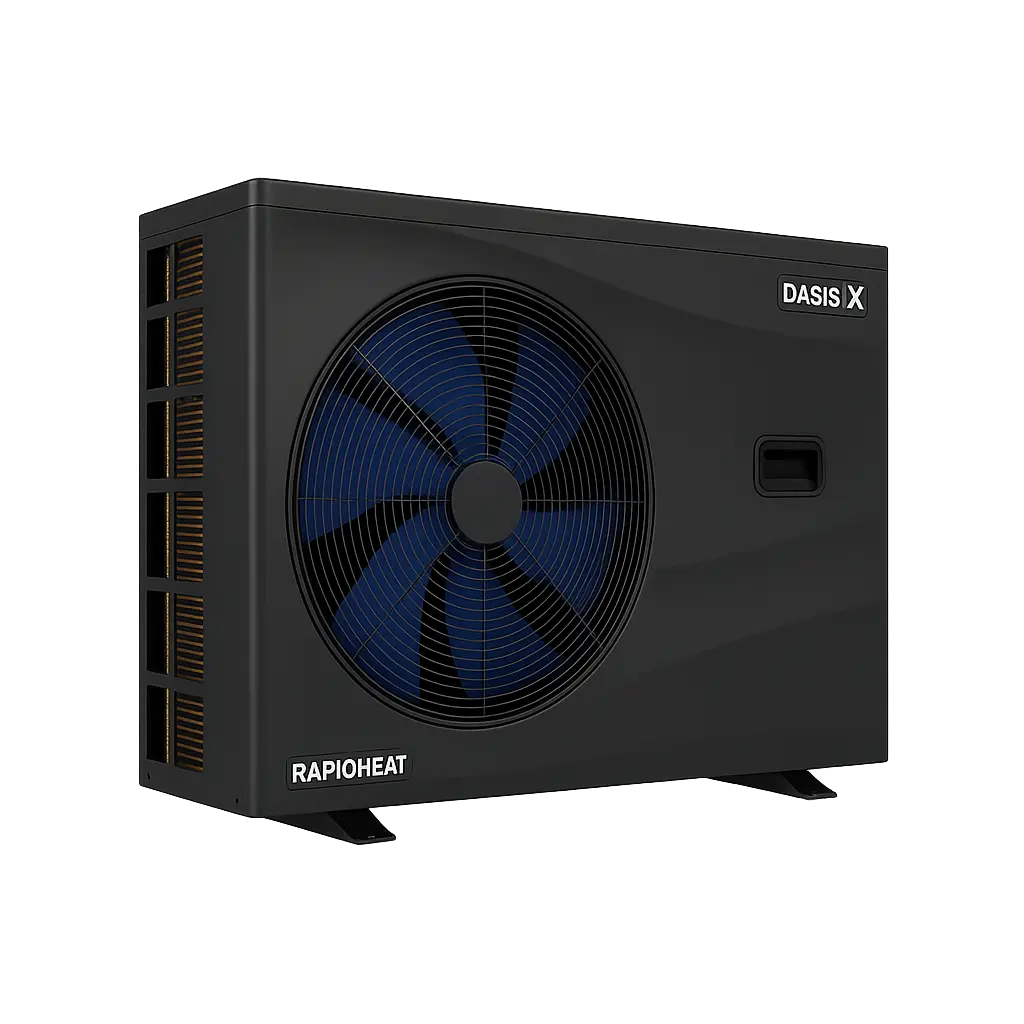
Sunlover Oasis 9kW
$4,125 supplied & installed
Sunlover Oasis 13kW
$5,220 supplied & installed
Sunlover Oasis 19kW
$7,150 supplied & installed
Sunlover Oasis 24kW
$10,550 supplied & installed
Live pricing from our quoting system — the same numbers you'd see on an MFP Easy proposal.
Pair the heat pump with a thermal blanket (from about $2,200 installed with a roller) and you'll typically cut heat loss — and heating running costs — substantially, because most of a pool's heat escapes from the surface overnight.
What a plunge pool costs to run
Running costs are where plunge pools quietly win, year after year:
- Heating: less water means less energy. A heat pump on a plunge pool typically costs a fraction of what the same unit costs on a big pool, and reaches temperature far faster.
- Chemicals: less water means less chlorine or mineral salts, and faster rebalancing after storms. Many of our plunge pool owners run a mineral magnesium pool system — the small volume keeps the mineral top-up cost modest.
- Power: smaller filtration pumps running shorter cycles. All-in, owners typically report plunge pool running costs of a few hundred dollars a year excluding heating — roughly half what a full-size pool costs to keep swimmable.
Plunge pools on small and sloping blocks
Plunge pools were practically made for the tricky sites that rule out big pools:
- Tight access: a 3m-wide shell can often be craned over the house into a courtyard — crane hire is already in our installed price.
- Sloping blocks: a compact footprint means less cut-and-fill and simpler retaining; on steeper sites, a semi-inground install with the downhill side decked turns the slope into a feature.
- Small backyards: QLD requires a 900mm non-climb zone around the barrier, so a smaller pool leaves genuinely usable yard space rather than swallowing the lot.
Rock, slope and access are exactly what our free site visit prices before contract — so the number on your proposal is the number you pay.
Plunge pool or small pool?
If your block can take 5.5–6.5 metres, it's worth comparing against our small pool range — the jump in swim space is significant for a modest price difference. Every model in our fibreglass plunge pool range is priced installed, so the two sizes compare on the same all-inclusive basis. When you're ready, book a free site assessment and we'll price your exact site.
FAQs
How much does a plunge pool cost in Australia?
Professionally installed fibreglass plunge pools typically run $45,000–$60,000 all-inclusive in South East Queensland. Concrete plunge pools usually start around $60,000–$80,000 because of formwork and longer build times. Shell-only or kit prices look cheaper but exclude excavation, crane, plumbing, fencing compliance and council costs.
Are plunge pools cheaper than normal pools?
Yes, but not proportionally to their size — roughly 60–70% of the cost of a full-size pool, not half. Excavation, crane, filtration, approvals and certification cost nearly the same regardless of pool size; the shell is only one component.
Do I need council approval for a plunge pool in QLD?
Yes. Any pool that can hold more than 300mm of water requires building approval and compliant fencing in Queensland — including above-ground and water-tank style plunge pools. Fences must be at least 1200mm high with self-closing gates, and the pool must go on the QLD pool register. We handle all approvals, engineering and certification as part of every installation.
How long does a plunge pool take to install?
The same 10–12 weeks as our full-size pools, from contract to swimming. The pool shell itself is typically craned in and swimmable within days — most of the timeline is approvals, site preparation and finishing work.
What sizes do plunge pools come in?
Ours run from 3m x 3m up to 5 metres long, in eight models. Depth is typically around 1.5–1.8 metres — deep enough for a proper plunge, shallow enough for kids to touch the bottom at one end. If you can fit more than 5.5 metres, a small pool usually offers better value per metre of swim space.
Can you heat a plunge pool?
Easily — it's one of their biggest advantages. Because a plunge pool holds so little water, a 9kW heat pump (from about $4,100 installed) can keep most plunge pools swimmable nearly year-round in South East Queensland. Add a thermal blanket and running costs drop further. Some owners run theirs warm enough in winter to use like an oversized spa.
Is a plunge pool better than a swim spa?
They cost a similar amount installed, so it comes down to use. A swim spa gives you jets for stationary swimming in an acrylic unit; a plunge pool gives you a real, landscaped inground pool the whole family uses, with a lifetime structural warranty. If exercise jets aren't the priority, most buyers get more everyday value — and a better-looking backyard — from a plunge pool.