Affordable Pools: Quality Fibreglass Pool Costs
Affordable fibreglass pools deliver the same quality and look as concrete for far less. Learn how size and smart choices keep your pool within budget.
Published · Updated
Direct answer
"Affordable pool" shouldn't mean the pool that costs the least to buy — it means the pool that costs the least to own per year of use. A $35,000 pool that needs a new interior in eight years and drinks chemicals is a worse deal than a $50,000 pool with a lifetime shell warranty and half the running costs. After 30+ years and 250+ installs a year across South East Queensland, we've seen both ends of that equation play out in real backyards. Here's what quality actually looks like at the affordable end of the market, how the cheap options really rank, and our current entry pricing.
The cheapest inground pool options, ranked honestly
If you're searching for cheap inground pools, here's the straight version of how the main options stack up in Queensland:
| Option | Upfront cost | The honest catch |
|---|---|---|
| Fibreglass plunge / small pool | Lowest quality-inground entry point (from about $45k installed) | Smaller swim zone — but full pool experience |
| Fibreglass mid-size | Mid-range | Very little; this is the value sweet spot |
| Vinyl-liner pool | Often cheapest on paper | Liners are consumables — replacement every several years is typical |
| Concrete pool | Typically the most expensive | Longer builds, and interiors typically need resurfacing over the pool's life |
| DIY fibreglass kit | Looks 30–40% cheaper | Excludes the expensive half of the job (more below) |
Above-ground pools are cheaper again upfront, but they're a different product with a different lifespan and resale story. If you want a permanent, warrantied asset, a small quality fibreglass pool is the cheapest inground option that doesn't come with an asterisk.
Our most affordable pools — live installed prices
These are the compact models in our range, at current all-inclusive installed prices straight from our quoting system:
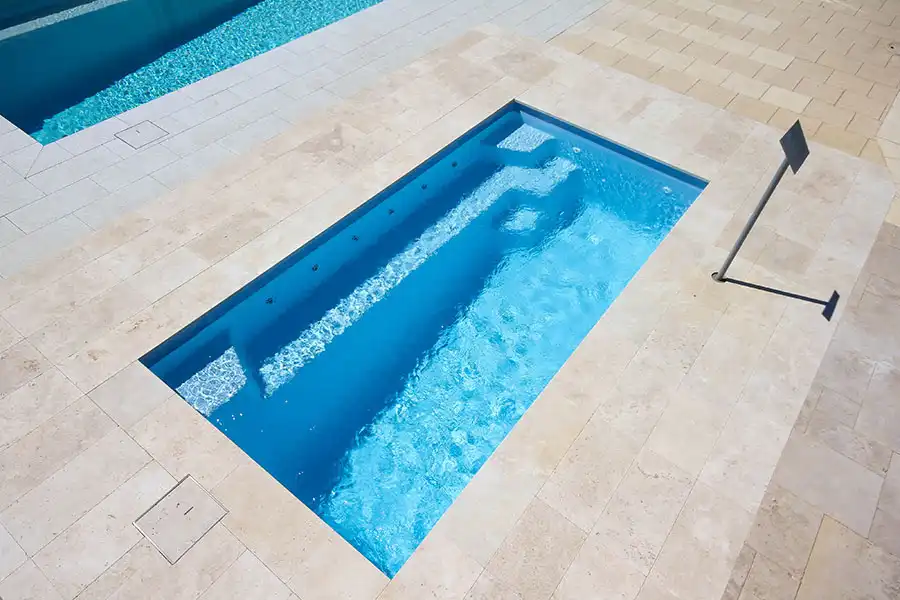
Malta
From $46,053The Malta fits a real pool into 4m × 2m — corner entry steps, a full-length bench seat, and a graded floor for tight courtyards.
View pool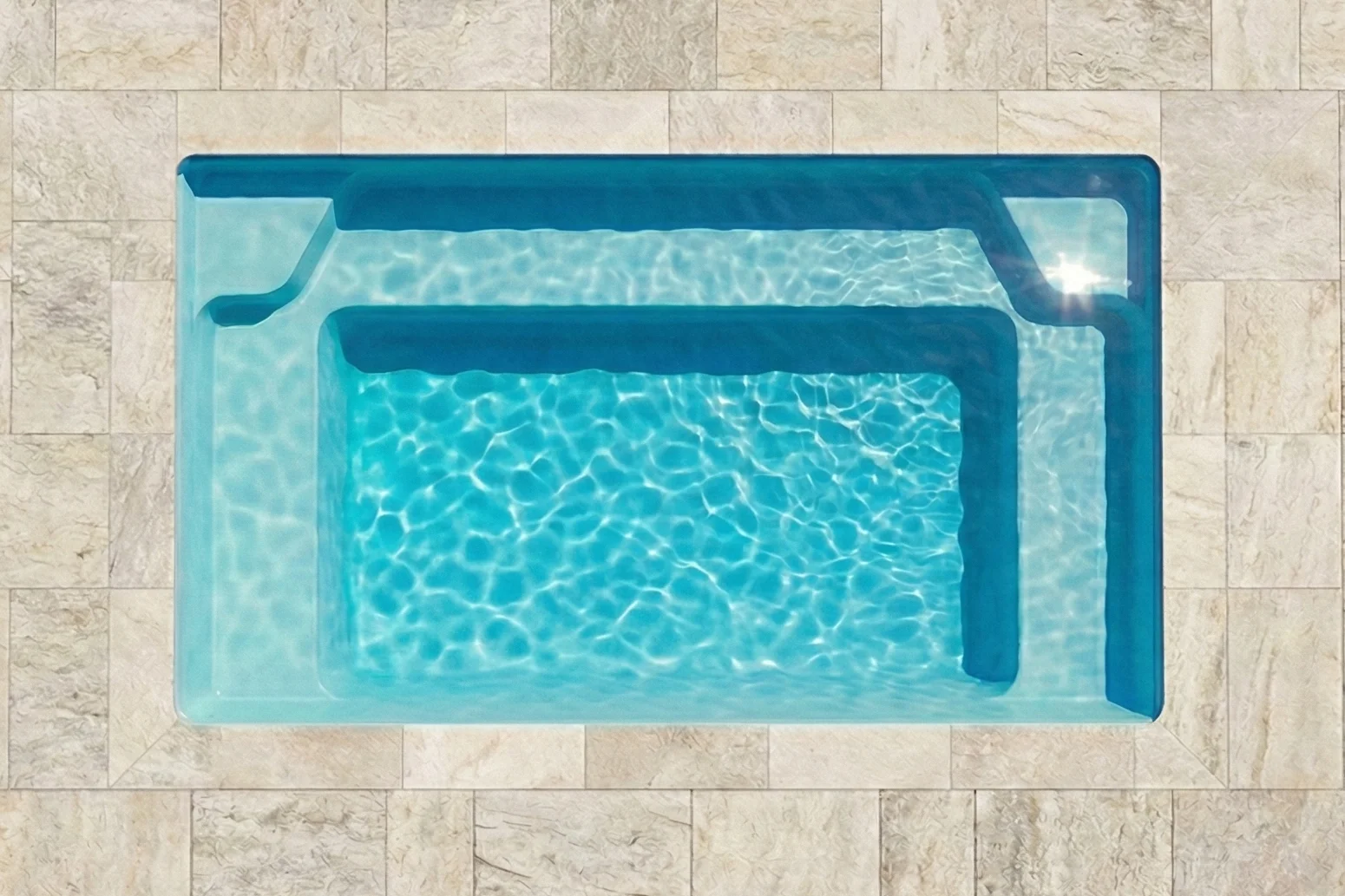
Bastia
From $49,074The Bastia is our most compact dedicated spa — 3.2m × 2m with bench seating on three sides and a constant 1.0m depth.
View pool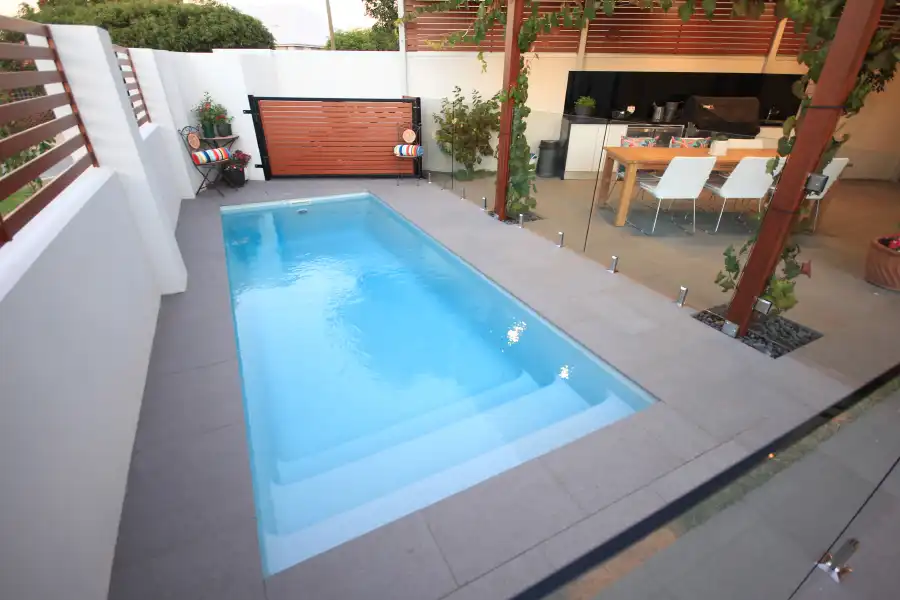
Paradiso
From $50,459The Paradiso brings the Villa Series' slimline design to 5.5m × 2.15m — a genuine pool for courtyards and narrow blocks.
View pool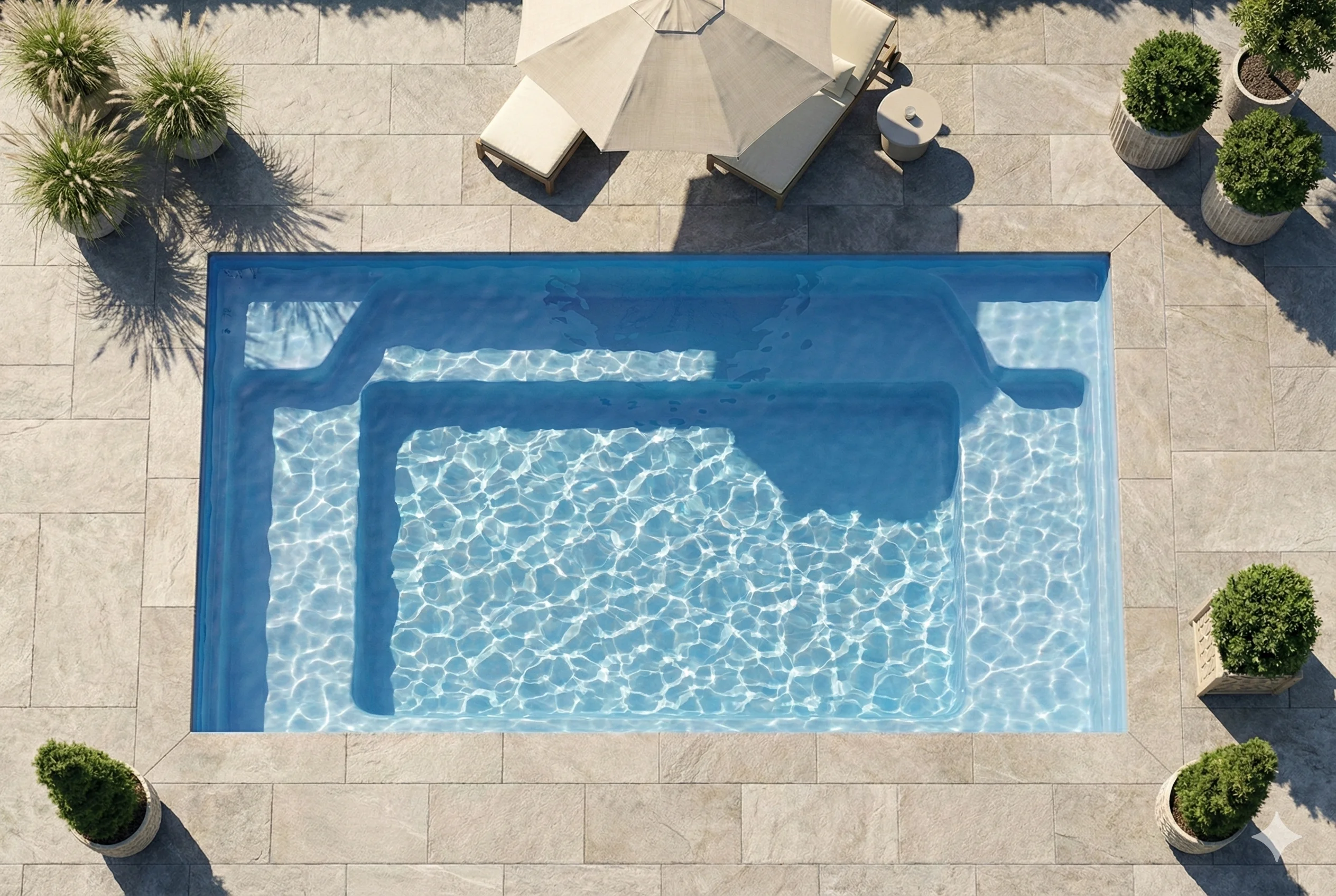
Elba
From $51,318The Elba is a generous 4m × 2m fibreglass spa with bench seating on three sides — designed to stand independent of your pool.
View pool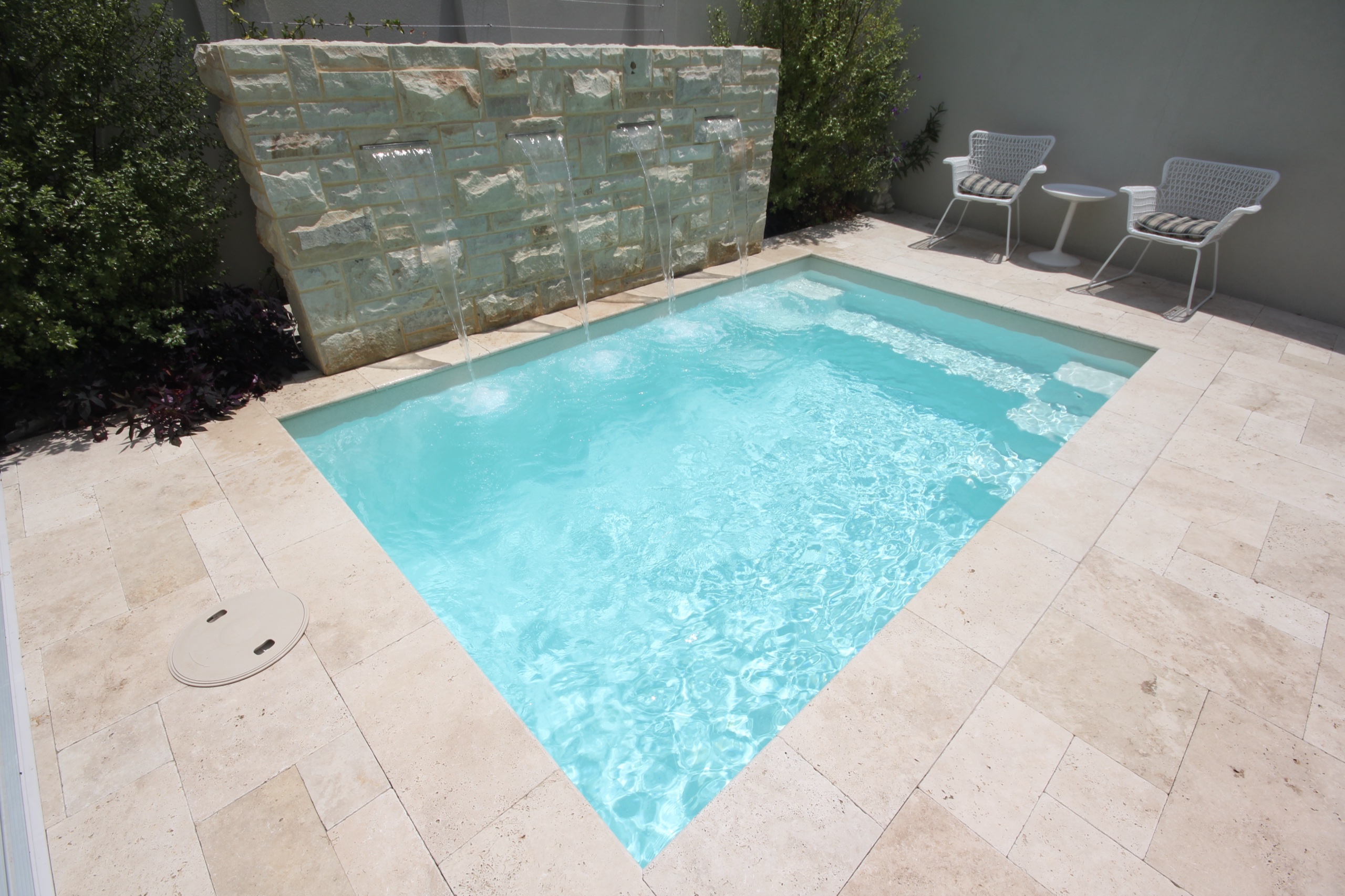
Serenity
From $52,718The petite 4m x 2.5m Serenity is the ideal courtyard plunge pool, with an easy 1.1m-1.47m depth for relaxed dips in the smallest of yards.
View pool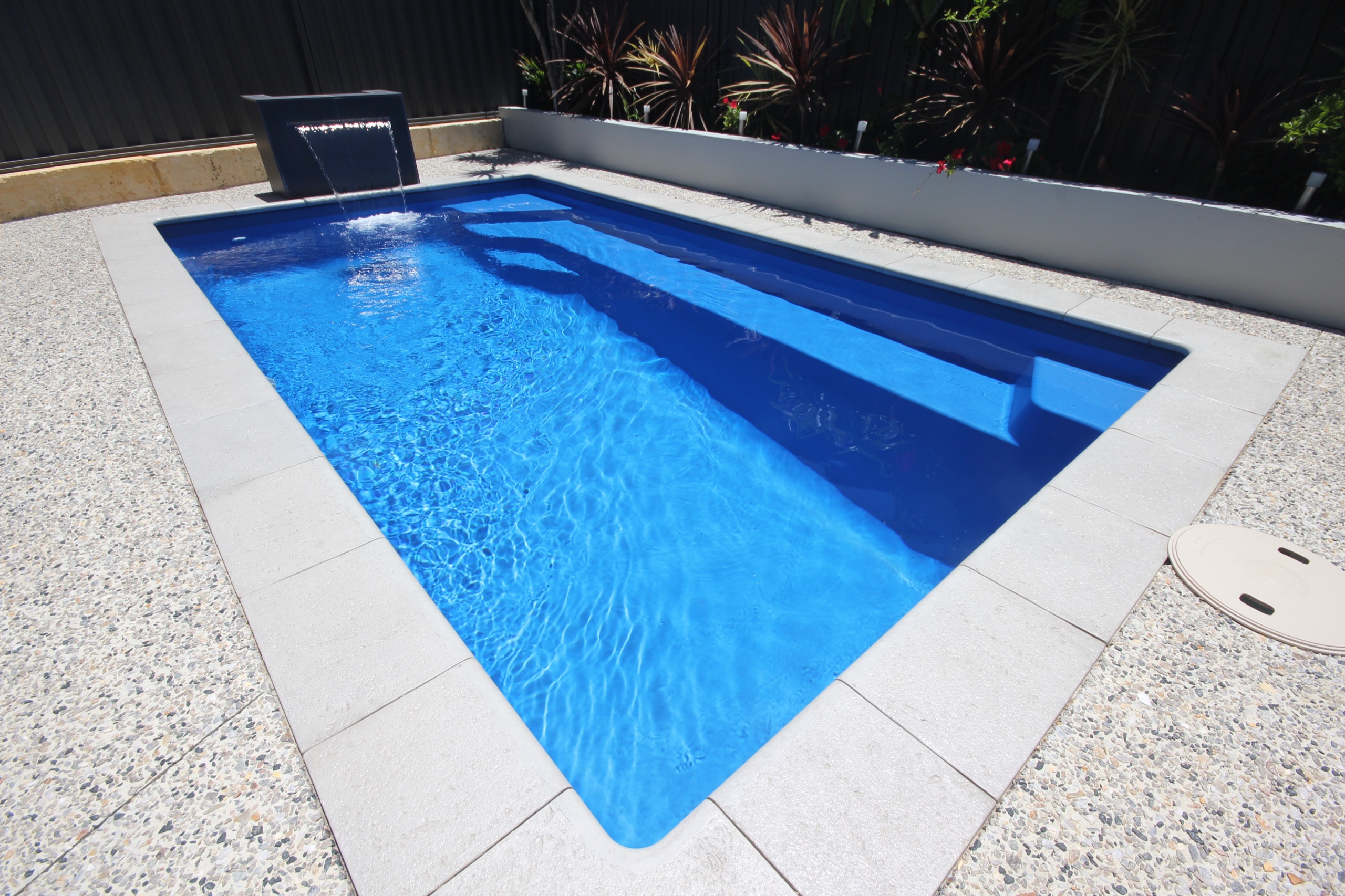
Verona
From $53,753At a compact 4.5m x 2.5m, the Verona slips into tight courtyards and small blocks, with a gentle 1.1m-1.5m depth made for cooling off.
View pool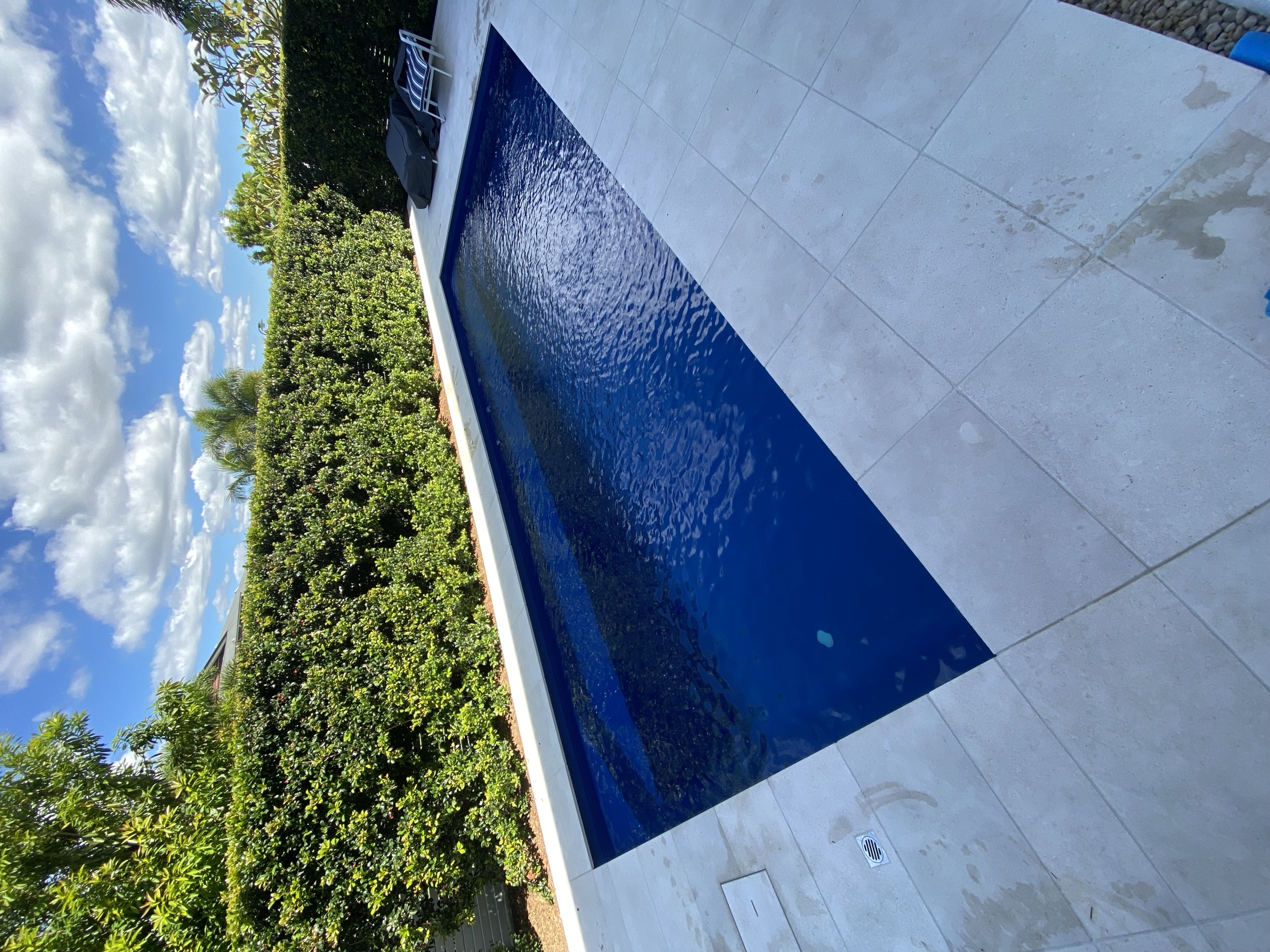
Portofino
From $54,115The Portofino's slender 5.5m x 2.5m lines tuck neatly down the side of a home, with a 1.1m-1.6m depth perfect for a quick lap or a cool dip.
View pool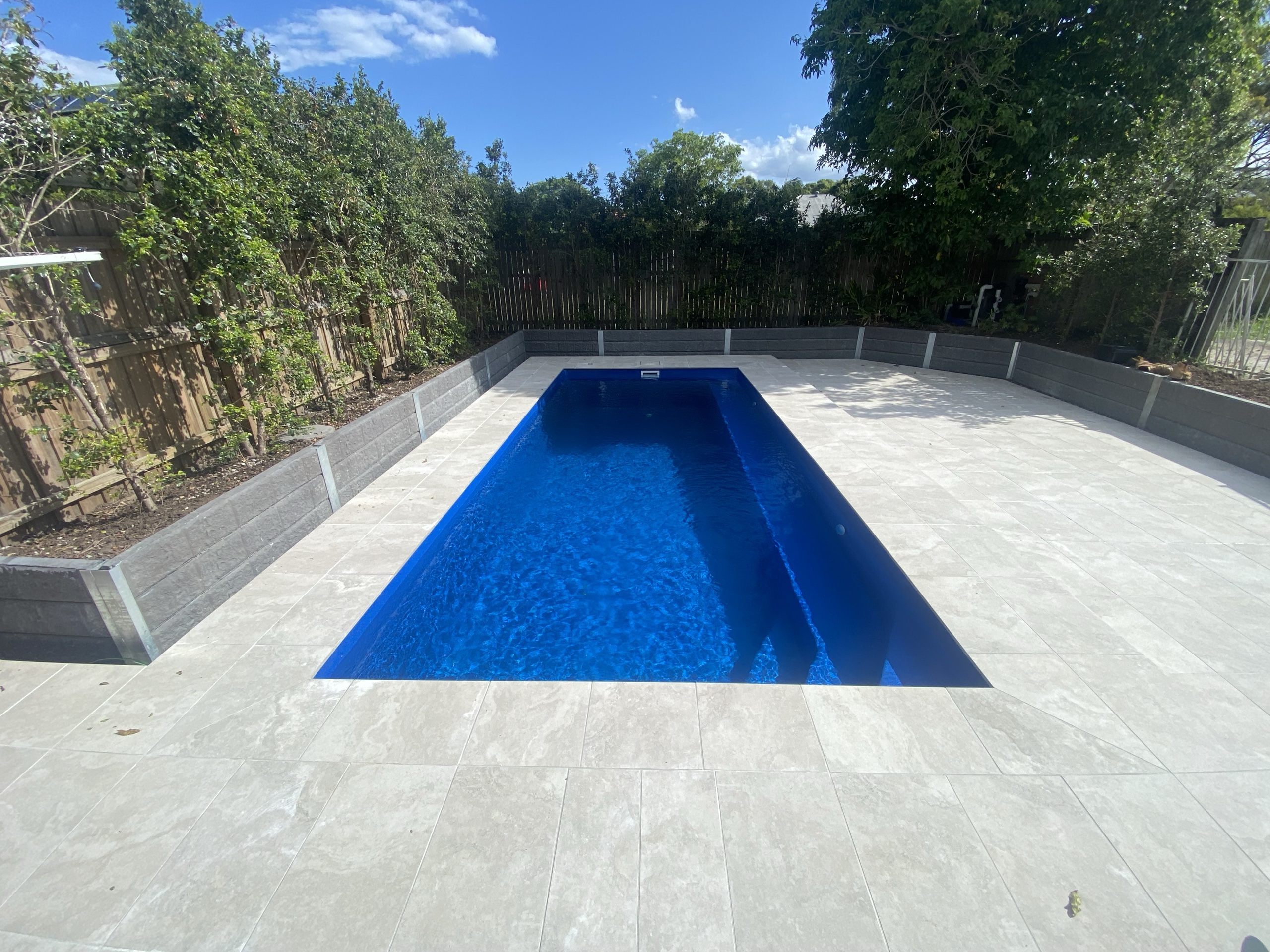
Sovereign
From $54,141The Sovereign's tidy 5m x 2.7m shape suits narrow blocks, easing from 1m to 1.63m so the kids can play while you cool off at the deep end.
View pool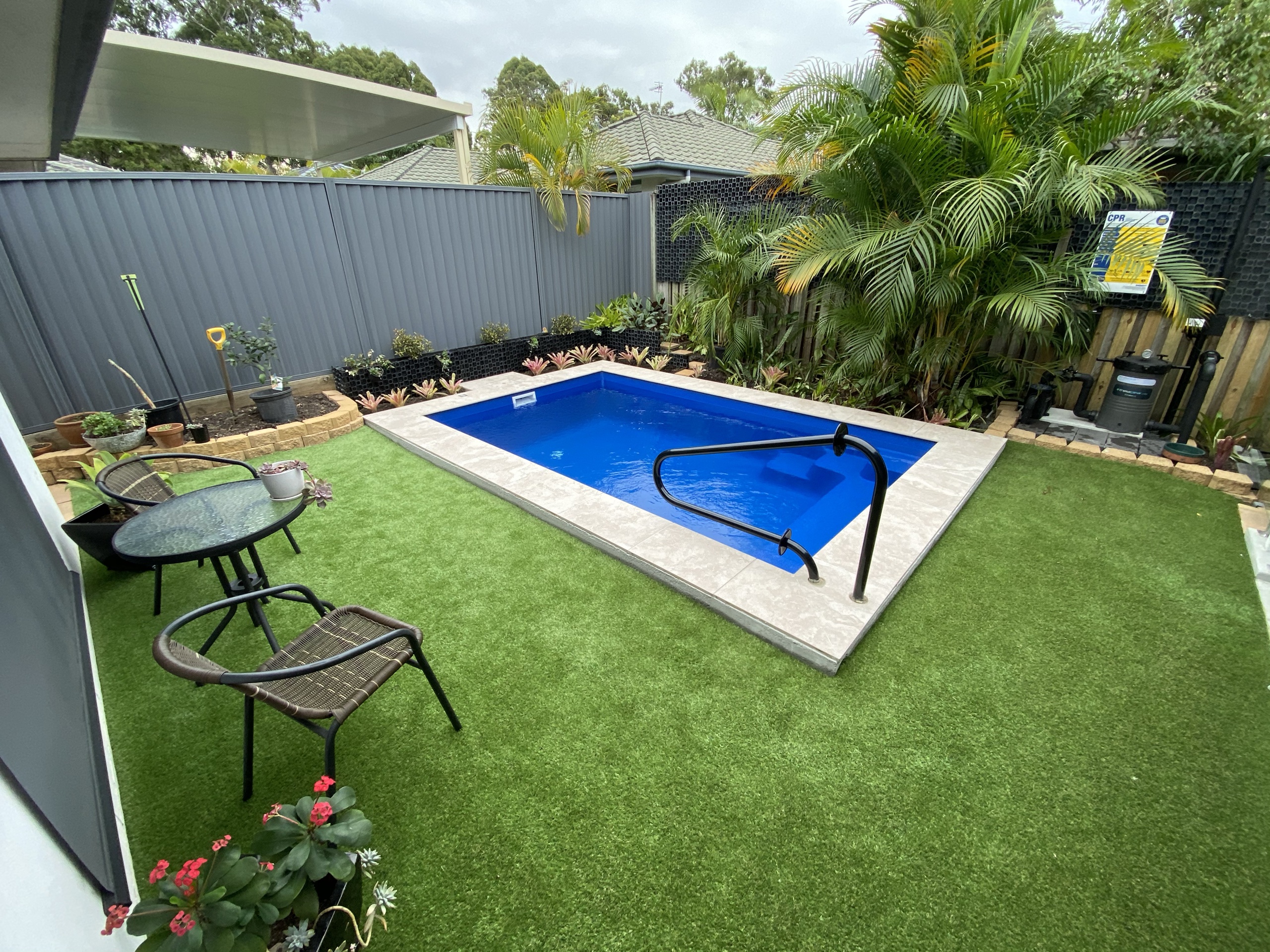
Allure
From $54,336At 5m x 2.5m, the Allure is a slimline plunge pool for compact yards, with a 1.1m-1.6m depth that balances splashing room and a place to swim.
View pool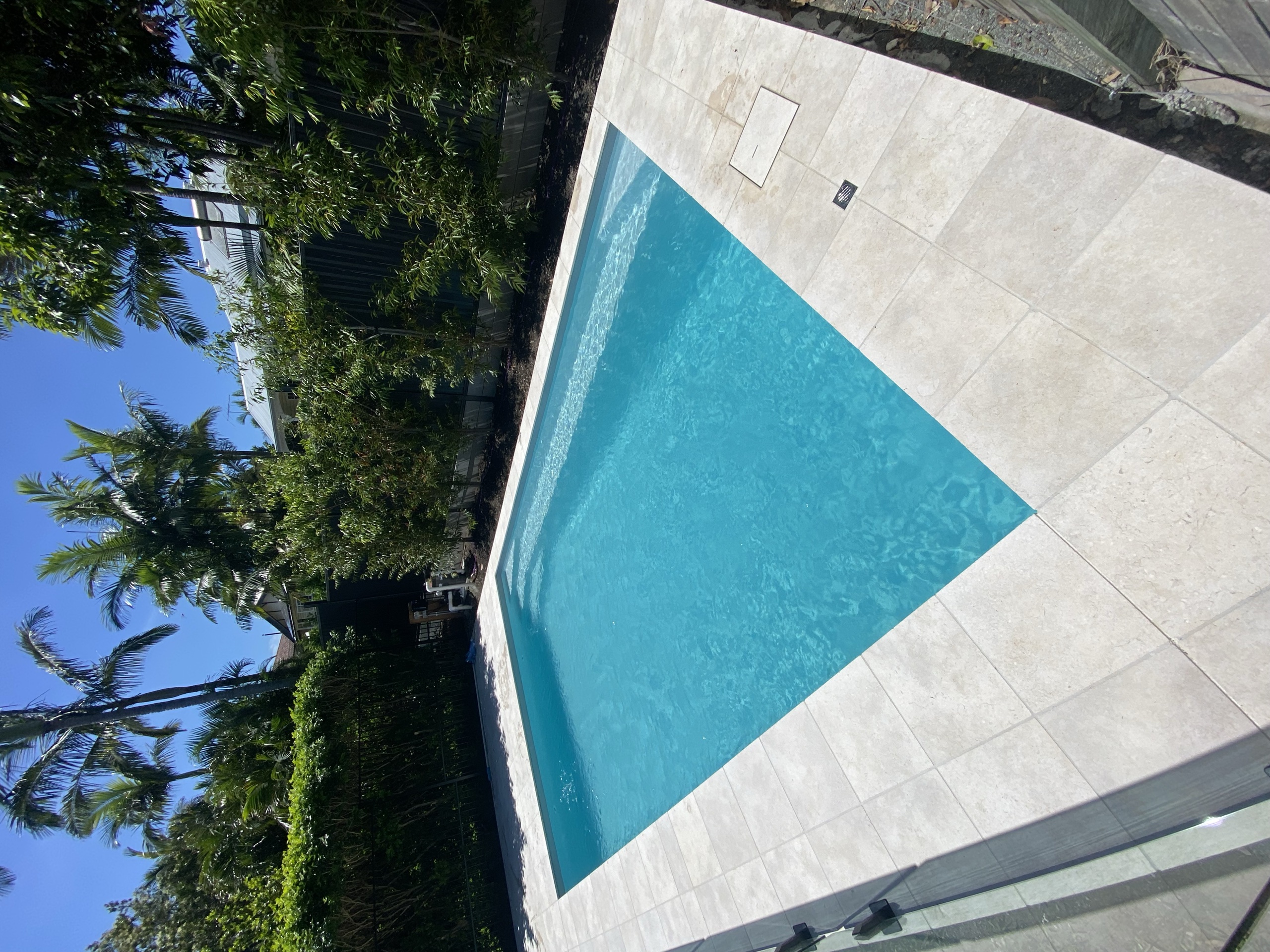
Latina
From $57,141The Latina packs real depth into a compact 4.5m x 3.5m footprint, reaching 1.78m at the deep end for proper swimming in a smaller yard.
View poolPrices are live all-inclusive installed prices (pool, standard installation, filtration and handover) for standard site conditions in South East Queensland.
Every price includes excavation, crane, premium filtration, mineral chlorinator, LED lighting, council approvals, engineering certification and lifetime structural and interior surface warranties. Nothing is added later except documented site conditions, which we assess at a free site visit before you sign anything.
What $45k, $60k and $80k actually buy
Budget conversations get much easier when the tiers are concrete. Across our 40-model range, installed pricing runs from $46,053 (the Malta plunge pool) to $108,867 (the 11.48m Saint Azur), and the tiers look roughly like this:
- Around $45k–$55k buys a quality plunge or compact pool — models like the Malta, Infinity range or Serenity. Full filtration, mineral chlorination, LED lighting and lifetime warranties; the only thing that's smaller is the water. Plunge pool prices start at the bottom of that band and rise with shell size, not with specification.
- Around $55k–$70k buys a mid-size family pool in the 6–8 metre bracket — lap-friendly shapes like the Florentina (6.5m), Harmony (7m) or Sheffield (8m). This is where most SEQ families land: real swimming length without a large-pool site footprint.
- Around $70k–$82k buys the big end — long family and lap pools up to the 11-metre Kensington. At this tier you're paying for water volume and length, not a jump in build quality; the shell technology and inclusions are identical to the entry models.
That last point is the one cheap-pool marketing hides: with a quality builder, the $45k pool and the $80k pool are built from the same laminate, carry the same lifetime warranties and get the same equipment. You choose a size, not a quality grade.
Think in cost per year, not sticker price
A pool is a 25-year-plus asset, so divide by years of ownership before comparing quotes:
- A quality fibreglass pool with a Lifetime Structural Warranty and Lifetime Interior Surface Guarantee has, in practical terms, no scheduled resurfacing bill. Spread $50,000 over 25 years of ownership and you're at roughly $2,000 a year before running costs.
- A budget pool that needs an interior renewal, a liner replacement or major equipment swap-outs inside its first decade can quietly cost more per year than a pool that was $15,000 dearer on day one.
- Running costs compound the gap. Efficient filtration and mineral chlorination typically mean shorter pump run times and fewer chemicals; a thermal blanket (from about $2,200 installed with a roller) typically cuts evaporation and heating losses substantially. Cheap equipment does the opposite, every week, for decades.
None of this means spending more is always better — it means the sticker price is the least informative number in the comparison.
The five features that separate quality from cheap
1. Shell engineering you can verify. Our shells use Graphene Nano-Tech® construction from Aqua Technics — measurably higher flexural and impact strength than conventional fibreglass. Cheap shells save money in the laminate, exactly where you can't see it and exactly where failures start.
2. A warranty measured in lifetimes, not years. Quality fibreglass carries lifetime structural warranties and, on our pools, a Lifetime Interior Surface Guarantee. Budget imports typically offer 5–10 years — the warranty length is the manufacturer telling you how long they expect the pool to last.
3. Equipment that matches the pool. An undersized pump or bottom-tier filter makes a good pool swim badly: cloudy water, longer run times, higher power bills. We fit premium filtration and a mineral-capable chlorinator as standard because equipment is the cheapest place to add daily quality — and the most common place budget quotes cut. The same logic applies to add-ons: a cheap pool heater that can't hold temperature costs more per swim than a correctly sized heat pump (from about $4,100 installed), because pool heating costs are dominated by running efficiency rather than purchase price.
4. All-inclusive, documented pricing. The classic affordable-pool trap is the quote that grows: excavation "extra", crane "extra", council fees "extra". Quality shows up as a fixed, all-inclusive number with site risks (like rock, slope or tight access) assessed and documented at a free site visit before contract.
5. Compliance done properly. Engineering certification, bonding, approvals and fencing compliance aren't optional in Queensland — any pool deeper than 300mm needs building approval and a compliant barrier (1200mm minimum fence height, gaps under 100mm, self-closing gates), and the pool must be on the QLD pool register. Those pool fencing rules apply whatever the pool cost. A pool that's cheap because paperwork was skipped is a liability, not an asset.
The DIY pool kit reality check
Cheap fibreglass pool kits and "supply-only" shells are the biggest false economy in this market. The shell is typically only part of an installed pool's cost — the rest is excavation, crane hire, plumbing, backfill, concrete, electrical bonding, engineering certification and council approval. A kit price excludes all of it, and self-installation typically voids the shell warranty, which is the single most valuable thing you're buying.
By the time an owner-builder has paid trades individually (at retail rates, without a builder's schedule keeping them sequenced), the finished saving is usually small — and every risk that a professional installer normally carries has been transferred to you. If a kit still tempts you, price the full finished job first, then compare it against a genuine all-inclusive installed number.
Where it's smart to save
- Go smaller, not cheaper. A quality small pool or plunge pool beats a budget full-size pool on every ownership metric.
- Stage the extras. Water features, extra paving and premium landscaping can come later. Heating is the exception — it's cheapest fitted during the build.
- Simple shapes. Rectangles cost less to fence, pave and cover than curves.
- Time your build. Demand peaks in spring when everyone wants to swim by Christmas, and lead times stretch with it. Signing in autumn or winter typically means a quieter schedule, and with a 10–12 week first-chat-to-swimming timeline, a winter start has you swimming right as the weather turns.
- Finance the difference. From around $150 per week through Handypay, the gap between "cheap" and "quality" is often a few dollars a day. Framed that way, the upgrade from a compromised pool to a lifetime-warrantied one is one of the cheapest insurance policies you'll ever buy.
Where it's never smart to save
Shell quality, filtration, fencing compliance and installer accountability. Every one of those is 10× more expensive to fix than to buy right, and two of them are legal requirements. On accountability specifically: ask who actually digs the hole and cranes the shell. We run in-house installation crews rather than subcontracted teams, because the installer's workmanship determines whether that lifetime shell warranty ever matters.
FAQs
What is the most affordable inground pool?
Fibreglass plunge and small pools are the cheapest quality inground option in Australia — our range currently starts around $45,000 fully installed, with live prices shown above.
How much does a cheap inground pool cost installed in Brisbane?
Genuinely installed — excavation, crane, filtration, approvals and certification included — quality fibreglass starts around $45,000 in the Brisbane area. Quotes far below that are usually supply-only shells or quotes with the expensive line items left off, so always compare the finished, all-inclusive number.
Are above-ground pools cheaper than inground pools?
Upfront, yes — significantly. But above-ground pools have shorter lifespans, no structural warranty story to speak of, and generally add nothing at resale. As a cost-per-year-of-ownership decision they're a different product, not a cheaper version of the same one.
Are cheap pool kits worth it?
DIY kits look 30–40% cheaper but exclude excavation, crane, plumbing, certification and fencing — and self-installation typically voids the shell warranty. The finished saving is usually small; the risk transfer to you is total.
How can I make a pool more affordable?
Choose a smaller quality pool over a larger budget one, keep the shape simple, stage cosmetic extras, build outside the spring rush, and use finance to spread the cost — not specification cuts you'll pay for in maintenance.
What's the cheapest way to heat an affordable pool?
A thermal blanket and roller (from about $2,200 installed) is the cheapest win — it typically holds heat that would otherwise evaporate away overnight. For actual heating, a correctly sized heat pump starts around $4,100 installed; undersized "cheap" heaters typically cost more to run per degree than a right-sized unit.
Do affordable pools add property value?
Quality installed inground pools generally do in South East Queensland's climate; above-ground and visibly budget installations generally don't. Buyers read pool quality the same way you're learning to.