Pool Decking vs Paving: Costs & Materials Compared
Pool decking or paving? Compare timber, composite, concrete and stone on cost, heat underfoot, slip rating and maintenance for South East Queensland backyards.
Published · Updated
Direct answer
The strip of ground around a new fibreglass shell decides how the whole backyard feels. Get the surround right and the pool reads as one finished space; get it wrong and you have a beautiful shell sitting in a patch of dirt. The two choices most South East Queensland homeowners weigh up are decking and paving. Both work. They just behave differently underfoot, cost different money, and ask for different maintenance over the years you own the pool.
Here is how timber and composite decking stack up against paving and concrete, and how to pick the surface that suits your block, your budget and a Brisbane summer.
Decking or paving — which is right for your pool?
Decking suits sloping or elevated blocks and a soft, warm, timber look; paving suits level ground, wet bare feet and low ongoing effort. That is the short version. Decking is a structure built above the ground on bearers and joists, so it can bridge a fall in the land and turn a steep embankment into usable, level entertaining space. Paving sits on the ground, so it needs a properly prepared, compacted base — which is straightforward on flat blocks and expensive once you are retaining and filling a slope.
The trade-off runs the other way on heat and upkeep. Pavers and concrete shrug off sun and pool splash for years with almost no attention. Timber wants recoating. Composite decking narrows that gap but carries a higher upfront price.
The table below is the fast comparison; the sections after it explain each column.
| Surface | Relative cost | Heat underfoot | Slip when wet | Maintenance | Best for |
|---|---|---|---|---|---|
| Timber decking | Mid | Cool–warm | Good (grooved) | High — recoat yearly | Sloping/elevated blocks, warm look |
| Composite decking | High | Warm–hot in full sun | Good | Low — wash only | Sloped blocks, low-fuss owners |
| Poured concrete | Low–mid | Hot in full sun | Depends on finish | Low | Level blocks, budget builds |
| Clay/concrete pavers | Mid | Warm | Good (textured) | Low–mid — reseal | Level blocks, classic look |
| Natural stone | High | Cool (light stone) | Very good | Mid — reseal | Premium finishes, bare feet |
| Concrete cutting, service prices | Price | |
|---|---|---|
| 1/4 Pool | $320 | |
| 1/2 Pool | $640 | |
| 3/4 Pool | $960 | |
| Full Pool | $1,280 | |
| Diagonal/Paver Cuts | $50 | |
| Expansion Cuts | $500 | |
Flat service prices for cutting existing slabs and paths around the pool zone.
What decking costs and where the money goes
Decking is priced by the substructure as much as the boards. Because a deck stands on a frame of posts, bearers and joists, the bigger cost driver is often what is underneath rather than the timber on top. On a flat block that frame is short and cheap; over a two-metre fall it becomes a serious structure with footings, and the price climbs.
Timber species sits on top of that. Merbau and other hardwoods are the common mid-range choice in Queensland. Modified timbers and premium species cost more and move less. Composite boards — a timber-plastic blend — carry the highest board cost of the group, and you are paying that premium to buy your weekends back later.
One planning point saves real money: decide on a deck before the pool goes in, not after. Decking is above ground while paving sits on it, so the deck frame needs to relate to the shell's height and the coping from the start. Working it out with your pool builder up front avoids ripping into a finished surface to add bearers.
What paving and concrete cost
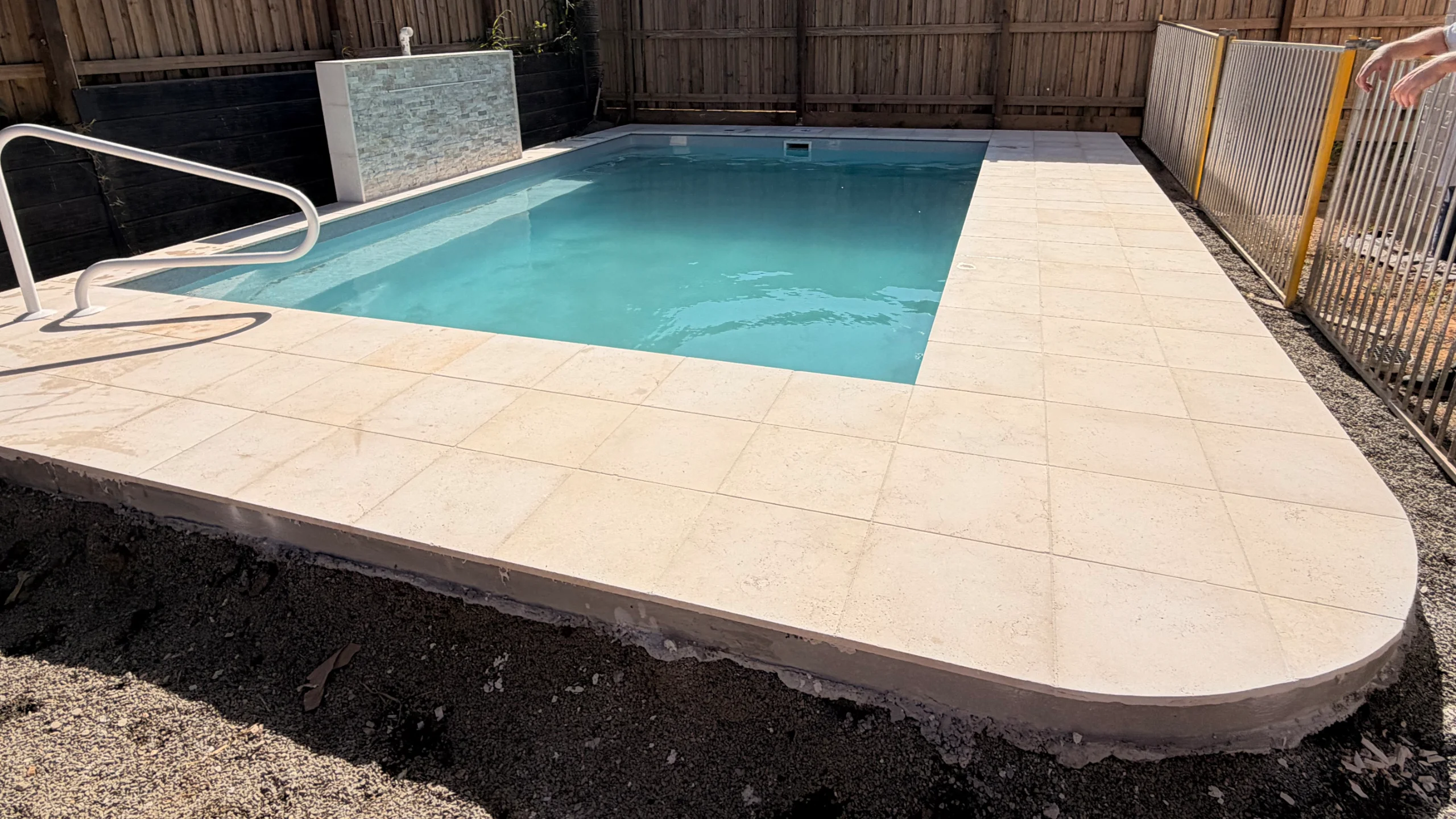
Paving spans the widest price band of any surround because "paving" covers everything from plain poured concrete to hand-laid natural stone. Poured concrete is usually the cheapest way to get a solid, level surface around a pool. A brushed or exposed-aggregate finish lifts it visually and adds grip. Concrete and clay pavers sit in the middle. Natural stone — travertine, granite, sandstone — is the top end, and it is where the barefoot experience is best.
All of them share one hidden cost on our soils: the base. South East Queensland's reactive clay swells in the wet and shrinks in the dry, so pavers laid on a poorly prepared base will lift, dip and crack at the joints within a few seasons. A compacted, well-drained sub-base is not optional here, and it is part of why a proper paved surround is not as cheap as the boxed pavers at the hardware store suggest.
Heat underfoot — the Queensland deciding factor
Light-coloured stone and timber stay the coolest underfoot; dark concrete and dark composite get hottest in full Brisbane sun. This matters more here than almost anywhere. A dark charcoal paver or a black composite board sitting in January sun can become genuinely painful to cross barefoot between the back door and the water.
If the surround gets no afternoon shade, colour beats material. Pale travertine and light sandstone are famously cool to walk on. Timber runs cooler than most masonry because it does not soak up and hold heat the same way. Standard concrete and darker composites are the ones to watch — specify a lighter tone, or plan shade over the main walking line.
Slip resistance and safety
Around a pool, slip rating outranks looks — the surface will be wet, and it will have wet children running on it. In Australia, slip resistance is measured against AS 4586, and a pool surround should be specified toward the higher-grip end of that scale. Grooved or timber decking gives good natural grip along the boards. Textured pavers, brushed or exposed-aggregate concrete, and honed (not polished) stone all grip well when wet. Smooth, polished or heavily sealed surfaces are the danger zone — a glassy sealed paver looks sharp dry and turns skating-rink slick wet.
Ask for the slip rating of any tile or paver before it goes down. It is a number on the product data sheet, and it is far cheaper to check than to relay a whole surround.
Maintenance over the life of the pool
Paving is close to set-and-forget; timber is the one surface that asks for a job every year. Timber decking must be cleaned and recoated with oil or stain roughly annually in our climate, or it greys, splits and lifts under the UV and the wet-dry cycle. That is the real cost of the timber look — a weekend of sanding and oiling most years.
Composite decking removes almost all of that; a wash-down is the extent of it, which is exactly what you are paying the higher board price for. Pavers and concrete want a periodic reseal to keep out hard-water scale and staining from pool chemistry, but that is a job measured in years, not seasons. Natural stone is the exception among the masonry options — porous stone needs sealing more diligently or it stains.
The coping join — where surround meets pool
The coping is the capping around the pool's edge, and getting the surround to meet it cleanly is what separates a finished job from a rough one. With paving, the pavers or stone are laid to butt against the coping with a consistent joint, and that line needs to be dead level and sealed so splash-out does not track underneath. With decking, the boards are cut to run up to the coping with a small, deliberate gap for drainage and timber movement — timber expands and contracts, so a hard-tight join will buckle.
This is the detail to confirm before anything is installed, because coping height sets the finished level of everything around it. On a paved surround the whole slab is planned off that height; on a deck the frame is built to land the boards flush with it. It is also where the fence interacts with the surround, so it pays to settle the pool fencing design at the same time rather than retrofitting posts through finished pavers or a laid deck.
Can you use both?
Yes — combining decking and paving is often the best answer, not a compromise. A timber deck off the house for lounging, meeting a paved or stone zone at the pool's wet edge, gives you the warm entertaining space and the low-maintenance splash zone in one design. Many of the best SEQ backyards run exactly this mix, sometimes with a strip of lawn between them. If a softer look appeals, weigh a grass pool surround into the plan too; the three materials read well together when the levels are set from the coping out.
FAQs
Is decking or paving cheaper around a pool?
On a flat block, poured concrete is usually the cheapest surround and timber decking sits mid-range, with composite decking and natural stone at the top. On a sloping or elevated block the maths flips — decking bridges the fall on a frame, while paving there needs retaining and fill, which can make paving the dearer option. The block, not just the material, sets the price.
Which pool surround stays coolest underfoot in Brisbane summer?
Light-coloured natural stone and timber stay the coolest. Pale travertine and sandstone barely heat up, and timber holds less heat than masonry. Dark concrete and dark composite boards get the hottest in full sun, so if the area gets no afternoon shade, choose a lighter tone or plan shade over the main walking path.
How much maintenance does timber pool decking need?
Timber decking needs cleaning and recoating with oil or stain roughly once a year in South East Queensland's UV and wet-dry climate, or it greys and splits. Composite decking only needs a wash-down. Pavers and concrete need an occasional reseal every few years rather than an annual job.
What slip rating should a pool surround have?
Specify toward the higher-grip end of the AS 4586 slip-resistance scale, since the surface will be wet and walked on by children. Grooved decking, textured pavers, brushed or exposed-aggregate concrete and honed stone all grip well wet. Avoid polished or glossy sealed finishes, which become slippery when wet.
Should I decide on decking or paving before the pool is installed?
Yes. Coping height sets the finished level of the whole surround, and a deck's frame has to be built to land flush with it while paving is laid to butt against it. Settling the choice before installation avoids cutting into a finished pool edge to add a deck frame or relay pavers later.