Grass Around Pool: Turf, Alternatives & Surround Ideas
Grass around a pool looks soft and stays cool underfoot, but chlorine splash and clippings cost you. Compare turf, artificial grass and paving for SEQ pools.
Published · Updated
Direct answer
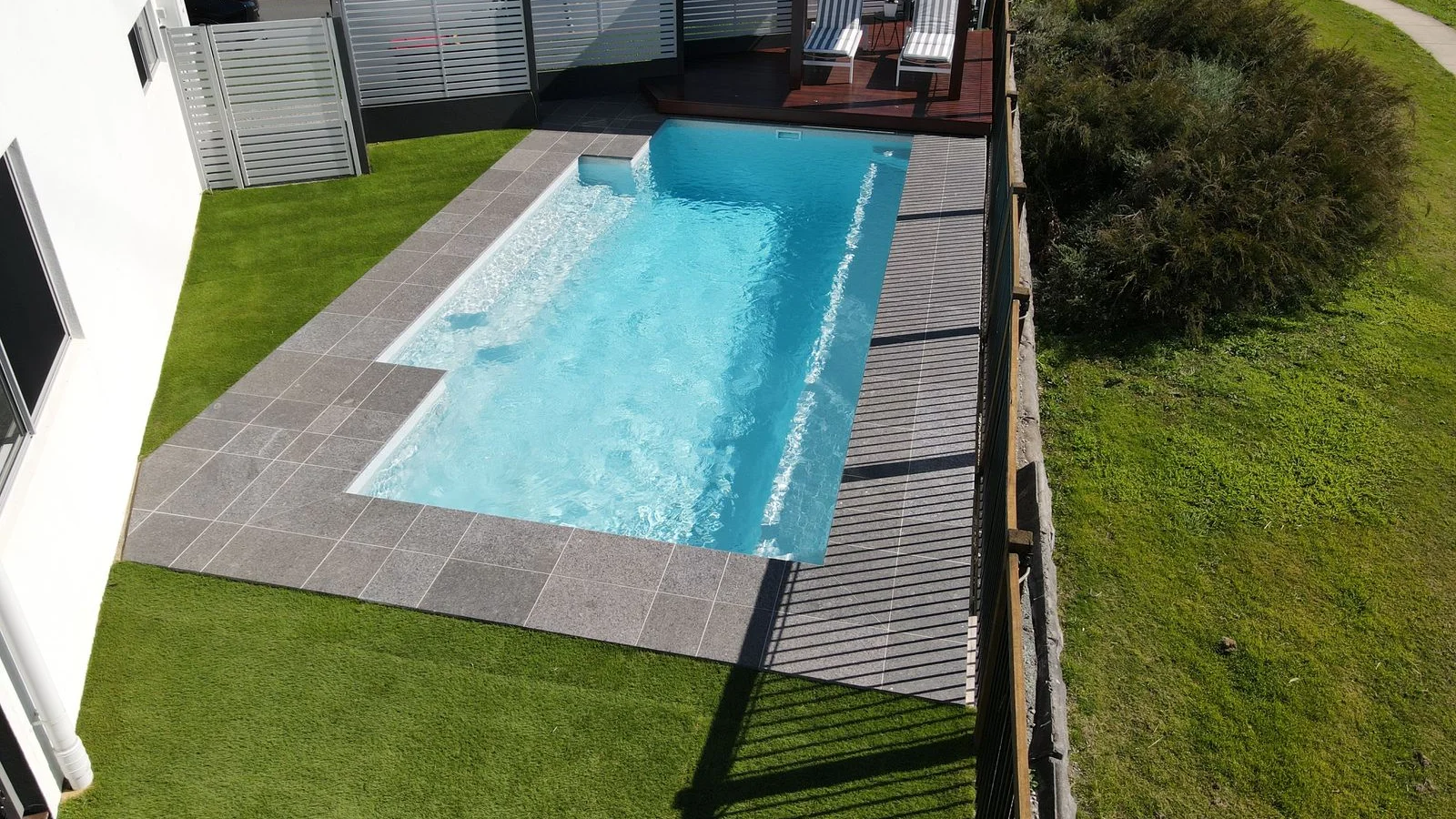
Grass around a pool gives you a soft, cool, natural edge that no hard surface can match on a barefoot summer afternoon. It also drops clippings, seed and dirt straight into your water, and the strip closest to the shell cops chlorinated splash all season. Whether real lawn is the right pool surround for your backyard comes down to your soil, how much maintenance you'll tolerate, and how you handle the metre or so of ground nearest the coping. Below we weigh grass against the alternatives, and cover the mixed surrounds we build most often across Brisbane, the Gold Coast and the Sunshine Coast.
Is grass around a pool a good idea?
Grass is a good idea when you want a natural look, a cooler surface underfoot, and you don't mind ongoing lawn care — but it works best as part of a mixed surround, not run right up to the waterline. Turf that touches the coping takes constant splash-out, foot traffic and shade, and those are exactly the conditions lawn struggles in. The fix most homeowners land on is a hard splash zone (paving or a mowing strip) around the immediate pool edge, with lawn beginning a step back where it can actually thrive.
The appeal is real. A fibreglass shell framed by a manicured lawn reads as calm and natural, and it keeps your yard usable as lawn rather than surrendering it all to hardscape. Grass doesn't scorch the way dark pavers or concrete can at midday, so bare feet are comfortable. It's also non-slip, which matters most in the wet zone where kids run.
What are the pros and cons of a grass pool surround?
Grass wins on cost, comfort and looks, and loses on maintenance and its tolerance for chlorinated splash. Here's the trade-off in full.
| Factor | Grass surround |
|---|---|
| Look and feel | Soft, natural, easy on the eye; framing a shell in lawn suits most SEQ backyards |
| Underfoot in summer | Stays cool; comfortable barefoot when pavers and concrete are too hot |
| Slip safety | Non-slip even when wet |
| Upfront cost | Lower than paving, decking or stone |
| Pool maintenance | Higher — clippings, seed and dirt blow and wash into the water, so you skim, vacuum and check the skimmer basket more often |
| Lawn maintenance | Mowing, edging, feeding; the splash strip needs extra care or re-turfing |
| Chlorine tolerance | Poor at the immediate edge — repeated chlorinated splash and salt yellow and thin the closest strip |
| Wear from traffic | The most-used entry side compacts and bares off over time |
The maintenance point cuts both ways. One reason people pave around a pool is to mow less, so choosing grass means keeping the lawn chore you might have hoped to lose. Budget for the strip nearest the pool needing more attention than the rest of the yard — occasional re-turfing on the splash-and-traffic side is normal, not a failure.
Real turf vs artificial grass around a pool
Real turf is cooler and cheaper to install but needs mowing, water and re-turfing at the splash zone; artificial grass is near-zero maintenance and shrugs off chlorine, but runs hot in full sun and needs proper drainage. Neither is simply better — they suit different owners.
| Real turf | Artificial grass | |
|---|---|---|
| Feel underfoot | Softest, coolest natural surface | Soft, but heats up in direct summer sun |
| Chlorine and salt splash | Damages the edge strip over time | Unaffected — no yellowing, no die-back |
| Ongoing work | Mow, edge, feed, water, occasional re-turf | Rinse off debris; brush the pile up now and then |
| Debris in the pool | Sheds clippings and seed | No clippings; blown leaf litter still needs skimming |
| Drainage | Natural soil drainage | Needs a permeable base so splash-out drains away, not pools |
| Best for | Owners who want a genuine lawn and accept the upkeep | Owners who want the green look with minimal maintenance |
For SEQ blocks with heavy clay soil — common right across the region — real turf near the pool can sit wet after splash and storms, which stresses the grass and softens the ground. Artificial grass on a well-drained base sidesteps that, at the cost of surface heat you'll feel on a 35-degree day. A common middle path is artificial grass only in the tight splash strip where real lawn always fails, with genuine turf beyond it.
Best alternatives to grass around a pool
The strongest pool surrounds mix materials — a hard splash zone at the water's edge, then grass, planting or stone beyond it. This gives you a clean, safe, drainable edge where it matters and keeps the soft, green feel where you actually lounge and walk.
- Paving or concrete at the coping. A paved band around the shell handles splash, chlorine and foot traffic without complaint, and it doubles as your mowing strip so the edger never touches the pool. It's the single most reliable way to keep a grass surround looking good. Decking and paving wear differently in our climate, which is worth knowing before you commit to a hard surface.
- Potted greenery and garden beds. Where soil won't hold a lawn — poor drainage, deep shade, or a block that never took to grass — a run of varied pots and a planted bed delivers greenery with far less fuss. Colourful flowering plants lift a paved zone, and herbs or moss soften the joins in a stone path.
- Natural stone and pebble. Stepping stones or slabs from the house to the pool, bordered with pebble or river rock, read as resort-style and drain freely. Pebble borders are also a tidy way to finish the edge of a walkway against a lawn.
- Water and fire features. A water feature at the pool edge or a fire pit set into a paved zone turns a plain surround into an evening destination, and the contrast of flame against water at night does a lot of work for very little planting.
- Mulch, pine straw and ground fillers. For flower beds and the empty corners between structures, mulch or pine straw fills space quickly, looks intentional, and won't shed into the pool the way mown grass does.
The full palette of edge treatments comes together in landscaping around your pool, where coping, splash zone and planting get designed as one rather than bolted on afterwards.
How do you protect grass from pool chlorine?
Keep chlorinated splash off the lawn with a hard splash strip at the coping, and dilute any run-off before it reaches the grass. Pool water at normal chlorine and salt levels won't kill a lawn from the occasional splash, but the strip that gets soaked every swim, every day, all summer is a different story — that's the ground that thins and yellows. A paved or gravel mowing band 300–600mm wide around the shell takes the brunt, so the lawn starts where the water rarely reaches. Grading the surround so splash-out drains away from the turf rather than pooling on it does the rest. On the traffic side where people climb in and out, expect to re-turf that patch every few seasons regardless — it's wear, not chemistry.
FAQs
Does chlorine kill grass around a pool?
Not from the odd splash — pool water at normal levels is dilute enough that a healthy lawn shrugs it off. The damage comes from the narrow strip right at the coping that gets soaked every single swim all summer, plus salt build-up from a salt-chlorinated pool. Protect that zone with a paved splash strip and let the lawn begin a step back.
What is the cheapest surround for a pool?
Grass is typically the lowest-cost surround to install compared with paving, timber decking or natural stone. The saving comes with a trade — you keep mowing, edging and feeding it, and the splash-and-traffic strip nearest the pool usually needs occasional re-turfing. A part-grass, part-paved mix balances the upfront cost against long-term upkeep.
Is artificial grass better than real grass around a pool?
It depends on what you're optimising for. Artificial grass ignores chlorine and salt, needs almost no maintenance and won't shed clippings into the water, but it heats up in direct summer sun and needs a free-draining base. Real turf is cooler underfoot and cheaper to lay, but demands ongoing care and struggles in the wet splash zone. Many SEQ owners use artificial grass only in the tight edge strip and real lawn beyond it.
What should go right next to the pool edge?
A hard, drainable surface — paving, concrete or stone — rather than lawn. The immediate edge takes splash, chlorine, salt and the most foot traffic, which is exactly where grass fails fastest. A paved band also acts as a mowing strip so your edger never runs against the shell, and it keeps dirt and clippings out of the water.
Why does grass around my pool keep dying?
Usually a combination of constant chlorinated splash, foot traffic compacting the soil, shade from the pool fence or house, and poor drainage on clay soil that leaves the ground waterlogged after every swim and storm. The edge strip cops all of these at once. Moving the lawn back behind a paved splash zone removes most of the causes in one go.