Pool Winter Maintenance Australia: Fibreglass Guide
Pool winter maintenance in Australia: how to winterise a fibreglass pool in SEQ — reduced-run mode, cover use, chemistry and spring prep.
Published · Updated
Direct answer
Pool winter maintenance in Australia doesn't mean shutting the pool down — in South East Queensland it means shifting into a lower-run mode while you hold the water balanced through the cooler months. Pools here don't freeze the way they do in North America or Europe, so there's no draining lines or plugging skimmers. What you're actually managing is a swimming pool that runs cooler, gets used less, and quietly drifts out of balance if you stop paying attention. Get the winter routine right and spring reopening takes an afternoon instead of a fortnight of shock treatments and green water.
Fibreglass shells make this easier than concrete. The gelcoat surface is non-porous, so algae has far less to grip onto and your chemical demand stays lower over winter. That advantage only holds, though, if the basics keep ticking over.
How to winterise a fibreglass pool in South East Queensland
Winterising a fibreglass pool in SEQ is a reduced-run routine, not a closure: drop your filtration hours, dial the salt chlorinator or dosing down, keep the water balanced, and cover the pool when it's not in use. Because Brisbane, the Gold Coast and Sunshine Coast winters stay above freezing, the pool water keeps circulating all season — you're simply running it less.
The one-time "close it up and forget it" approach that works in cold climates causes problems here. Water that sits without circulation, even at 15°C, grows algae and goes cloudy. A pool left uncovered loses heat and water to evaporation every clear winter night. So the SEQ winter job is maintenance at a lower intensity, done consistently, rather than a shutdown.
Here's the shift from summer to winter settings at a glance:
| Task | Summer | Winter (SEQ) |
|---|---|---|
| Filtration run time | 8–12 hrs/day | 4–6 hrs/day |
| Free chlorine target | 2–3 ppm | 1–3 ppm (lower with a cover) |
| pH range | 7.2–7.6 | 7.2–7.6 |
| Shock treatment | Weekly / after heavy use | Every few days, short run |
| Cover use | Overnight, heat retention | Whenever not in use |
| Chemical top-ups | Frequent | Reduced, but checked weekly |
Keep your pool chemistry balanced through winter
Winter pool care lives or dies on chemistry, and the target that matters most is pH — hold it between 7.2 and 7.6 all season. Cold water and low use lull people into skipping tests, but chemistry drifts quietly in winter: rain dilutes and lowers pH, cooler water changes how sanitiser behaves, and low bather load masks a problem right up until the water turns.
Test weekly, even when nobody's swimming. Free chlorine should sit at 2–3 ppm as a baseline. If you run a salt chlorinator with a cover on, wind the output back to hold roughly 1–2 ppm — the cover slows evaporation and reduces UV loss, so the same output that was fine in summer will overshoot and waste salt cell life. Keep an eye on the water line too; winter rain can push levels up and dilute everything you've dosed.
One winter-specific trap on SEQ properties: leaf fall and organic debris. Tannins from leaves sitting in the water lower pH and feed the exact conditions algae likes. Skim regularly and don't let debris settle over winter.
Stay ahead of algae and debris
Algae still grows in a cool fibreglass pool, so a thorough clean and a dose of algaecide at the start of winter is worth doing before you drop your run hours. Even though the gelcoat resists it better than concrete, a pool that's used less and circulated less is a pool where algae gets a head start — mustard algae in particular can bloom in shaded, low-flow water.
Scrub the walls and waterline, clean out the filter, and add an algaecide suited to your water. Then keep a light shock treatment rhythm going through the season — a couple of hours of pump operation every few days is usually enough to protect the filter and pump and stop chlorine from bottoming out. You don't need summer run times; you need consistency.
Debris is the other winter constant. Cooler months in SEQ still throw storms, wind and leaf drop at the pool, and a clogged filter or skimmer basket undoes everything else you're doing. A quick weekly skim and basket empty keeps flow up so your reduced run time still turns the water over properly.
Use a cover to cut evaporation and workload
A pool cover is the single highest-value thing you can add to a winter routine — it slashes evaporation, keeps leaves and debris out, and holds heat and chemicals in the water instead of losing them to the air. Every clear winter night, an uncovered pool sheds warmth and water; a cover stops that, which is why it also lets you run less chlorine and top up chemicals less often.
For a fibreglass pool you want a cover matched to the shell — the shape is a clean, moulded curve, so a well-fitted cover seals better than it would over an irregular concrete pool. If you're deciding between a solar blanket, a thermal cover or a slatted system, the trade-offs are worth understanding before you buy. The short version: any properly fitted cover pays for itself over a winter in reduced water, chemical and heating costs.
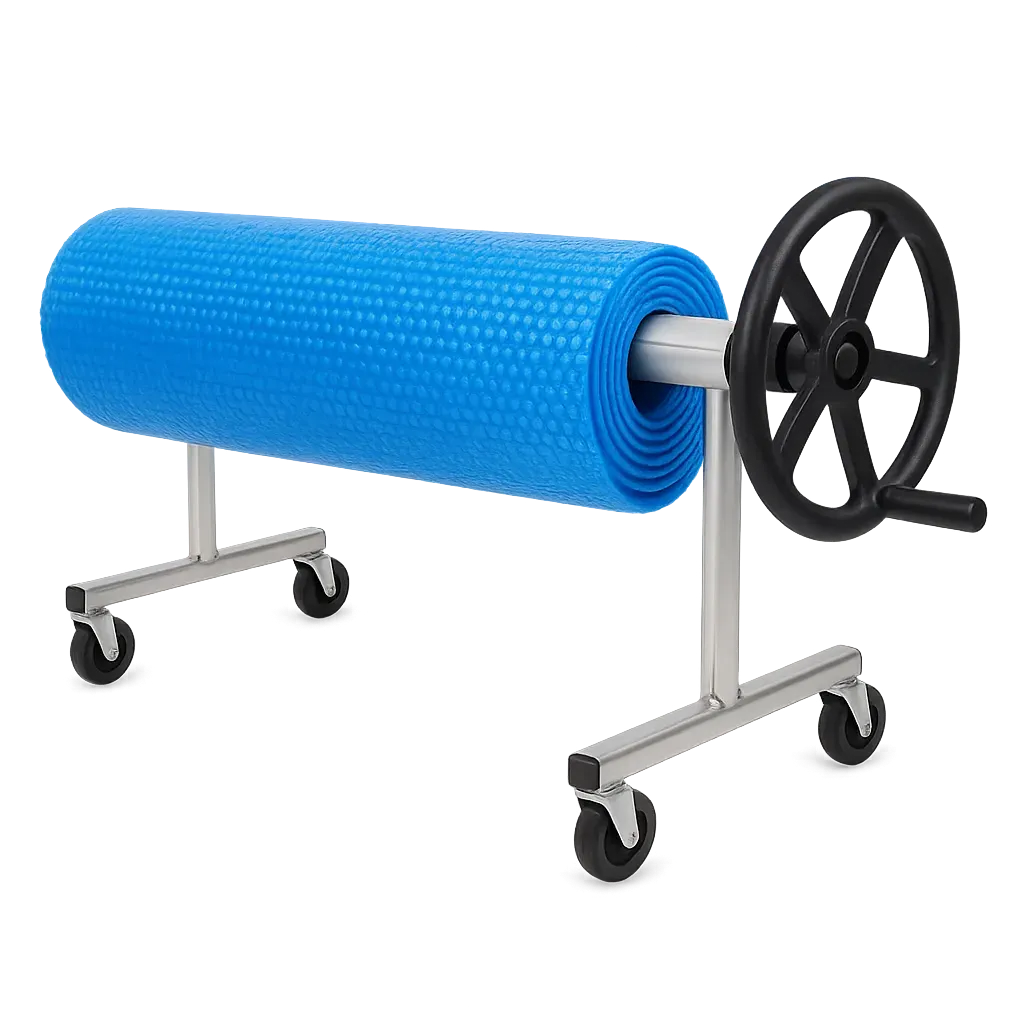
3mm Daisy Thermal Blanket with Stainless Steel Roller
$2,190 supplied & installed
3mm Daisy Thermal Blanket with Stainless Steel Roller
$2,540 supplied & installed
3mm Daisy Thermal Blanket with Stainless Steel Roller
$2,840 supplied & installed
3mm Daisy Thermal Blanket with Stainless Steel Roller
$3,140 supplied & installed
Live pricing from our quoting system, sized to each pool model in the range.
Prep for spring while you're at it
The best time to make spring reopening easy is right now, in winter — a pool that's been covered, circulated and balanced through the cool months reopens in an afternoon. Every winter shortcut you take instead shows up in September as green water, a stained waterline or a salt cell that's been quietly failing.
When the weather warms, lift the cover, run a full water test, bring your filtration hours back up, and rebalance to summer targets. If you've kept pH in range and held even a low chlorine reading all winter, that transition is minor. Neglect it and you're back to shock-dosing a cloudy pool and waiting days for it to clear.
None of this is complicated — it's the same discipline as summer at a lower volume. Keeping up your regular routine is what stops small winter drift from becoming a spring problem. The wider fibreglass pool maintenance schedule picks up where the winter routine leaves off, covering the tasks that return as the water warms.
FAQs
Do I need to winterise a fibreglass pool in Queensland?
Yes, but not in the cold-climate sense of draining and closing it. In South East Queensland the pool never freezes, so winterising means running your filter fewer hours, covering the pool, and keeping the water balanced through the cooler months. You're moving into a low-run mode, not shutting down.
How many hours should I run my pool pump in winter?
Around 4–6 hours a day is usually enough in SEQ winter, down from 8–12 in summer. The water is cooler and used less, so it needs less turnover — but it still needs circulation. Running the pump too little lets water stagnate and algae take hold, which costs more to fix than the power you'd save.
What chlorine level should I keep over winter?
Aim for 2–3 ppm free chlorine as a baseline, or 1–2 ppm if you run a salt chlorinator under a cover. The cover reduces UV loss and evaporation, so you can wind the output back and still hold sanitiser. Keep pH between 7.2 and 7.6 the whole time — that's the number that drifts most in winter.
Can algae grow in a pool during winter?
Yes. Algae grows more slowly in cool water, but reduced circulation and low use give it an opening, especially in shaded or low-flow areas. Fibreglass gelcoat resists it better than concrete, though it isn't immune. A start-of-winter clean, an algaecide dose and a light shock treatment every few days keep it in check.
Should I cover my fibreglass pool in winter?
Cover it whenever it's not in use. A cover cuts evaporation, keeps debris out, retains heat and lets you run less chlorine because it blocks UV. Over a SEQ winter that adds up to real savings on water, chemicals and reopening effort — and a well-fitted cover seals cleanly over a fibreglass shell's moulded shape.