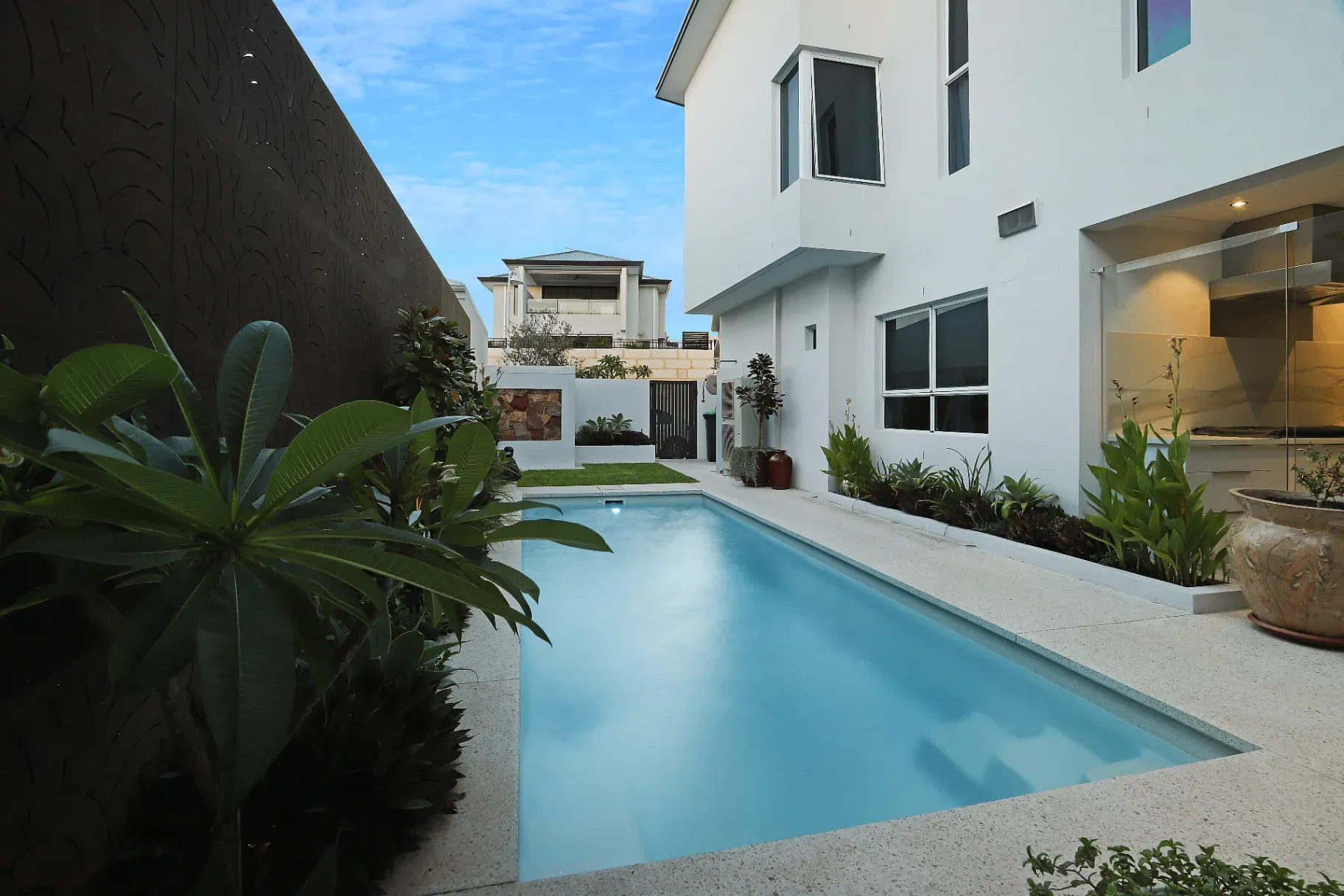
Environmentally Friendly Pools: Eco Options & Costs
How to build an environmentally friendly pool in South East Queensland — mineral water, solar heating, covers and low-energy pumps that cut chemicals and running costs.
Published · Updated
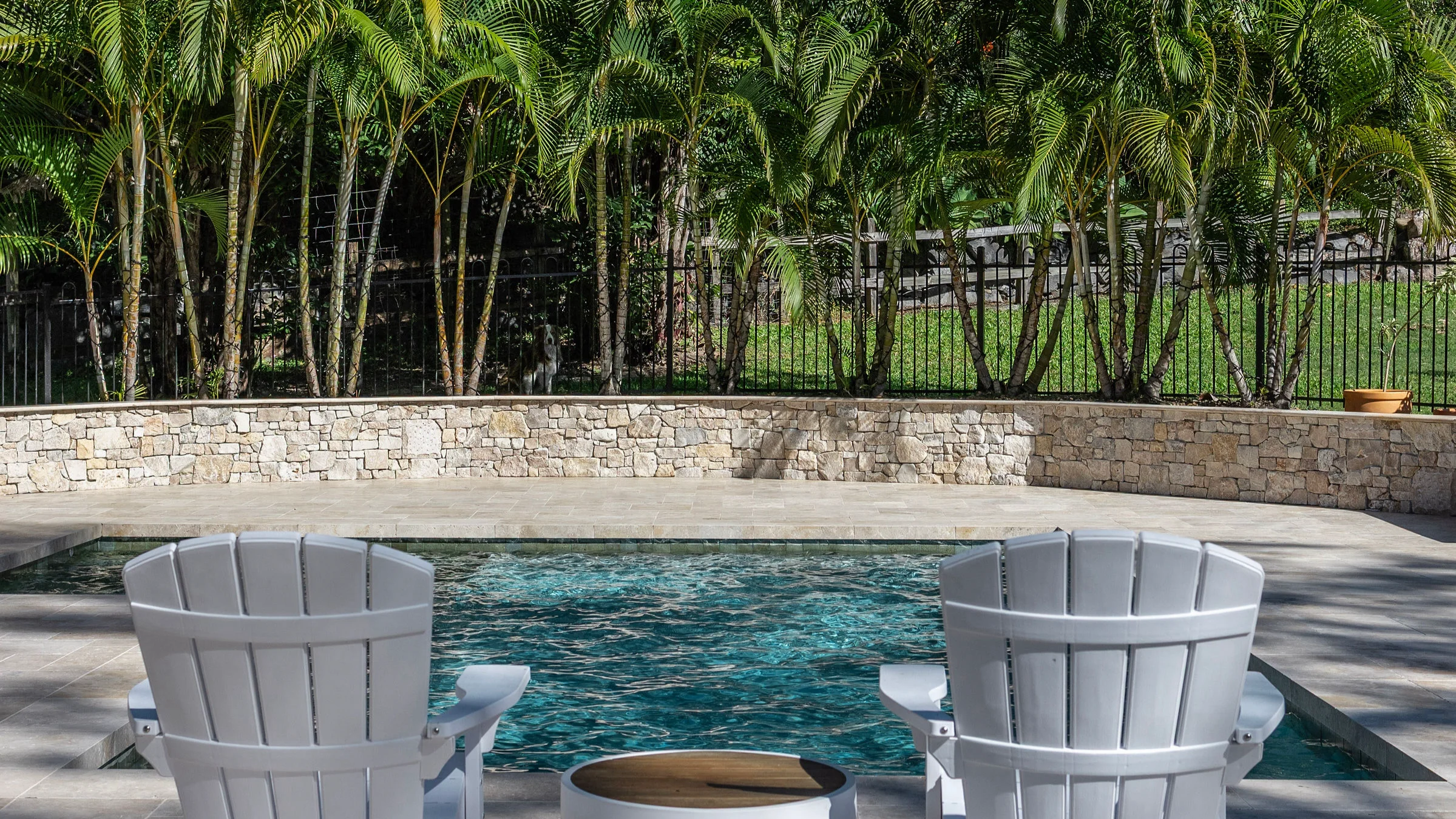
Direct answer
An environmentally friendly pool is one that uses less energy to run, loses less water to evaporation, and needs fewer harsh chemicals to stay clean and safe. That's the practical definition, and it's the one worth chasing — not a marketing badge, but a pool that costs less to keep every month and sits lighter on the backyard. In South East Queensland, where pools run close to year-round, those savings add up fast.
Much of the "chemical free swimming pool" talk online points to natural swimming pools, where reed beds and bacteria filter the water instead of a sanitiser. They're beautiful, but they're a different build entirely, and they're rare in Brisbane, the Gold Coast and the Sunshine Coast for good reason. For a family pool you actually swim in most days, the realistic path to sustainability is a well-specified fibreglass pool with the right water type, heating and equipment. Here's how each piece works.
What makes a swimming pool environmentally friendly?
The gains come from four levers: the water chemistry, the heat source, evaporation control, and the pump. Get all four right and the same pool that used to be a running-cost headache becomes genuinely cheap to own.
| Upgrade | What it reduces | Why it matters in SEQ |
|---|---|---|
| Mineral (magnesium) water | Harsh chlorine, skin and eye irritation | Softer water, gentler on kids and salt-sensitive plants |
| Solar heating | Gas and electricity for warmth | Long swim season on free rooftop heat |
| Pool cover | Water loss, heat loss, chemical burn-off | Cuts evaporation dramatically in our dry westerlies |
| Variable-speed pump | Filtration electricity | Runs slow and quiet most of the day |
None of these is exotic. They're standard options we fit on installs across Ipswich, Brisbane and the coasts — the difference is specifying them from the start rather than retrofitting later.
Can you have a chemical free or chlorine free pool?
A truly chemical free pool means a natural swimming pool with a planted regeneration zone, and that's a specialist build most families don't want to maintain. What most people actually want when they search for a chlorine free pool is water that doesn't sting the eyes, bleach the swimmers, or reek of chlorine on a hot afternoon. That's very achievable.
The honest version: mineral and magnesium systems cut the chlorine load right down rather than to zero, and the small amount that remains is generated on site from the minerals in the water instead of being tipped in from a drum. You get sanitised, safe water without the harsh edge. It's the closest thing to a chlorine free experience that still keeps a busy family pool reliably clean.
Fibreglass helps here in a way concrete can't. The gelcoat surface is non-porous, so algae and biofilm have far less to cling to. A porous concrete or rendered interior gives algae a foothold in every micro-pore, which is why those pools tend to demand more sanitiser to stay ahead of it. Less surface for algae means less chemical to fight it — a quiet sustainability win baked into the shell itself.
Magnesium mineral water is the low-chemical path
Magnesium mineral water is the most popular sustainable water type we install, because it softens the swimming experience while cutting the chemical dose. The blend usually pairs magnesium and potassium minerals with a small amount of salt, and a mineral chlorinator makes sanitiser on demand from that water rather than from added chlorine.
Swimmers notice it immediately — no red eyes, no dry skin, no chemical smell clinging to towels. The backwash water is also gentler on gardens and lawns, so what leaves the pool doesn't scorch the beds around it. If a lower-chemical, softer-water pool is the goal, magnesium mineral water is where most SEQ families land.
Solar heating cuts the biggest energy cost
Heating is the single largest energy cost of owning a pool, and solar is the cheapest way to carry it. Roof-mounted solar collectors use the pump you already run to push pool water through black tubing on the roof, where the sun warms it before it returns to the pool. The only extra electricity is a slightly longer pump run — no gas, no element, no monthly heating bill.
In our climate a solar system can add weeks to each end of the swim season, pushing comfortable water into spring and autumn without touching a gas heater. Pair it with a cover overnight and the collected heat actually stays in the pool instead of radiating off after dark. Collector types, sizing and pump interaction all shape how much heat a solar pool heating system delivers.
Gas and electric heat pumps have their place for winter or a spa, but as the primary warmth for a family pool, rooftop solar is the one that keeps the pool green in both senses.
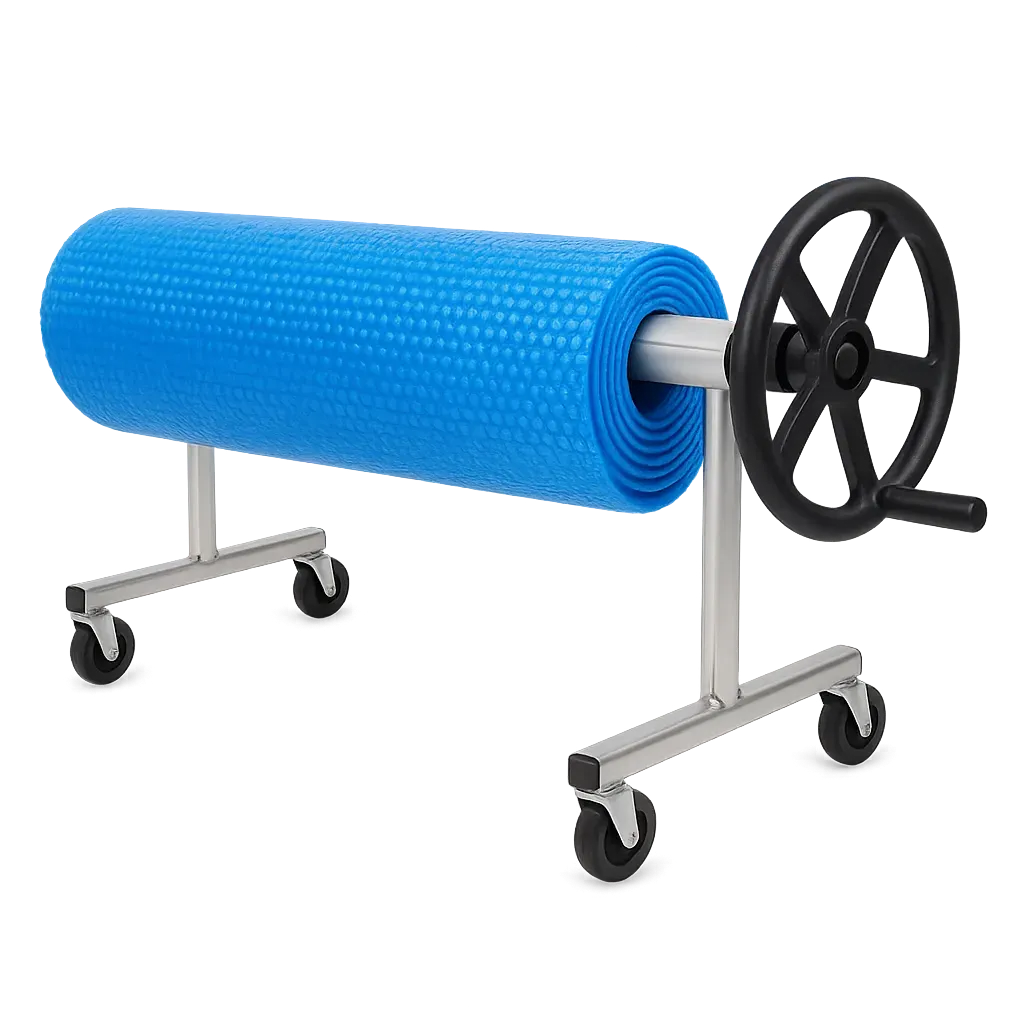
3mm Daisy Thermal Blanket with Stainless Steel Roller
$2,190 supplied & installed
3mm Daisy Thermal Blanket with Stainless Steel Roller
$2,540 supplied & installed
3mm Daisy Thermal Blanket with Stainless Steel Roller
$2,840 supplied & installed
3mm Daisy Thermal Blanket with Stainless Steel Roller
$3,140 supplied & installed
Live pricing from our quoting system, sized to each pool model in the range.
A pool cover is the cheapest sustainability upgrade
A pool cover does more for water and energy savings, dollar for dollar, than any other single item. Left uncovered, a pool in the SEQ summer loses a startling volume of water to evaporation — especially through the hot, dry westerly afternoons — and every litre that evaporates carries heat and chemical away with it.
A cover cuts that evaporation right back, holds daytime warmth overnight, and blocks the UV that burns off chlorine, so the sanitiser you do use lasts longer. Less top-up water, less heat lost, less chemical consumed — three savings from one piece of equipment. For a household watching both the water bill and the power bill, it pays for itself quickly.
Variable-speed pumps run cheaper and quieter
A variable-speed pump is the standard we recommend because it slashes filtration electricity compared with an old single-speed unit. Single-speed pumps only run flat-out, drinking power the whole time. A variable-speed pump turns down to a slow, efficient filtration speed for most of the day and only ramps up when it needs to — for cleaning or running solar.
The energy difference over a year is substantial, and the pump runs noticeably quieter at low speed, which neighbours in tight Gold Coast and Brisbane blocks appreciate. It's the equipment upgrade with the shortest payback of the lot.
The fibreglass shell is the long game
Sustainability isn't only about running costs — it's about how long the pool lasts before it needs rebuilding. A fibreglass shell is manufactured once in a factory and installed in a day, and a quality shell like the Aqua Technics range we install is engineered to hold its surface and structure for decades. There's no interior to resurface every seven to ten years the way a concrete pool needs, and no liner to replace like a vinyl pool.
The non-porous gelcoat that keeps algae at bay also means the pool stays smooth and easy to clean across its whole life, so the low-chemical, low-effort character holds up rather than degrading. A pool you install once and keep for thirty years is, in the end, the most sustainable pool of all — every rebuild avoided is materials, water and energy saved.
Building a sustainable pool in South East Queensland
Put the pieces together and a genuinely eco-friendly pool in Brisbane, Ipswich or on the coast looks like this: an Aqua Technics fibreglass shell for longevity and a clean surface, magnesium mineral water for soft, low-chemical swimming, rooftop solar as the main heat source, a cover to lock in the heat and water, and a variable-speed pump doing the daily filtering. Spec them together at build time and none of it is a retrofit compromise.
Sustainable pools aren't a future promise — they're a set of choices you make on the day you order the pool. The exact heating size and equipment we'd recommend depends on your block, orientation and how you'll use the pool, and that's confirmed in your quote once we measure the site. Get it right at the start and you own a pool that's cheaper to run, kinder to swim in, and built to last.
FAQs
Can a fibreglass pool be completely chlorine free?
Not completely, if you want it to stay reliably safe for a busy family. A magnesium mineral system gets close by cutting the chlorine load right down and generating the small remaining amount on site from the minerals in the water, so there's no harsh chlorine smell or sting. A truly chlorine free result means a natural swimming pool with a planted filtration zone, which is a specialist build most households don't want to maintain.
What is the most environmentally friendly way to heat a pool in SEQ?
Rooftop solar heating. It uses the pump you already run to warm pool water on the roof, with no gas and almost no extra electricity, and our climate suits it well enough to add weeks of comfortable swimming to each end of the season. Adding a cover overnight keeps that collected heat in the water instead of losing it after dark.
Do mineral pools cost more to run than chlorine pools?
Running costs are broadly comparable, and often lower once you factor in the softer water needing fewer harsh additives. The mineral blend costs a little to top up, but you buy far less bagged chlorine and acid, and the gentler water is easier on equipment, plants and swimmers. The magnesium pool guide breaks down the ongoing figures.
How much water does a pool cover actually save?
A cover cuts evaporation dramatically, which is significant in SEQ where hot, dry afternoons pull a lot of water out of an uncovered pool. Alongside the water, a cover holds heat overnight and blocks the UV that burns off sanitiser, so you also spend less on heating and chemicals. It's the fastest-paying sustainability upgrade you can fit.
Are fibreglass pools better for the environment than concrete?
Over their lifetime, generally yes. A fibreglass shell's non-porous surface resists algae so it needs less chemical to stay clean, and a quality shell lasts decades without the resurfacing a concrete pool needs every several years. Avoiding those rebuilds saves materials, water and energy, which makes longevity a real environmental factor, not just a convenience.