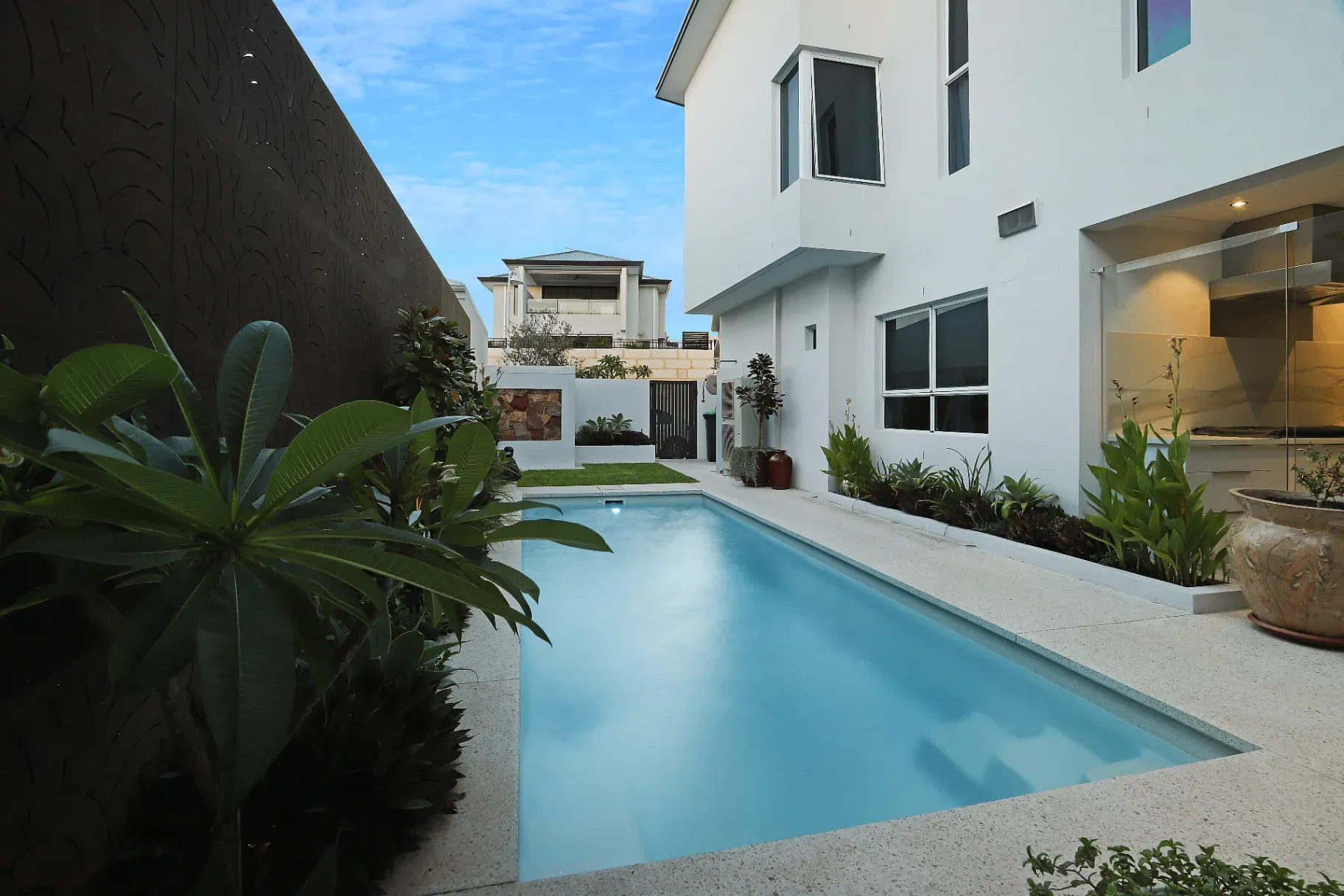
Fibreglass Lap Pools: Sizes, Prices & Small-Block Options
Lap pools from 7m to 11m with live installed prices, what makes a good swimming corridor, swim jets for small blocks, and fibreglass vs concrete for training pools.
Published · Updated
Direct answer
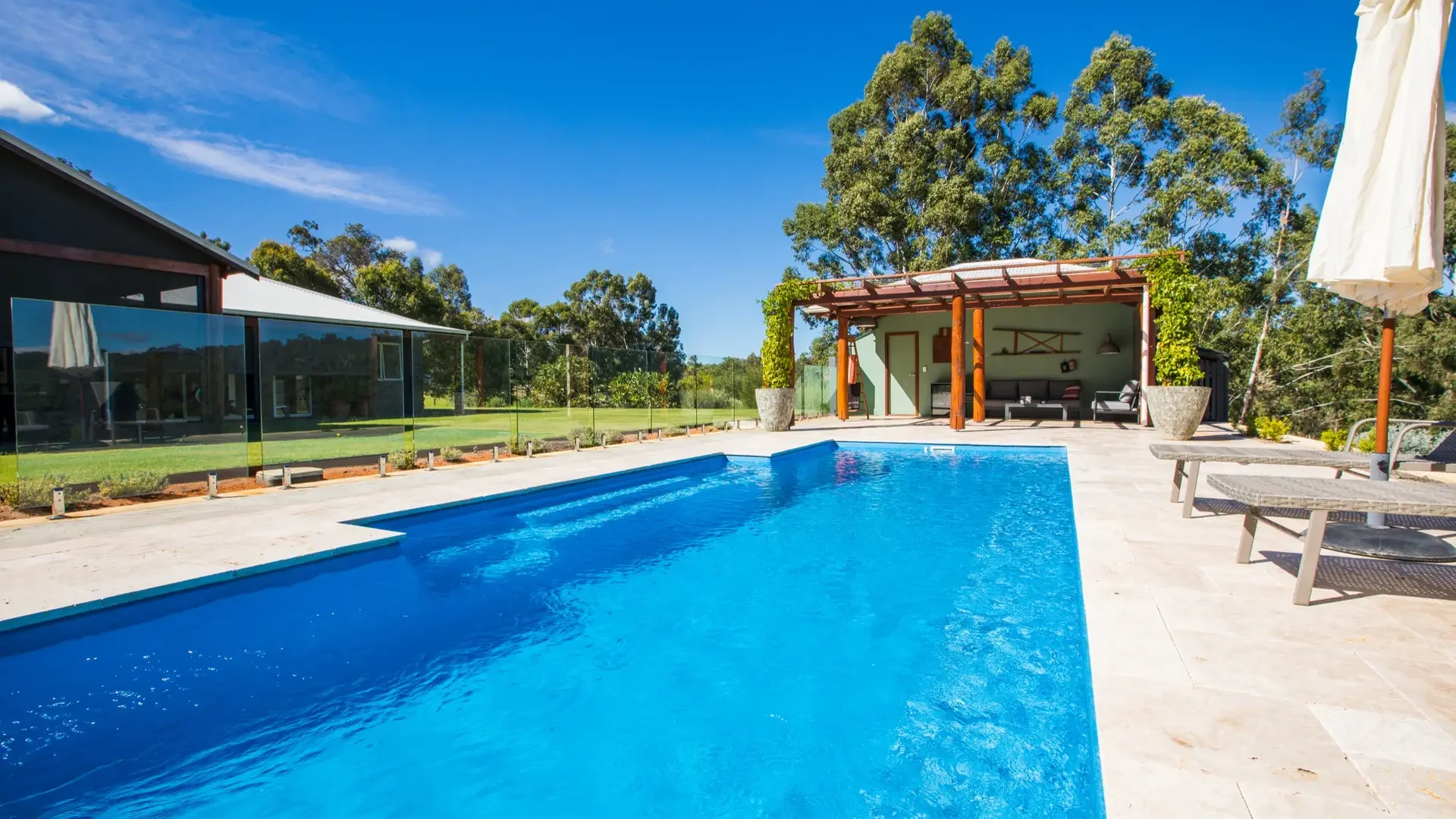
A lap pool doesn't need to be a 25-metre strip down the side of a tennis court. For real training at home, 7–11 metres of clear water with consistent depth does the job — especially paired with a swim jet — and fibreglass gets you there in weeks rather than the six-plus months a concrete lap pool takes. Here's what a lap pool costs installed in South East Queensland, the dimensions that actually matter, how to fit one on a narrow block, and the models we install for swimmers — with live prices.
What is a lap pool, exactly?
A lap pool is simply a pool designed around swimming rather than splashing: longer than it is wide, with a clear straight corridor, consistent depth, and entry steps kept out of the swim line. There's no official minimum length — a public lap pool is 25m or 50m, but a residential lap pool is anything that lets you hold a stroke rhythm, which in practice starts around 7 metres and gets genuinely good from 9 metres up. Shape matters more than raw size: plenty of "family" pools swim terribly because a wide entry staircase eats a third of the water.
Lap pool dimensions: length, width and depth standards
Three numbers define how a lap pool swims. Here's how to think about each.
Length
| Length | What it swims like |
|---|---|
| 5–7m | Fitness swimming with a swim jet; 3–4 strokes wall to wall without one |
| 8–9m | Honest lap swimming opens up — enough water to settle into a stroke |
| 10–12m | Proper home training length; tumble-turns feel worthwhile |
| 15m+ | Concrete/custom territory — rare on residential blocks |
Width
The practical minimum is about 2 metres of clear water per swimmer. Our narrowest lap-friendly models run 2.5m wide — comfortable for one swimmer with room for a stroke that isn't perfectly straight. At 3m (Sheffield) there's margin for a second casual swimmer; at 4m (Kensington) two people can train abreast, or the pool doubles as a full family pool between sessions.
Depth
Around 1.2–1.6m of consistent depth is the sweet spot: deep enough to tumble-turn and kick without your hands dragging the floor, shallow enough to stand up anywhere and rest between sets. A steeply sloping "diving" profile is actually worse for lap swimming than a flatter one.
Our lap-friendly range — live installed prices
These are the long, narrow and geometric models in our Aqua Technics range best suited to swimming, from compact fitness pools to the full 11-metre Kensington.
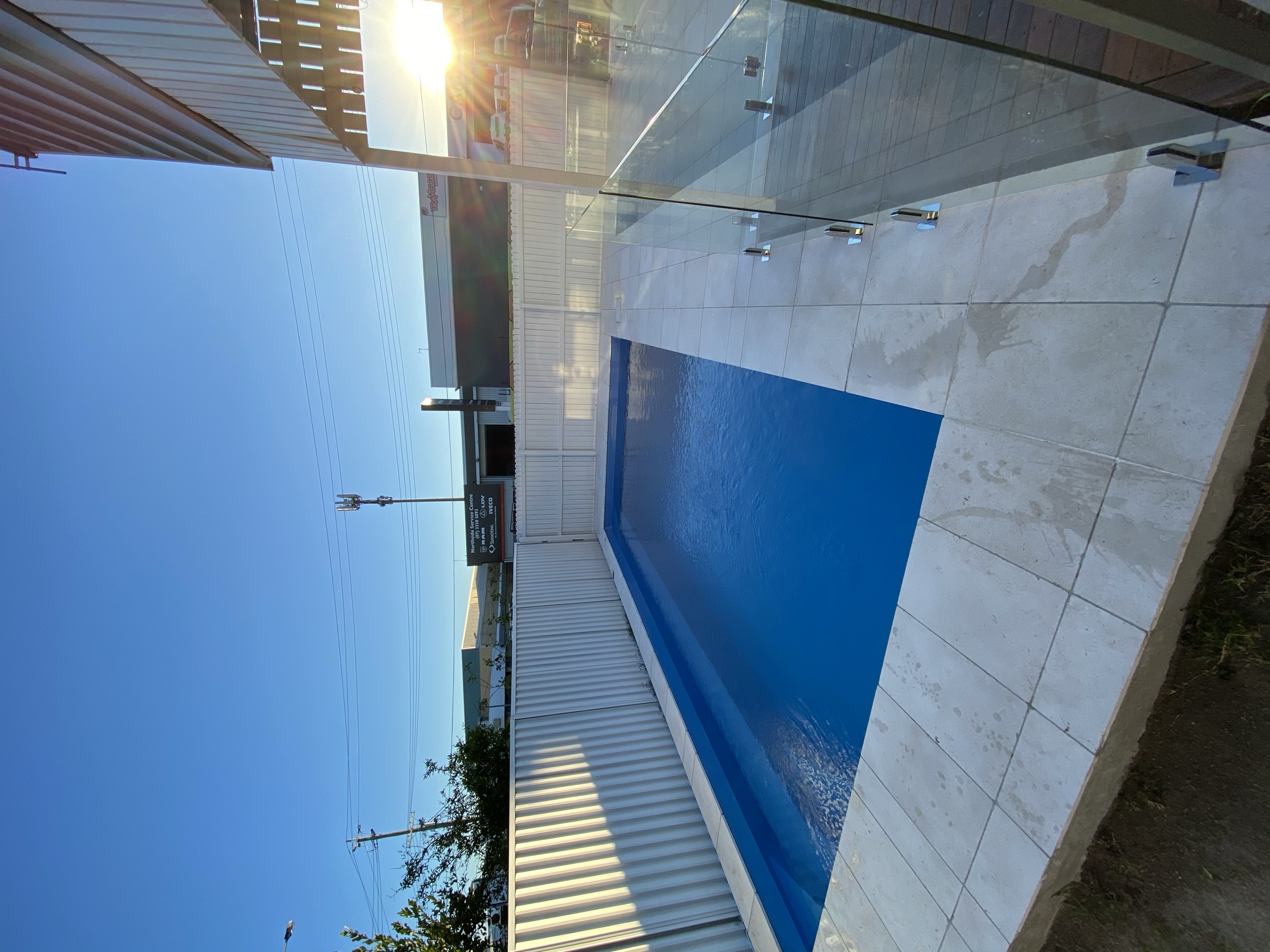
Florentina
From $57,121The Florentina's slim 6.5m x 2.5m profile is built for narrow blocks, giving you room to swim with a 1.1m-1.7m depth that suits the whole family.
View pool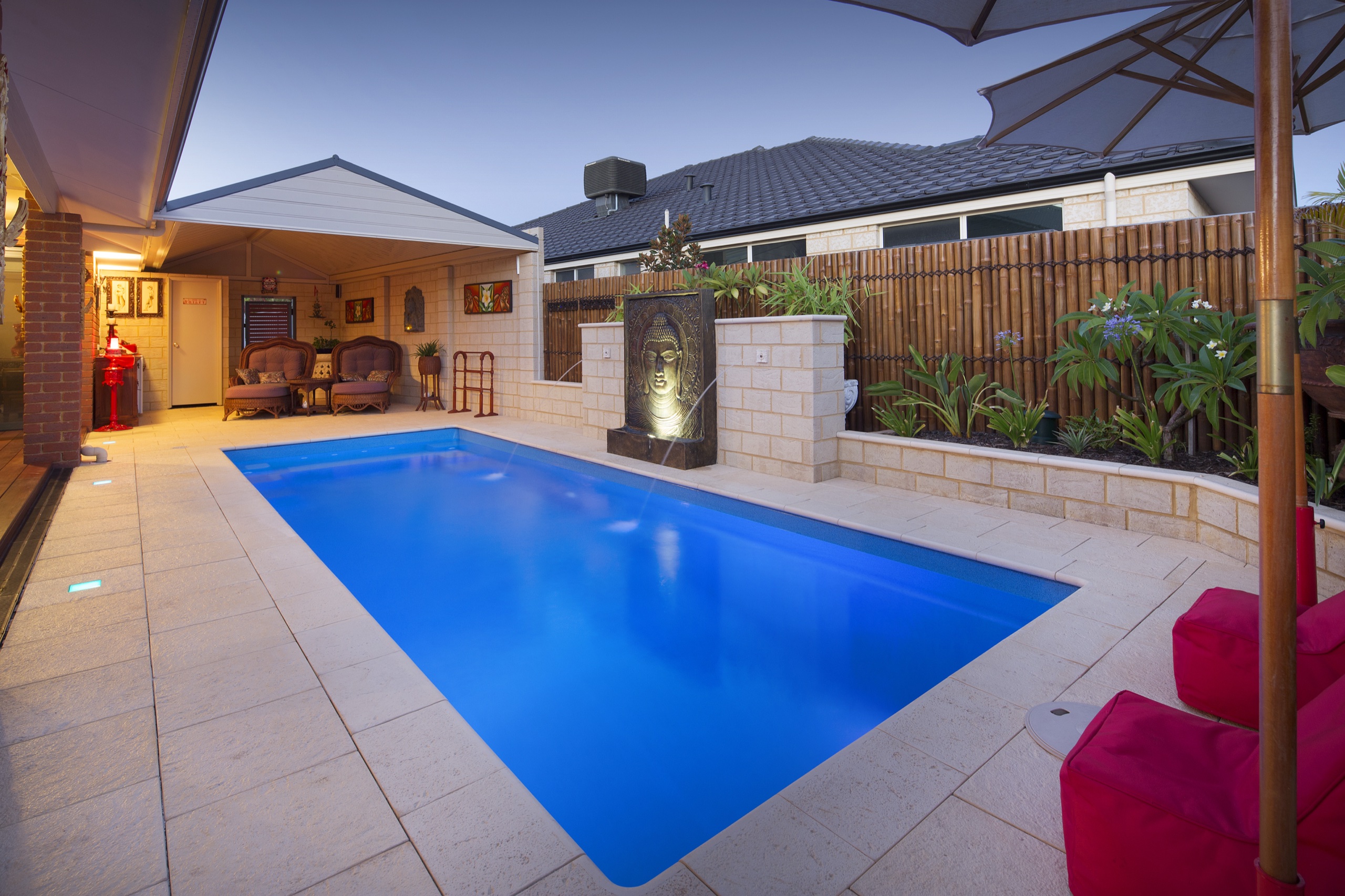
Harmony
From $57,837The Harmony's 7m x 2.5m lines glide along narrow blocks beautifully, with a 1.1m-1.85m depth giving you a true lap pool without the width.
View pool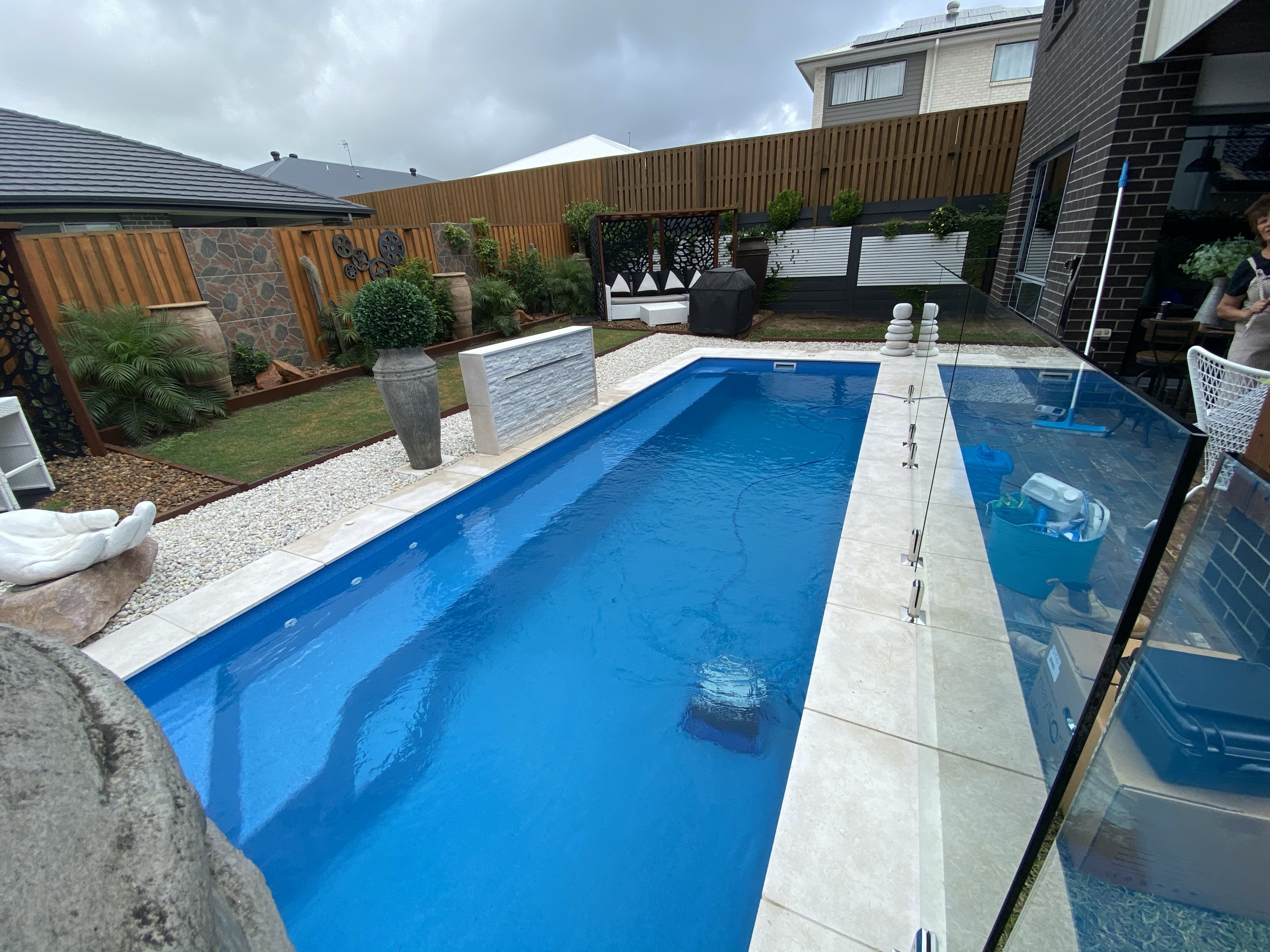
Bellagio
From $60,475At 7.5m x 2.5m, the Bellagio offers a long, narrow swimming corridor for tight side yards, deepening to 1.8m for a satisfying end-to-end lap.
View pool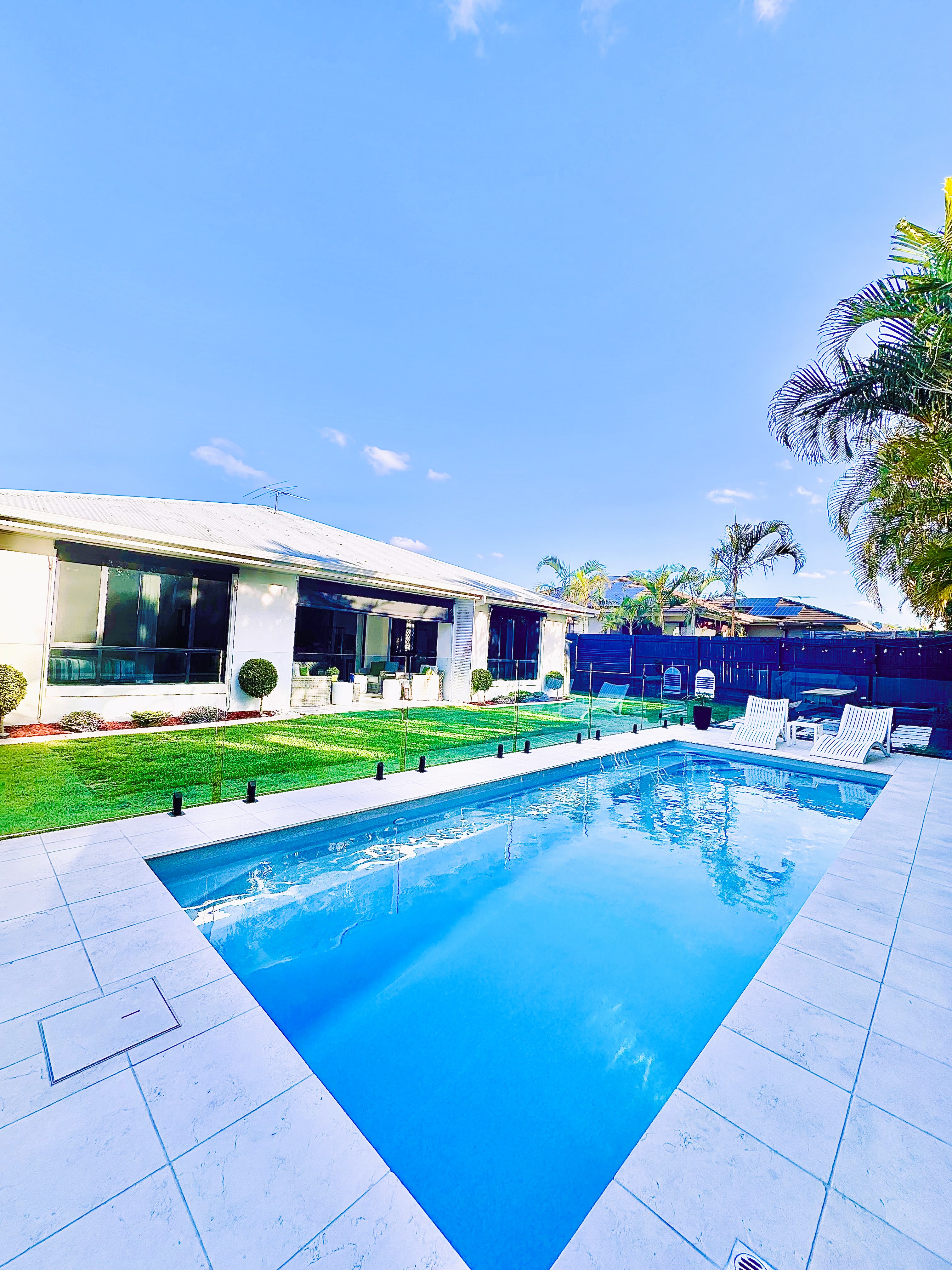
Sheffield
From $63,500The Sheffield's roomy 8m x 3m design deepens to 1.96m, giving keen swimmers a long, satisfying lap while the 0.98m shallow end stays family-friendly.
View pool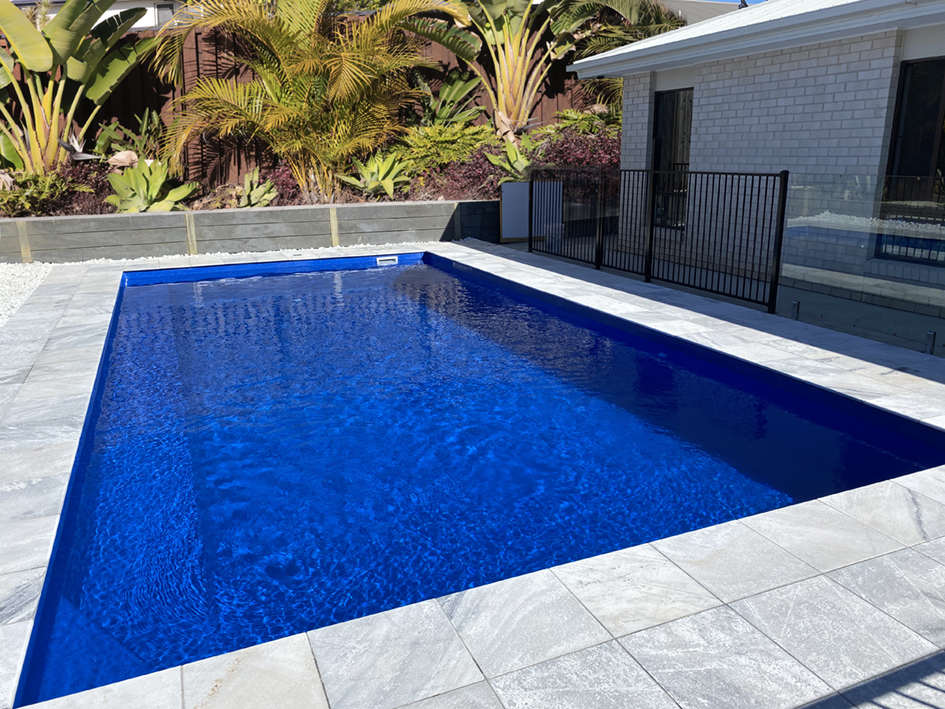
Kensington
From $81,973The Kensington's vast 11m x 4m shape is the ultimate lap and family pool, reaching a full 2m deep end while shallows keep little swimmers safe.
View poolPrices are live all-inclusive installed prices (pool, standard installation, filtration and handover) for standard site conditions in South East Queensland.
All prices are live, all-inclusive installed figures — excavation, crane, premium filtration, mineral chlorinator, LED lighting, council approval fees, engineering certification and lifetime warranties included. The only extras are fencing and landscaping, plus any site-specific conditions (rock, tight access, slope) which we price at a free site visit before you sign anything.
How much does a lap pool cost in Australia?
For a fibreglass lap pool fully installed in South East Queensland, budget roughly $60,000–$85,000 depending on length — our 11m Kensington, the longest shell in the range, installs from about $81,500. The live cards above show current pricing per model.
Where the money actually goes on an installed lap pool:
| Component | Typical share of the job |
|---|---|
| Shell (manufacture + freight) | The largest single line — scales with length |
| Excavation + crane | Long, narrow digs need careful access planning |
| Filtration, chlorination, lighting | Included in our installed price |
| Council approval + engineering | Included in our installed price |
| Fencing | Excluded — priced separately to suit your barrier layout |
| Heating (optional) | From about $4,100 for a heat pump, installed |
Concrete lap pools typically start around $90,000–$120,000 and climb quickly with length — you're paying for months of on-site forming, spraying, rendering and tiling rather than a factory-built shell craned in over a morning. If the budget is tight, finance from around $150/week is available through Handypay.
Fibreglass vs concrete for lap pools
Concrete's pitch is unlimited length. If you want 15m+, concrete is genuinely your option. Under 11 metres, fibreglass wins on every other axis:
- Speed: 10–12 weeks from first chat to swimming, versus 6–12 months for concrete — the shell itself is craned in and swimmable within days.
- Surface: smooth gelcoat is kinder on shoulders brushing the wall through a turn, and doesn't chew swimwear the way pebblecrete does over a 2km session.
- Thermal performance: fibreglass insulates better than concrete — a real saving on a heated training pool running all winter.
- Price: significantly lower installed cost, no re-rendering or re-tiling later, and Aqua Technics shells carry a Lifetime Structural Warranty and Lifetime Interior Surface Guarantee.
Small block? Swim jets turn 6 metres into endless water
If your block can't take 8+ metres, a swim jet (counter-current unit) turns even a 5–7m pool into a treadmill for swimming: an adjustable current you swim against, holding position while the water moves past you. It converts a compact pool like the Florentina or Harmony into unlimited training length.
A few things worth knowing before you buy one:
- Adjustability matters. A good unit dials from a gentle recovery pace up to a current that will humble a club swimmer.
- It's cheaper than length. A swim jet costs far less than the extra excavation, shell size and concrete surround of going two metres longer — and it doubles as resistance for aqua-jogging and rehab work.
- Plan it at design stage. Retrofitting is possible, but plumbing the unit during installation is cleaner and cheaper. Raise it at your free site visit.
Lap pool vs swim spa: which one for training?
Swim spas — self-contained heated tubs around 4–6m with built-in jets — get cross-shopped against lap pools constantly. The honest comparison:
| Fibreglass lap pool + swim jet | Swim spa | |
|---|---|---|
| Swim feel | Real open water; option to swim actual laps | Jet current only; turbulence in a short tub |
| Footprint | Needs 6m+ of yard | Fits on a large patio or deck |
| Family use | Doubles as a proper pool | Cramped for more than 2–3 people |
| Heating | Heat pump + blanket; bigger volume to heat | Small insulated volume, quick to heat |
| Lifespan & value | Permanent in-ground asset, lifetime shell warranty | An appliance — components wear like a spa's |
If you genuinely can't excavate — rock shelf, no crane access, a rental — a swim spa is the fallback. If you can get 6m of pool in the ground, most swimmers who try both prefer real water.
Heating a lap pool for year-round training
Swimmers use their pools year-round, which makes heating near-mandatory — a training pool sitting at 16°C in July is a very expensive pond. The combination that works in SEQ is a properly sized heat pump plus a thermal blanket.
A heat pump holds a steady 27–28°C training temperature through a Brisbane winter far more efficiently than gas. Sizing matters more on lap pools, because long narrow shells have a lot of surface area for their volume.
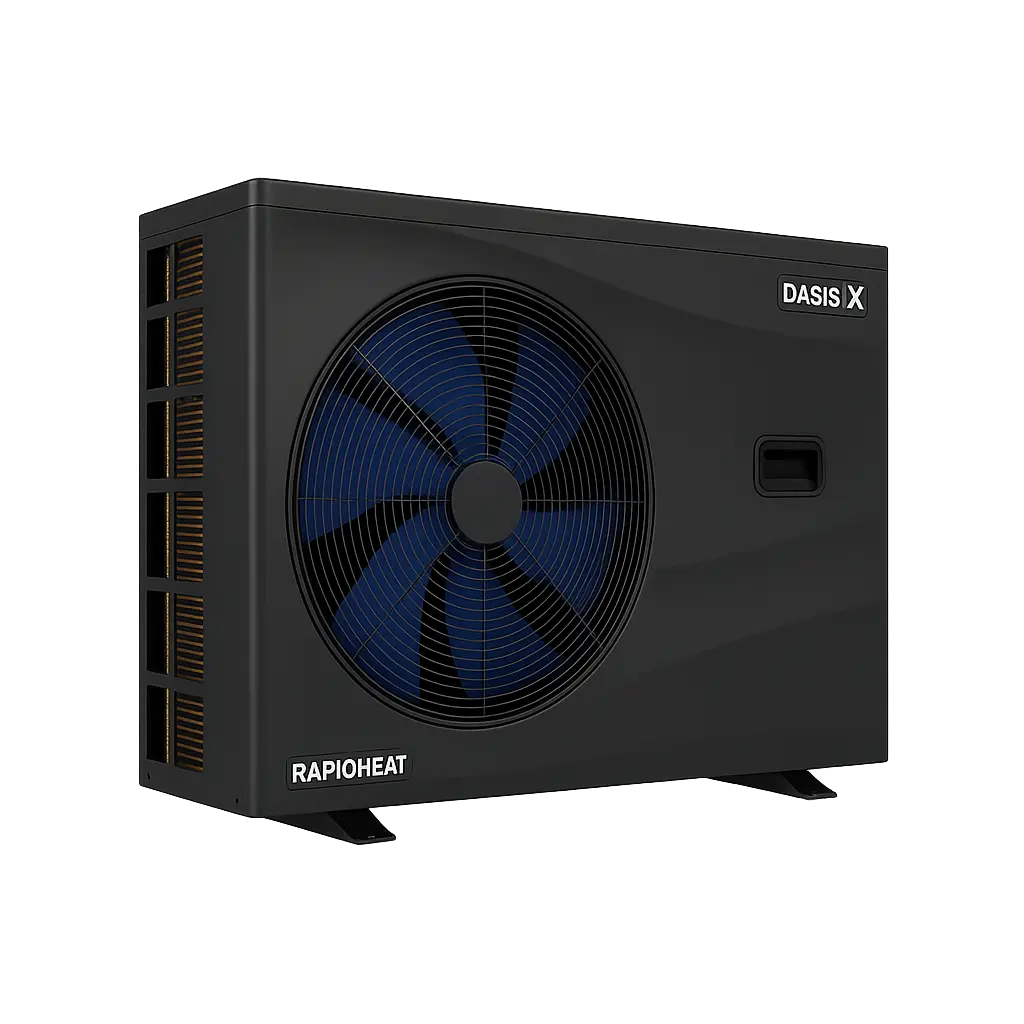
Sunlover Oasis 9kW
$4,125 supplied & installed
Sunlover Oasis 13kW
$5,220 supplied & installed
Sunlover Oasis 19kW
$7,150 supplied & installed
Sunlover Oasis 24kW
$10,550 supplied & installed
Live pricing from our quoting system — the same numbers you'd see on an MFP Easy proposal.
The blanket is the highest-ROI accessory there is: most heat loss is evaporation off the surface, and covering it typically cuts heating costs dramatically. On a long narrow pool, get the roller — dragging 11 metres of blanket by hand gets old by week two.
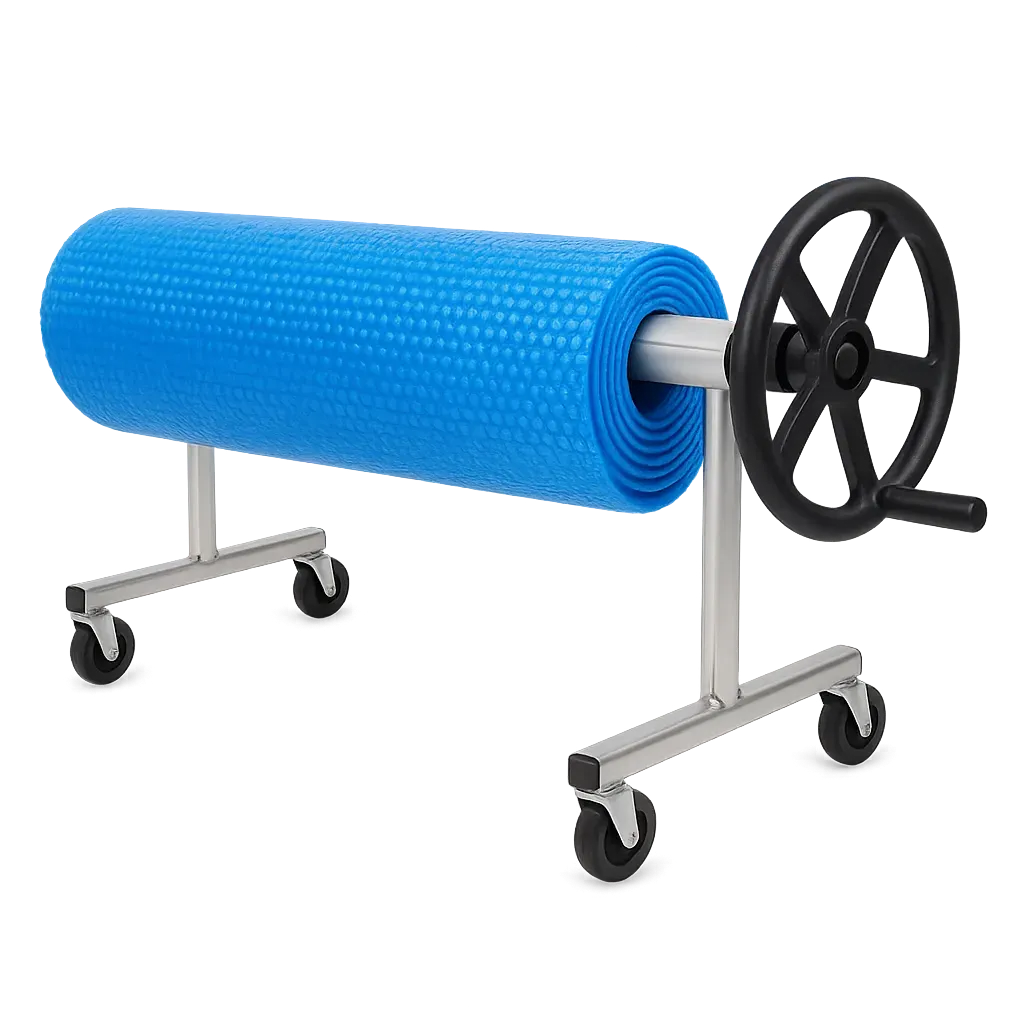
3mm Daisy Thermal Blanket with Stainless Steel Roller
$2,190 supplied & installed
3mm Daisy Thermal Blanket with Stainless Steel Roller
$2,540 supplied & installed
3mm Daisy Thermal Blanket with Stainless Steel Roller
$2,840 supplied & installed
3mm Daisy Thermal Blanket with Stainless Steel Roller
$3,140 supplied & installed
Live pricing from our quoting system, sized to each pool model in the range.
Heat pump sizing drives the pool heating costs you actually pay each winter, and the pool cover you choose decides how much of that heat you keep overnight.
Fitting a lap pool on a narrow block
Lap pools are the natural fit for the narrow SEQ infill block — a 2.5m-wide shell runs down a side boundary that would fit nothing else. What we look at during the site visit:
- Boundary setbacks and easements. Sewer and stormwater easements often dictate which side of the block the pool can sit on. We handle the council approval, included in the installed price.
- Crane access. A long shell coming in over the house needs the right crane position; tight-access sites are priced upfront, never as a mid-job surprise.
- Fencing along the corridor. QLD rules apply to any pool deeper than 300mm: a barrier at least 1200mm high, gaps under 100mm, a 900mm non-climb zone, self-closing gates, and registration on the QLD pool register. On a boundary-run lap pool, the boundary fence itself often forms one compliant side.
- Slope. A sloping block can work in your favour, with the deep end sitting into the fall of the land.
Above-ground lap pools come up often in searches. They exist, but a partially in-ground fibreglass shell on a sloping block usually achieves the same result with better swim feel and a permanent structure.
We install across Brisbane, the Gold Coast, the Sunshine Coast and Ipswich with our own in-house crews — 250+ pools a year, and SPASA QLD's Best Fibreglass Pool Builder in 2021, 2023, 2024 and 2025.
FAQs
How long does a lap pool need to be?
For genuine lap training, 9 metres is a practical minimum — our Amalfi, Westminster and Kensington all qualify. For fitness swimming with a swim jet, anything from 5 metres works.
How much does a lap pool cost in Australia?
Fibreglass lap pools run roughly $60,000–$85,000 fully installed depending on length — exact live prices for each model are shown above. Concrete lap pools typically start around $90,000–$120,000 and go up quickly with length.
How wide should a lap pool be?
2.5–3 metres is comfortable for a single swimmer; 3.5–4 metres lets two people swim abreast or the family use it as a normal pool between sessions. Below about 2 metres of clear water, wall turbulence starts to interfere with your stroke.
How deep should a lap pool be?
A consistent 1.2–1.6m suits most swimmers: deep enough for tumble-turns and kick sets, shallow enough to stand anywhere and rest between efforts. You don't want a steep diving-profile floor in a training pool.
Is a swim spa as good as a lap pool for training?
They train different things. A swim spa's jet current works in a very small footprint, but the turbulence and confined water don't feel like real swimming. If your block can take a 6m+ in-ground pool, a fibreglass lap pool with a swim jet gives you both the current and genuine open water.
Can a lap pool double as a family pool?
Absolutely — models like the Kensington (11m × 4m) and Westminster (9m × 4m) are designed exactly for that: a clear swimming corridor plus bench seating and play space.
Do lap pools need heating in Queensland?
If you plan to train through winter, yes. Unheated SEQ pools drop well below comfortable training temperature from roughly May to September. A heat pump from about $4,100 installed plus a thermal blanket holds 27–28°C year-round at a sensible running cost — see the heating section above for sizing.