Pool Shapes and Sizes in Australia: The Complete Guide
Standard Australian backyard pools run 7m–8m. Compare fibreglass pool shapes and sizes, 3m rounds to 11m lap shells, with real installed prices.
Published · Updated
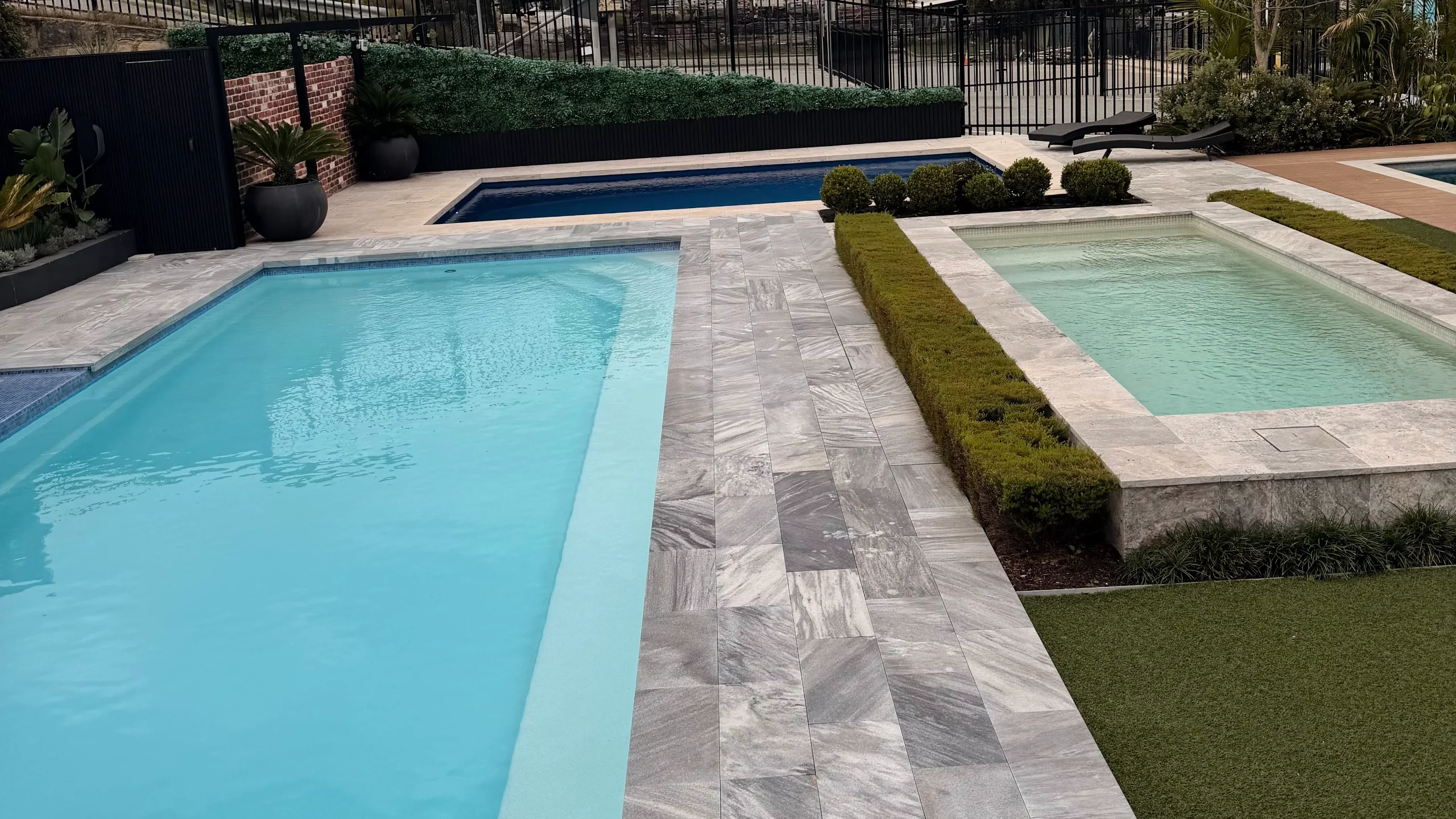
Fibreglass pool shapes in Australia come down to three geometric forms: rectangular pools — the overwhelming majority of what gets installed — round pools, and L-shaped pools. Fibreglass pool sizes run from 3m round shells to 11.48m lap shells. The standard Australian backyard pool is 7m–8m long: across the 250+ pools we install each year in South East Queensland, the largest single cluster of installs sits between 7.0m and 8.0m. Two questions settle both decisions — the space your yard can actually give up, and the swimming you plan to do in it. A pool for kids playing end-to-end needs different dimensions to a pool for a morning lap set, and a corner courtyard takes a different shape to a long side run. Every shape and size we manufacture carries an exact dimension and a current installed price band.
Pool shapes in Australia: what actually gets installed
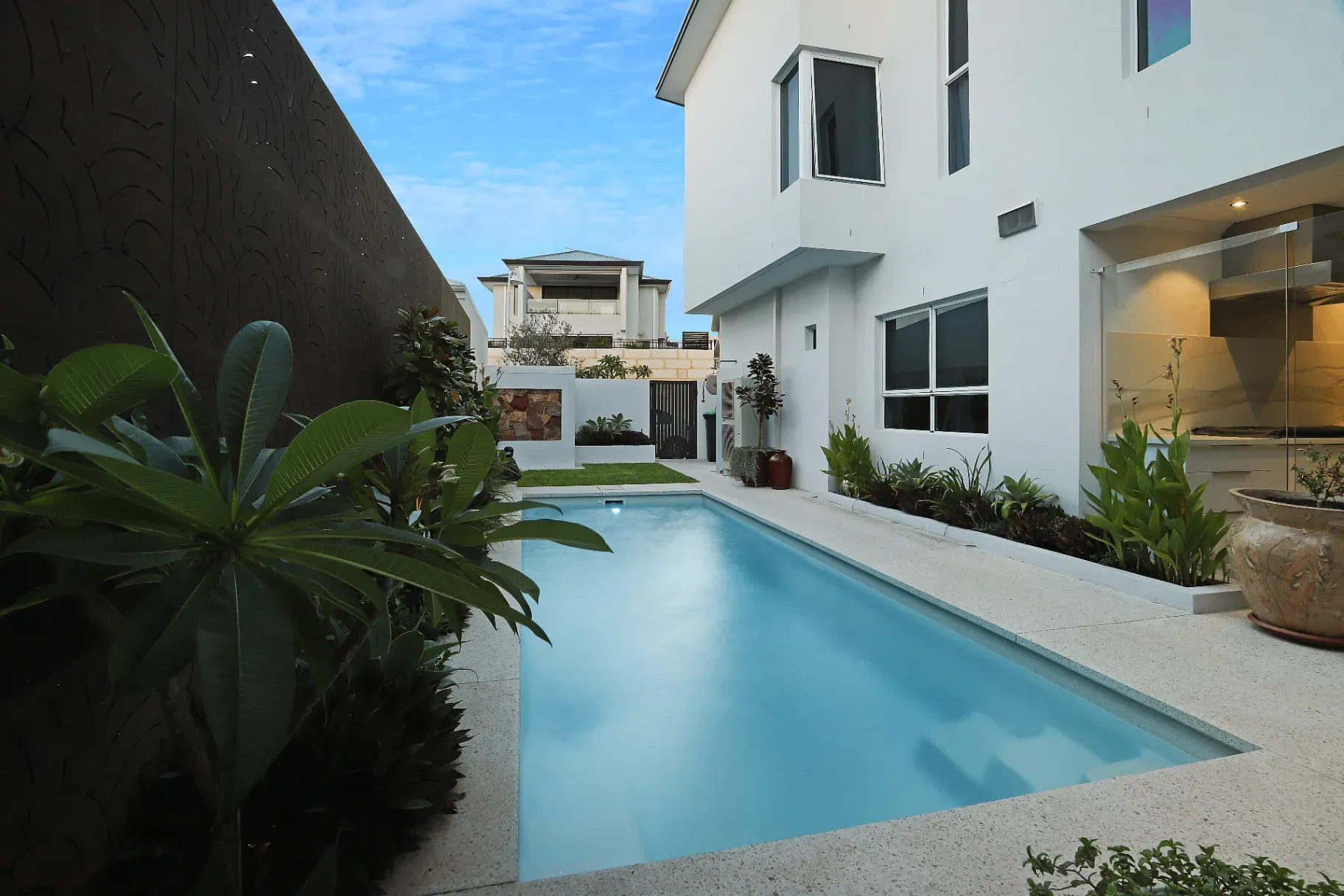
The rectangular pool is the dominant pool shape installed in Australian backyards. Of all the types of pools on the market, the rectangle keeps winning for structural reasons, not fashion: Australian blocks are rectangular, so a straight-sided shell runs parallel to a fence line and wastes none of the yard; a moulded rectangular shell carries a graded floor, entry steps and swim-outs; and a rectangle gives the longest unbroken swim line for its footprint. Rectangular fibreglass pools span our whole size range, from 4.0m shells to the 11.48m Saint Azur.
The round fibreglass pool is the rare shape. Moulding a circular shell that passes engineering certification is genuinely difficult, which is why we manufacture Australia's only design-certified round fibreglass shells — in 3m and 4m diameters. A round pool tucks into corners, courtyards and decked entertaining areas where a straight-sided shell would either dominate the space or not fit at all.
An L-shaped pool folds two pools' jobs into one shell: a long leg for swimming and a short leg for a shallow play zone or tanning ledge. The L wraps a corner of a house or deck, which is exactly where most of them end up installed.
Kidney and freeform pools are a concrete-era shape. Concrete is formed on site, so a builder can trace any curve the owner draws; a fibreglass shell comes out of a reusable factory mould, so fibreglass ranges — ours included — centre on geometric forms. If a true freeform outline is non-negotiable, that is a concrete project, with concrete's price and timeline attached.
Standard pool sizes in Australia
The standard Australian backyard pool is 7m–8m long. That figure comes from our own install base rather than an industry survey: the largest category cluster in what we put in the ground sits between 7.0m and 8.0m. Widths across the range run 2.0m to 4.0m, and width is the second decision length forces — it sets what the water is for as surely as length sets how far you can swim.
Our full catalogue by size category, with every model's length × width in metres:
| Category | Length range | Models (length × width, m) |
|---|---|---|
| Round | 3.0–4.0m | Infinity 3 (3.0×3.0), Infinity 4 (4.0×4.0) |
| Small | 3.2–5.5m | Bastia (3.2×2.0), Malta (4.0×2.0), Elba (4.0×2.0), Serenity (4.0×2.5), Verona (4.5×2.5), Latina (4.5×3.5), Allure (5.0×2.5), Sovereign (5.0×2.7), Paradiso (5.5×2.15), Portofino (5.5×2.5) |
| Medium | 6.0–7.0m | Empire (6.0×3.0), Positano (6.0×3.2), Saint Luxe (6.0×3.2), Avellino (6.0×4.0), Istana (6.2×3.3), Sentosa (6.5×2.15), Florentina (6.5×2.5), Bellino (6.5×3.6), Messina (7.0×2.0), Harmony (7.0×2.5), Oxford (7.0×3.0), Palazzo (7.0×3.5), Imperial (7.0×4.0) |
| Large | 7.2–8.0m | Terazza (7.2×3.3), Bellagio (7.5×2.5), Castello (7.5×3.6), Bedarra (7.5×3.8), Saint Remy (7.6×3.6), Sheffield (8.0×3.0), Valentina (8.0×4.0) |
| Lap | 8.25–11.48m | Grandeur (8.25×4.0), Elysian (8.3×3.3), Hayman (8.5×3.8), Amalfi (9.0×3.6), Westminster (9.0×4.0), Saint Louis (9.5×4.0), Kensington (11.0×4.0), Saint Azur (11.48×4.0) |
The width columns in that table sort the range into two working groups. Our narrowest shells — the Malta (4.0×2.0), Messina (7.0×2.0), Paradiso (5.5×2.15), Sentosa (6.5×2.15), Serenity (4.0×2.5), Verona (4.5×2.5), Allure (5.0×2.5), Portofino (5.5×2.5), Florentina (6.5×2.5), Harmony (7.0×2.5) and Bellagio (7.5×2.5), all 2.5m wide or under — are drawn for boundary runs and side returns, where the swim line matters more than open water. Our 4.0m-wide shells — the Infinity 4 (4.0×4.0), Avellino (6.0×4.0), Imperial (7.0×4.0), Valentina (8.0×4.0), Grandeur (8.25×4.0), Westminster (9.0×4.0), Saint Louis (9.5×4.0), Kensington (11.0×4.0) and Saint Azur (11.48×4.0) — put lounging room beside the swim line: open water for floating and play while someone swims past. The 3.0m–3.8m shells between them, like the Oxford (7.0×3.0) and Bedarra (7.5×3.8), split the difference.
Read the table backwards from your yard, not forwards from the biggest number. A 7.0×3.0 Oxford needs the 21 square metres of water plus surrounding coping, a compliant barrier and boundary clearance — the shell is the smallest part of the footprint. Buyers who start from "the biggest pool that fits" routinely end up a size down once the barrier and paving are drawn on the plan.
Is a 6m pool too small?
A 6m pool is not too small — 6m is the start of our medium range, and medium pools are the workhorse of Australian backyards. The Empire (6.0×3.0) and Avellino (6.0×4.0) open the category; the Avellino's 4m width holds the same water area as many 7m shells, just packaged shorter for a squarer yard. Medium is also the deepest bench in our range: thirteen models sit between 6.0m and 7.0m — the Empire, Positano (6.0×3.2), Saint Luxe (6.0×3.2), Avellino, Istana (6.2×3.3), Sentosa (6.5×2.15), Florentina (6.5×2.5), Bellino (6.5×3.6), Messina (7.0×2.0), Harmony (7.0×2.5), Oxford (7.0×3.0), Palazzo (7.0×3.5) and Imperial (7.0×4.0) — more than any other size category carries. That thirteen-model depth means a medium-pool buyer chooses between widths from 2.0m to 4.0m rather than settling for the one shell that fits.
What a 6m pool serves well: children playing end-to-end games, adults cooling off and doing water exercise, and a household of four or five swimming at once without collisions. Eighteen or more square metres of water is a genuine swimming pool, not a compromise. What a 6m pool does not serve is continuous stroke training — a swimmer turns every few strokes at that length, which is why lap swimmers shop from 8.25m up.
The cut-off runs on use. If the pool's job is play, cooling off and entertaining — which describes most pools we install — medium pools from 6.0m to 7.0m do that job completely.
Is a 7m pool big enough?
A 7m pool is big enough for almost every Australian household — 7m is the most popular pool length we install. It is the only length where our range carries five models: the Messina (7.0×2.0), Harmony (7.0×2.5), Oxford (7.0×3.0), Palazzo (7.0×3.5) and Imperial (7.0×4.0). That spread of widths at one length exists because demand concentrated there — a 7m shell fits the majority of suburban yards while giving adults a usable swim line and kids serious play space.
The width choice is the real decision at 7m. The Harmony's 2.5m width suits a narrow strip beside a boundary; the Imperial's 4.0m width holds 28 square metres of water. Same length, very different pools.
Where a 7m pool is not big enough: dedicated lap training, where an 8.25m-minimum lap shell earns its length. And where 7m is too much pool for the block, our round pools at 3m and 4m diameter put real water into yards a rectangle was never going to fit.
Pool sizes and prices
Length is the biggest price lever on a fibreglass pool — more metres means a bigger shell, a bigger dig, more spoil trucked off site and more concrete around the finished edge. The category bands below are the current installed prices from our own quoting, not shell-only figures.
| Pool size | Length | Depth | Installed from |
|---|---|---|---|
| Round pools | 3m to 4m | 1.45m level | $47,233 |
| Small pools | 4m to 5.5m | 1.0m to 1.78m | $46,053 |
| Medium pools | 6m to 7m | 1.0m to 1.88m | $55,003 |
| Large pools | 7.2m to 8m | 0.98m to 1.96m | $60,475 |
| Family pools | 8.25m to 11m | 1.0m to 2.0m | $69,428 |
Live all-inclusive installed pricing for standard site conditions in South East Queensland — updated straight from our quoting system.
Installed, the bands run: round pools $47,233–$58,385, small pools $46,053–$57,141, medium pools $55,003–$78,273, large pools $60,475–$83,332 and lap pools $65,534–$108,867 — and a two-minute price estimate for your own block narrows a band to a number, because slope, access and soil decide where inside the band your site lands. Neighbouring bands overlap: the dearest small pool, the Latina at $57,141, costs more than the cheapest medium, the Sentosa at $55,003. Stepping up a size category can cost less than adding site complexity to a smaller shell.
Matching shape and size to your block
Your block decides the shortlist before taste gets a vote. Every Queensland pool needs boundary clearance and a compliant safety barrier, so the usable pool zone is always smaller than the yard itself — we measure it at the free site assessment, and the exact clearances for your property are confirmed there rather than guessed from a plan.
Narrow blocks suit long, lean shells. A 2.5m-wide model — the Harmony, Bellagio or Florentina — runs down a side return or along a fence line and leaves the lawn intact, and a lap shell like the Elysian (8.3×3.3) or Hayman (8.5×3.8) uses a long boundary run that would otherwise carry nothing.
Small and steep blocks suit round shells. A 3m round pool needs a fraction of the level ground a rectangle demands, and a round shell arrives over the house by crane, so tight access that rules out machinery walking a long shell in stops mattering. Compact pools built for soaking rather than swimming — plunge pools — span our round and small categories, and they are how sloping inner-suburb blocks get real water without cutting large level terraces into the slope.
Square-ish yards take the classic rectangle centred on the entertaining area, and a corner block wrapping a deck is where the L-shaped shell fits: its two legs follow the two sides of the corner. The full range of fibreglass pool designs runs from a 3m round shell to an 11.48m lap run, and the footprints sit side by side so you can see which ones your block could carry.
Which pool shape is the most affordable?
The rectangular pool is the most affordable pool shape we install: our smallest rectangle, the 4.0m × 2.0m Malta, starts at $46,053 installed, and the 3m round Infinity 3 follows about $1,200 behind at $47,233. Both sit at the floor of the range for the same structural reason — a small shell means a smaller excavation, less spoil off site and a lighter crane lift, and every one of those savings lands in the installed price.
The rectangular pool is also the most affordable shape per metre of swimming. A rectangle's straight sides convert its whole footprint into usable swim line, so once the job is actual swimming rather than soaking, the rectangle delivers more pool for each dollar. At the top of the round range the two shapes converge again: the round band tops out at $58,385 installed, against $57,141 for the dearest small rectangle.
So shape is no longer the price decision it used to be. Cheapest pool, full stop: the 4m Malta rectangle. Cheapest swimming: a rectangle sized to your yard. A round pool now earns its place on where it fits, not on what it costs.
FAQs
What is the size of a standard Australian pool?
The standard Australian backyard pool is 7m–8m long and 2.5m–4m wide. Across the 250+ fibreglass pools we install each year in South East Queensland, the largest cluster of installs sits between 7.0m and 8.0m, which is why 7m carries more model options than any other length in our range. Smaller yards commonly take 4m–5.5m shells, and dedicated lap pools run from 8.25m to 11.48m.
What is the average size of a pool in Australia?
Across the fibreglass pools we install in South East Queensland, the largest category cluster sits between 7.0m and 8.0m long, with widths of 2.5m to 4.0m. That band covers our large category — the Terazza (7.2m × 3.3m) through the Valentina (8.0m × 4.0m) — plus the five 7.0m medium shells. Round and small pools of 3.0m–5.5m serve compact and sloping blocks, and lap pools from 8.25m to 11.48m serve swimmers who train.
What is the most popular size pool?
The 7m pool is the most popular size we install. It is the only length where our range carries five models — the Messina (7.0m × 2.0m), Harmony (7.0m × 2.5m), Oxford (7.0m × 3.0m), Palazzo (7.0m × 3.5m) and Imperial (7.0m × 4.0m) — because demand concentrated at that length. A 7m shell fits the majority of suburban yards while giving a household a genuine swim line and play space.
What are typical pool sizes?
Typical fibreglass pool sizes by category: round pools 3.0m–4.0m diameter, small pools 3.2m–5.5m long, medium pools 6.0m–7.0m, large pools 7.2m–8.0m, and lap pools 8.25m–11.48m. Widths run 2.0m to 4.0m across the range. Medium is the deepest bench in the range at thirteen models; round and small shells serve compact blocks, and lap shells suit swimmers who train.
What is the most affordable pool shape?
The rectangular pool. Our smallest rectangle, the 4.0m × 2.0m Malta, starts at $46,053 installed, about $1,200 below the $47,233 starting price of our round pools. Either way, a smaller shell means a smaller dig, less spoil removal and a lighter crane lift — the two shapes are close enough at the entry point that price rarely decides between them. Per metre of actual swimming the rectangle wins by a wider margin, because its straight sides turn the whole footprint into swim line.
What are the three types of pools?
The three types of pools are concrete, fibreglass and vinyl-liner — these are construction types, distinct from shapes. Concrete pools are formed on site and can take any shape, including freeform curves. Fibreglass pools are factory-moulded shells, which is why fibreglass ranges centre on geometric forms — rectangles, rounds and L-shapes. Vinyl-liner pools use a flexible liner over a frame and are now uncommon in new Australian installs.