Fibreglass Pool Cost Australia: Installed Price Guide
A fibreglass pool costs $46,053 to $108,867 installed across the pools we build in South East Queensland. See the bands by size and what's inside.
Written by Tehbyn Nova, Head of Operations & Growth · Technically reviewed by Caleb Druhan, General Manager (QBCC licence 15087383) on
Published · Updated
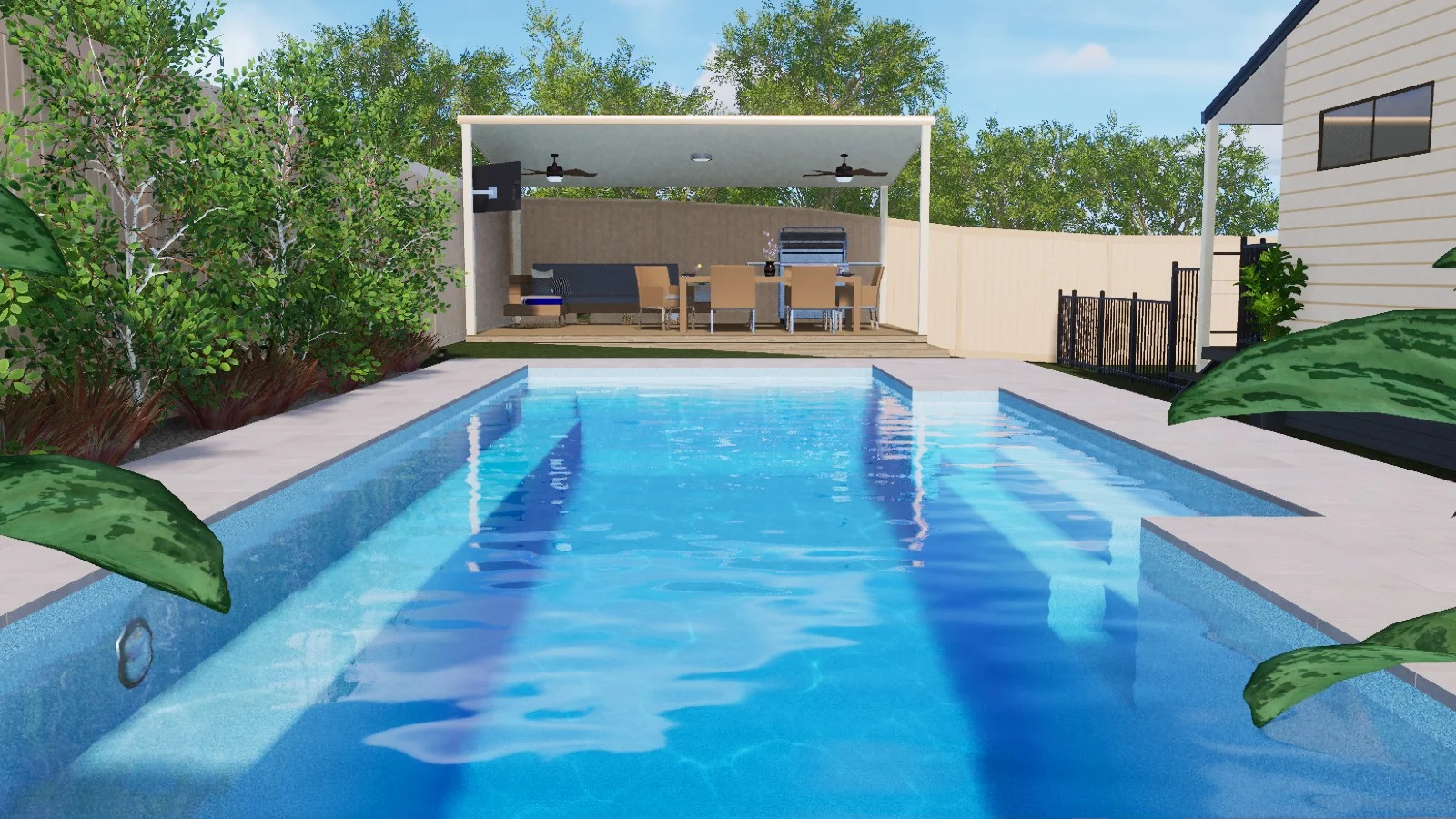
Installed fibreglass pool prices range from $46,053 to $108,867 across the 40 pool models we build in South East Queensland.
Prices by size category are:
- Round: $47,233 to $58,385
- Small: $46,053 to $57,141
- Medium: $55,003 to $78,273
- Large: $60,475 to $83,332
- Lap: $65,534 to $108,867
The installed price includes:
- The fibreglass shell
- Excavation and crane installation
- The filtration package
- Licensed electrical work
- Coping and concrete edging
- Queensland approvals and certification
- Handover
The shell accounts for approximately one-quarter to one-third of the total price. On-site work accounts for the remaining cost. Site access has the largest effect on the quote. Restricted access can more than triple excavation costs.
Heating, landscaping beyond the pool surround, a compliant pool barrier, and rock or unusual soil conditions are priced separately by Queensland builders.
A quote that excludes mandatory items can be $7,000 to $10,000 lower than a complete quote for the same pool. These items include the pool barrier, licensed electrical work, temporary fencing hire, certification, and water fill.
A site visit is required to provide a fixed contract price for a specific property.
How much does a fibreglass pool cost in Australia?
A fibreglass pool costs between $46,053 and $108,867 installed, based on the forty models we build in South East Queensland. The Malta, a 4.0 × 2.0m small pool, is at the lower end. A lap pool is at the upper end.
These installed prices include the shell, excavation, crane, filtration, surrounds, approvals and handover. They are not shell-only prices.
Pool size and site conditions are the main factors that affect cost. Larger pools require larger shells, more excavation, longer coping runs and different crane specifications. At the smaller end, plunge pool prices range from $44,805 to $58,824 installed.
Site access, ground conditions and existing structures also affect the final price. A builder must inspect the backyard before confirming the cost.
The fibreglass shell accounts for about one-quarter to one-third of the installed price. Most of the cost covers work completed on the property. As a result, the difference in installed price between small and large pools is less than the difference in shell size.
What does a fibreglass pool cost by size — 6m, 7m, 8m?
An installed fibreglass pool costs between $46,053 and $108,867. The price depends on the pool size and shell category.
| Pool category | Installed price range |
|---|---|
| Round pool | $47,233 – $58,385 |
| Small pool | $46,053 – $57,141 |
| Medium pool | $55,003 – $78,273 |
| Large pool | $60,475 – $83,332 |
| Lap pool | $65,534 – $108,867 |
Most buyers choose a medium or large pool. These sizes generally fit a standard suburban block and leave space around the pool.
A round pool is not the lowest-cost option. The affordable end of the range is the Malta, which is a small rectangular pool.
The price ranges overlap. A small pool with additional specifications on a difficult block can cost more than a medium pool on a flat block. Pool size is only one factor in the installed price.
Fibreglass pools are not priced by area. A price per square metre does not represent the installed cost. The installed price of the smallest shells is not half the price of large shells because many installation costs are the same for all pool sizes.
The following costs generally remain fixed:
- Crane
- Delivery
- Approvals and certification
- Licensed electrician
- Temporary barrier
- Handover
- Filtration package
Council document assessment requirements are the same for a small pool and a lap pool. Crane booking, travel, setup, levelling, and lifting requirements also apply to both.
The following costs increase with pool size:
- Shell
- Excavation
- Gravel base
- Bond beam
- Coping
- Water
Filtration costs do not increase per litre. Filtration packages use three pool-size classes. Pools in the same class have the same filtration cost. Moving to the next class adds the cost of the next package.
A pool can increase in size without requiring a different pump and filter. If the pool moves into the next class, the filtration package and cost change.
Moving to a larger size category generally increases shell and excavation costs. Fixed installation costs are already included and are not charged again.
See the fibreglass pool price list for the installed price and dimensions of each model. The pool size categories are round, small, medium, large, and lap. Each category contains shells with a similar footprint, but prices can differ.
Use the fibreglass pool cost calculator to estimate the cost for a specific block.
What is included in an installed fibreglass pool price?
An installed fibreglass pool price includes:
- The pool shell
- Excavation and spoil removal
- Crane work
- Filtration and plumbing
- Licensed electrical work
- Coping and the concrete surround
- Queensland approvals and certification
- Handover
Labour and plant make up most of the price. A fibreglass pool kit price covers only the shell. An installed price covers the shell and the work required to install and operate the pool.
These costs fall into four groups.
The first group is shell placement. It includes excavation, spoil removal, the crane lift, and the engineered structure that keeps the shell stable in reactive clay during South East Queensland’s wet and dry cycles. Most of these costs relate to plant, labour, and truck movements.
The second group covers pool operation. It includes the filtration package, plumbing, and licensed electrical work.
The third group covers the pool surround. It includes coping and the concrete edge that provides a finished walking surface around the pool.
The fourth group covers compliance and completion. It includes Queensland approvals, certification, and handover. These items do not produce a visible part of the pool, and lower-priced quotes often omit them.
These groups are parts of one installed price. The pool installation cost can also be divided by project stage, based on when each trade completes its work.
Quotes for the same pool can differ by thousands of dollars when mandatory items are excluded. The following five items are required in Queensland and must be paid before the pool can hold water.
| Omitted item | What it actually costs |
|---|---|
| Compliant pool barrier | From about $2,300 in flat-top metal; several times that in frameless glass |
| Licensed electrician | $1,250 – $1,750 |
| Temporary fencing hire | About $500 |
| Certification and approvals stack | $2,000 – $4,500, typically around $3,000 |
| Water fill | $250 – $700 depending on council |
| Total gap | $7,000 – $10,000+ |
Buyers often do not recognise the certification line. It covers the certifier, final inspection, soil test, Form 15, council lodgement, fire ant treatment, and QBCC home warranty insurance.
Queensland law requires a compliant pool barrier before a pool can legally hold water. Fencing is therefore a required item, not an upgrade.
Temporary fencing is also a required cost. It appears on the invoice even if it is not included in the quote.
The permanent barrier has the largest cost variation because the buyer chooses the material. Frameless glass costs several times more per metre than flat-top metal for the same run. Both materials meet the same legal requirement.
Before comparing quote totals, check that both quotes include all five items. Quotes that include the same required items provide a more direct comparison.
Which part of a fibreglass pool costs the most?
The pool shell is the most expensive single item. It accounts for about one-quarter to one-third of the installed price. Installation is the next-largest cost group. Together, the shell and installation account for most of the total price.
Installation includes excavation, spoil removal, crane lifting and construction of the engineered base. Difficult site conditions increase these costs. Limited site access can more than triple the excavation cost.
Other costs are usually lower. Certification and approvals are typically in the four-figure range on a project costing tens of thousands of dollars. Filtration packages use the same equipment for a wide range of pool sizes. Heating, lighting and landscaping are optional. The shell and excavation have the greatest effect on the quote.
What sits outside the price — fencing, heating and the costs after handover?
A standard installed fibreglass pool price excludes the pool barrier, heating, landscaping beyond the pool surround, rock and unusual soil conditions. Queensland builders quote these items separately. When comparing quotes, check which items each quote excludes.
A compliant pool barrier is required. Queensland law does not allow a pool to hold water without one. Barrier costs depend on the selected material, such as flat-top metal or frameless glass, and the length required.
Optional additions include heating, blankets, extra lighting, a larger paved surround and landscaping. These items are priced separately from the installed pool price and can be added after handover. Pool heating costs are one example. Heating can be deferred if the conduit is installed while the trenches are open.
Standard quotes also exclude rock and unusual soil conditions. Builders price these conditions for each site because they cannot confirm underground conditions before excavation. We assess the likelihood of rock during the site visit and record the assessment in writing before the contract is signed.
What moves a fibreglass pool quote up or down on your block?
Site access is the largest modelled variable in our quotes. Tight access can more than triple excavation costs. Slope, access, and old-pool removal each have a modelled cost band. These are what affects a fibreglass pool's installed price, in addition to the shell choice.
Site access determines the plant and time required for excavation. On an open block, the truck and excavator can enter the site. The excavator can dig continuously and load spoil directly into bins.
Restricted access adds work. If an excavator cannot enter the site, it must be lifted in. A narrow side path may require a smaller excavator, which increases excavation time. If spoil cannot be loaded at the excavation point, it must be moved to a staging point before being loaded onto the truck. The excavation price includes this additional work.
Crane access is assessed separately from ground access. The finished fibreglass pool shell arrives by truck and must be lifted into the excavation. The lift must clear the roof, neighbouring boundary, and power lines. A longer reach requires a larger crane.
The site costs created by a sloping block may include drop edge beams, retaining structures, and engineered fill. These items are listed on the plan instead of being added as a percentage surcharge.
Site factors are charged during excavation because the required plant is already on the block. They are separate from optional extras, which the buyer can defer. A site factor is a ground condition priced once during construction.
“Before any installation is scheduled, our technical site auditors conduct a thorough site audit. This includes access, slopes, and anything else that can impact your install price. That way, there are no surprises on install day.”

Is a fibreglass pool cheaper than a concrete pool?
A fibreglass pool typically costs less to install than a concrete pool of the same size. Installation takes weeks rather than months because the fibreglass shell arrives complete from the factory. This avoids on-site work such as curing the shotcrete, tiling or rendering the interior, and coordinating weather-dependent trades.
Is a fibreglass pool worth the money?
Whether the installed price justifies the limitations of a moulded shell depends on the quote inclusions. About one-quarter to one-third of the total price covers the shell. The remaining cost covers excavation, crane hire, filtration, coping, the concrete surround, approvals, certification and handover. These costs apply to any inground pool. With fibreglass, the finished shell is delivered to the site rather than built on-site over several months.
The quote lists the included work. Site conditions are assessed during a site visit. The contract also identifies exclusions, including rock and unusual soil conditions, before excavation starts.
Payments are made in stages. After a 10% deposit, progress payments are due for delivery, excavation, installation and handover. The contract provides a fixed price based on the assessed site conditions. We review the contract with the buyer before signing.
Finance is available through our partner Handypay for approved applicants — see our finance page for payment plan options.
General price ranges do not account for site access, ground conditions or slope. A site visit and quote provides a fixed price for the specific block.
FAQs
How much does an inground fibreglass pool cost installed?
An installed inground fibreglass pool costs $46,053 to $108,867, based on current pricing for the forty models we build in South East Queensland. This price includes the pool shell, excavation, crane, filtration, surrounds, council approvals, certification, and handover.
The base price excludes a compliant safety barrier, heating, and site-specific costs such as rock excavation. Builders exclude ground conditions from quotes until excavation begins.
Which fibreglass pool is the entry point of the MFP Easy range?
The Malta is the entry-level model in the MFP Easy range. It is a 4.0 × 2.0m rectangular fibreglass pool and has the lowest installed price in the range.
Its smaller shell requires less excavation, less spoil removal, and a lighter lift, which reduces installation costs. Round pools are a separate size and price category, not a lower-cost option.
Above-ground pools cost less than inground pools, but they are a different product. They have a fixed depth, no engineered surround, and no structure built into the ground.
How much does a 10 metre pool cost?
A 10 metre pool is in the lap pool category, the largest of the five size categories we build. It also has the widest lap pool cost range.
Pool length affects the shell price, excavation volume, coping length, and crane requirements. The final cost depends on the model and site conditions. Site access has the largest effect because a long shell requires a clear lift path from the truck to the excavation.
Does a sloping block cost more than a flat one?
A sloping block costs more than a flat block because it requires additional construction. This may include drop edge beams, retaining structures and engineered fill. We regularly install on sloping sites in South East Queensland, where flat backyards are uncommon.
What is excluded from a fibreglass pool quote?
Standard pool quotes in Australia, including ours, exclude rock and unusual soil conditions. These costs are determined after excavation begins. Before signing, we assess the site, neighbouring builds and soil test. We record the expected conditions in the contract.
Landscaping beyond the pool surround, heating and fencing upgrades are priced separately.
What is the downside of a fibreglass pool?
Fibreglass pools are available only in fixed shapes and sizes. The shell is moulded in a factory, so buyers must select a design from a catalogue. Unlike concrete pools, fibreglass pools cannot have a custom freeform outline.
The shell must be delivered to the backyard in one piece. This requires suitable crane access, which can be difficult on tight inner-city blocks.
Fibreglass pools also provide a fixed price, a construction timeline measured in weeks, and a non-porous gelcoat surface.
How much of the price is the pool shell?
The pool shell accounts for about one-quarter to one-third of the installed price. This share increases slightly with pool size. Larger shells cost more to manufacture and transport, while paperwork and crane setup costs do not increase at the same rate.
The remaining approximately 70% covers work performed on the block. A shell-only kit price and an installed price cover different parts of the same job.