Fibreglass vs Concrete Pools: Costs, Timelines & Upkeep
Fibreglass and concrete pools compared for Australian buyers: installed price, build time, surface, upkeep, lifespan, heat, salt and design limits.
Published · Updated
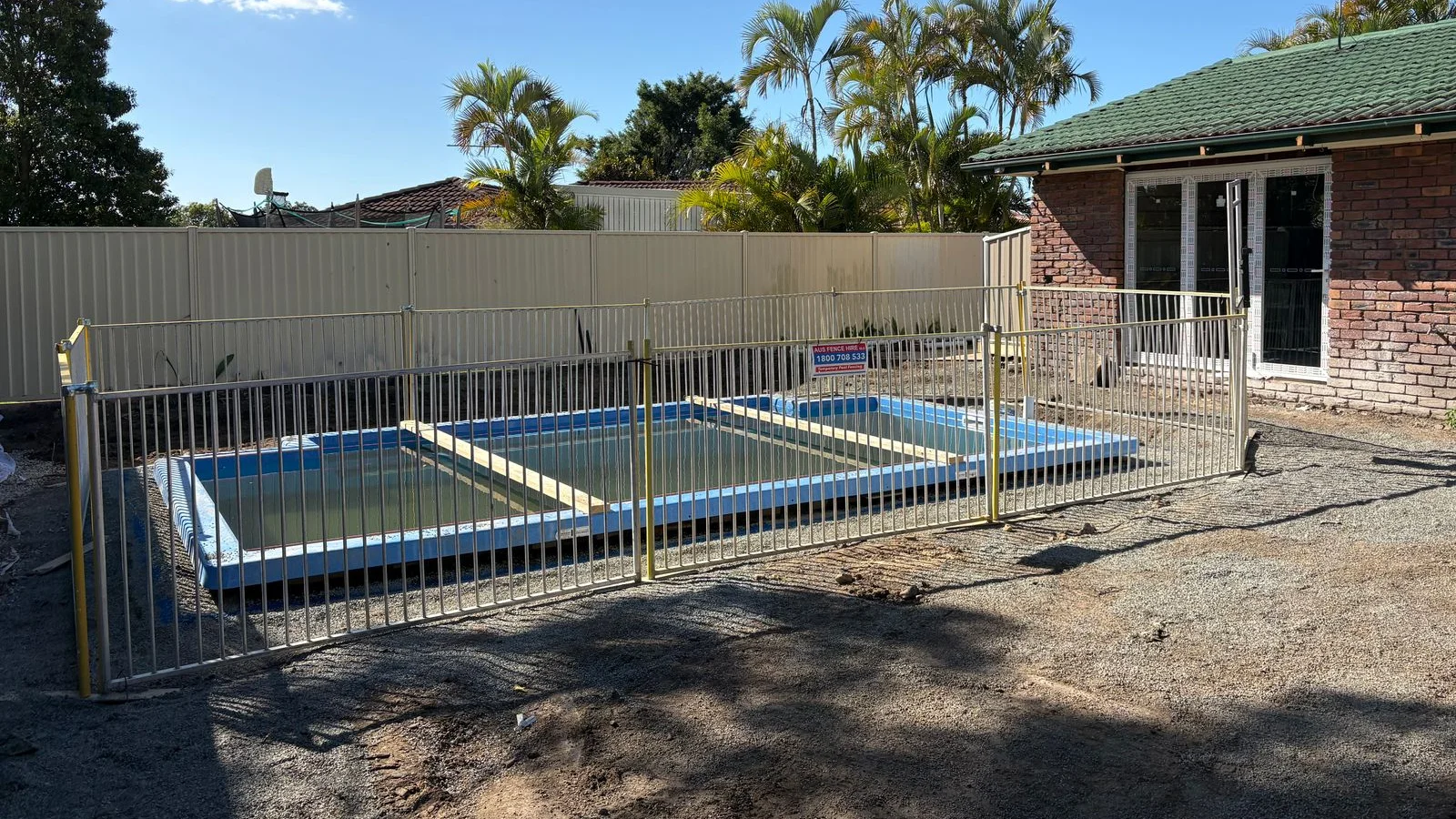
The main difference between fibreglass pools and concrete pools is the construction method.
A fibreglass pool is moulded and cured in a factory. The completed shell is transported to the site and installed in an excavated area.
A concrete pool is built on-site. Construction includes excavation, steel reinforcement, concrete application, curing, and installation of the interior finish.
The construction method affects cost, installation time, surface, maintenance, and lifespan.
What is the difference between a fibreglass pool and a concrete pool?
Fibreglass and concrete pools differ in how the shell is built and how the interior surface is applied.
A fibreglass pool is a single shell made from glass fibre and resin. The shell is moulded and cured in a factory, delivered in one piece, and lowered into a prepared excavation. Its interior surface is gelcoat, a coloured resin layer moulded into the shell. The shell provides both the structure and the finished surface.
A concrete pool is built on site. After excavation, installers add a steel reinforcement framework and spray or pour concrete over it. After the concrete cures, they apply a separate interior finish. The structure and finish have separate service lives and costs.
A fibreglass shell is installed in one piece and is typically placed in the ground within two days after excavation begins.
Are gunite, shotcrete and pebblecrete all concrete pools?
Yes. Gunite and shotcrete refer to methods used to build a concrete pool structure. Pebblecrete is a finish applied after the concrete structure has cured.
| Term | Structure or finish | Where you hear it |
|---|---|---|
| Gunite | Structure: concrete sprayed over a steel reinforcement framework | The US term for the sprayed method |
| Shotcrete | Structure: the same sprayed method | The term used by Australian builders |
| Cast-in-place concrete | Structure: concrete poured into formwork on site | Describes a poured, formed shell |
| Precast concrete | Structure: concrete poured into a factory mould | Describes a shell poured off site |
| Plaster / marbelite | Finish: cement-based render over the structure | "Plaster" is the US term for the render |
| Pebblecrete / exposed aggregate | Finish: pebble set in cement render | The Australian term for a pebble interior |
| Pebble Tec | Finish: a pebble interior | A US brand name |
| Tile | Finish: tiles laid over the structure | The same term in both markets |
In a fibreglass pool, the shell and surface are the same object.
What does each pool cost, installed, in Australia?
Our installed fibreglass pools range from $46,175.64 to $109,590.30. The median price is $62,861.11.
Crystal Pools, a Sydney concrete pool builder, lists concrete pools from $75,000, excluding additional features and accessories. This starting price is higher than our median installed price.
Our range includes 173 model and colour combinations. The Malta size 1 has the lowest price. The Saint Azur size 3 has the highest price.
The installation component, excluding the shell, ranges from $29,335.64 to $61,376.45. The median installation cost is $38,060.41.
Our median signed contract is about $79,200. This figure is based on signed customer contracts, not an average of list prices.
| Pool size | Length | Depth | Installed from |
|---|---|---|---|
| 3m to 4m | 1.45m level | $45,847 | |
| 4m to 5.5m | 1.0m to 1.78m | $45,613 | |
| 6m to 7m | 1.0m to 1.88m | $54,443 | |
| 7.2m to 8m | 0.98m to 1.96m | $60,374 | |
| 8.5m to 11m | 1.0m to 2.0m | $72,535 |
Live all-inclusive installed pricing for standard site conditions in South East Queensland — updated straight from our quoting system.
These are installed prices, not shell-only prices. The amount a fibreglass pool costs installed depends on the selected shell and the installation and finishing work required.
Plungie, an Australian precast concrete manufacturer, publishes the following price ranges:
- Total project cost: $75,000 to $150,000 and above. This includes the installed pool, fencing, equipment, and landscaping.
- Shell-only cost: $50,000 to $100,000 and above.
Crystal Pools prices large, fully tiled concrete pools above $200,000.
Site conditions affect the cost of both pool types:
- Site access affects how the fibreglass shell or concrete equipment reaches the excavation.
- Excavation depth affects the amount of spoil that must be removed.
- Sloping blocks may require retaining on the lower side.
- Coping, paving, and required pool fencing are separate costs for both materials.
Over ten years, a concrete pool may require resurfacing. The interior finish is a wearing layer that must be replaced at the end of its service life.
A fibreglass pool uses the shell’s gelcoat as its finished surface. It does not have a separate interior layer to replace.
Pool Advisor lists the following costs for full concrete pool resurfacing:
- 6m x 2.5m pool, about 15m²: $2,500 to $3,800
- 9m x 4m pool, about 36m²: $6,000 to $9,000
How long does each pool take to build?
A standard fibreglass pool installation takes 6 to 7 weeks from excavation to handover. The pool is typically ready to use about 11 weeks after contract signing. The shell is installed within the first two days after excavation starts.
Published timelines for concrete pools vary. Plungie, an Australian precast concrete manufacturer, states that on-site construction takes 8 to 16 weeks. Blue Pools and Spas states that a concrete pool usually takes 3 to 6 months.
These estimates measure different periods. Plungie measures the time that trades and machinery are on the property. Blue Pools and Spas measures the full project from start to completion.
Curing affects the concrete pool timeline. Fibreglass shells cure in a factory before delivery, so curing does not add to the on-site schedule. Concrete shells are sprayed or poured on site and must cure before later work begins. Rain can also delay concrete work.
What does the inside surface feel like, and which one grows algae?
A cement-based concrete interior is porous, which allows algae to grow inside the pores. Cured gelcoat is non-porous and does not have surface pores where algae can attach.
A gelcoat interior is smooth and hard. It forms the outer resin layer of the moulded shell. Plaster and pebblecrete interiors are more textured. Plaster is a cement-based render with a sanded surface. Pebblecrete uses pebbles set in cement render, making the pebbles noticeable underfoot.
Some areas of a fibreglass shell are textured. Steps and tanning ledges have a slip-resistant surface to reduce the risk of slipping underwater.
A fibreglass pool has a coloured gelcoat interior, usually with shimmer. Our shells are available in a range of gelcoat colours. Gelcoat does not have a stone or pebble appearance. Choose a concrete pool if you want a pebble or fully tiled interior.
Which pool costs less to run on chemicals, filtration and salt water?
Leisure Pools Australia, a fibreglass manufacturer, states that concrete pools require more chemicals because their porous interiors affect water chemistry. Cement-based interiors can also increase alkalinity, requiring regular acid treatment to maintain a stable pH. Fibreglass gelcoat is inert and does not affect pH or alkalinity.
According to What's The Damage, estimated annual running costs are $3,000 to $7,000 with professional maintenance and $1,500 to $3,500 with self-maintenance. No published source provides separate running costs for fibreglass and concrete pools.
Fibreglass shells are compatible with salt chlorination because salt does not affect the gelcoat. Salt water, magnesium and chlorine systems can be used independently of the pool shell type. You can change the sanitation system on an existing pool without modifying its structure.
Which lasts longer, and what actually happens after 25 years?
After 25 years, a fibreglass shell is usually still structurally sound. The gelcoat may be faded or have reduced gloss. This condition is called chalking. It affects the surface, not the structure.
Other surface conditions include:
- Colour loss
- Blistering, where the gelcoat develops small raised spots
- Crazing, where fine cracks develop across the surface
These conditions do not necessarily indicate structural failure.
Concrete pools have a different maintenance cycle. The structure may last longer than the interior finish, which requires periodic replacement. Livin Construction Co estimates that a well-maintained pebblecrete interior lasts 15 to 20 years. After that period, the pool may require resurfacing.
| Resurfacing a pebblecrete interior, per Pool Advisor | Cost |
|---|---|
| 6m x 2.5m pool, about 15m² | $3,100 to $4,600 |
| 9m x 4m pool, about 36m² | $7,400 to $11,000 |
Livin Construction Co also provides a general resurfacing rate for all interior finishes:
- Most resurfacing specialists, 2025: $180 to $280 per square metre
Neither material has a fixed lifespan. Water chemistry, sunlight and maintenance determine when the surface requires repair or replacement. After 25 years, a fibreglass pool may have surface fading. A concrete pool may require replacement of its interior finish.
Which pool is warmer, and which costs more to heat?
A fibreglass pool warms faster than a concrete pool of the same volume. Its shell is a thin laminate of glass fibre and resin with low thermal mass. As a result, the water responds more quickly to sunlight and heating.
A concrete shell has more thermal mass and is in direct contact with the ground. The shell changes temperature with the water, so the pool takes longer to warm.
In South East Queensland, the difference is most noticeable during the cooler weeks before and after summer. During summer, sunlight warms both pool types. In cooler periods, a fibreglass pool warms faster after several warm days.
Heating costs depend mainly on the heating equipment and heat retention, not the pool material. A heat pump can maintain a set temperature in either pool. A pool blanket reduces overnight heat loss. A fibreglass pool reaches the set temperature sooner because its shell has less thermal mass.
How much design freedom does each pool give you?
Concrete pools are built on site and can be made in any shape, depth, or size. They can include steps, ledges, swim-outs, beach entries, and built-in spas.
Fibreglass pools are selected from factory-made moulds. Their dimensions are limited by truck transport and crane access.
Many fibreglass moulds include benches, entry steps, tanning ledges, and swim-outs as standard. These features are included in the price. In a concrete pool, each feature must be formed and finished during construction.
Our fibreglass range includes 173 model-and-colour combinations. The largest model, the Kensington, measures 11.4m x 4.4m.
Concrete pools can use plaster, pebble, or tile interiors. Fibreglass pools are available in the manufacturer’s gelcoat colours.
Choose concrete if the required shape is not available as a fibreglass mould or if the required depth cannot be transported.
Prices are live all-inclusive installed prices (pool, standard installation, filtration and handover) for standard site conditions in South East Queensland.
Which pool adds more value when you sell?
A swimming pool can add value to a house. Buyers typically consider the condition of the interior surface more than the pool’s construction material.
A concrete interior with stains, patches, or worn areas may require resurfacing. A chalked fibreglass gelcoat may require less work because the faded surface is part of the shell, not a separate layer.
Poorly maintained fibreglass and concrete pools can both look inexpensive. A well-maintained gelcoat in a current colour can present as well as a maintained pebble or tiled interior.
During an inspection, buyers typically assess the surface condition, coping, and paving rather than the shell material.
Should you choose a fibreglass pool or a concrete pool?
Choose a concrete pool when you need a custom design. Choose a fibreglass pool when installation time, cost certainty, or reduced disruption is more important.
Choose a concrete pool when:
- The required shape is not available as a mould, such as a curve that follows an existing wall.
- The required depth or length exceeds what a truck can deliver or a crane can place.
- The design requires structural features, such as a raised wall, integrated spa, or custom-sized beach entry.
Concrete pools are built on site and can meet these requirements.
Choose a fibreglass pool when:
- A standard pool shape meets your needs.
- You have a fixed budget and need a known installation cost.
- The yard cannot remain a construction site for months because of small children, a home-based business, or a settlement date.
- The pool uses salt chlorination, which does not affect the gelcoat.
Vinyl-liner pools are another type of inground pool.
Which pool suits your block — reactive clay, a slope, or tight access?
Reactive clay, slope, and site access can affect the choice of pool material.
Reactive clay soils in South East Queensland move as moisture levels change. A fibreglass shell can flex with this movement. A rigid concrete structure may crack if ground movement is significant. Fibreglass is generally more suitable for reactive clay.
A sloping site does not favour either material. Both concrete and fibreglass pools may require retaining on the low side. The slope affects excavation volume and retaining wall height rather than shell selection.
Site access can restrict fibreglass installation. A fibreglass shell is delivered in one piece and must be moved to the excavation. If side access is too narrow for a truck, a crane may lift the shell over the house. This affects the excavation and delivery plan but does not necessarily prevent fibreglass installation.
A concrete pool is built on site using materials carried into the backyard. Concrete may be more suitable if neither a truck nor a crane can access the site.
What do owners say after living with each pool?
Owners report different issues for each material.
Common complaints about fibreglass pools include:
- Limited shape options
- Surface colour chalking
- Problems with older shells built to earlier specifications
Common complaints about concrete pools include:
- Periodic resurfacing
- Higher chemical demand due to the porous interior
- Longer construction times that restrict access to the yard
Some fibreglass complaints apply to older products. Shell laminates, resin systems, and gelcoat colour ranges have changed since 2017. Our completed installations use current shells.
Concrete pool complaints are less dependent on product age. Cement-based interiors require resurfacing and have higher chemical demand.
How can you tell whether the pool you already have is concrete or fibreglass?
You can identify the pool material without draining it. Check the following areas:
-
Coping-to-waterline junction
- Fibreglass pools have a continuous moulded lip that is part of the shell.
- Concrete pools have a tiled band or rendered edge with visible grout lines and joins.
-
Skimmer throat
- Fibreglass pools have a moulded plastic skimmer box integrated with the shell. The wall opening is smooth.
- Concrete pools have a separate skimmer unit installed in the concrete, with render around it.
-
Step edges
- Fibreglass steps have rounded, continuous edges with no joins between surfaces.
- Concrete steps have defined, rendered edges.
-
Wall
- Tap the wall with your knuckle. A fibreglass shell sounds hollow and may move slightly.
- A concrete wall sounds solid and does not move.
The pool material determines the maintenance requirements. Concrete interiors require resurfacing based on the finish lifespan. Fibreglass gelcoat requires maintenance rather than replacement.
FAQs
What happens to a fibreglass pool after 25 years?
After 25 years, a fibreglass pool shell is usually still structurally sound. Most visible changes occur in the gelcoat. The surface may lose its gloss, and the colour may fade. This is called chalking and does not indicate a structural problem.
The gelcoat may also develop blistering or crazing. These conditions can occur at any pool age.
A concrete pool’s interior finish may require maintenance by this time. Livin Construction Co states that pebblecrete surfaces have a lifespan of 15 to 20 years.
What is the downside of a fibreglass pool?
Fibreglass pools are limited to available moulds. Our range has 173 model and colour combinations. The largest design, the Kensington, measures 11.4 m x 4.4 m. Custom shapes and larger sizes are not available.
The shell must be transported to the excavation site. If side access is too narrow, a crane may be required to lift it over the house. Interior finishes are limited to gelcoat colours. Pebble and stone finishes are not available.
What are the disadvantages of a concrete pool?
Concrete pools take longer to build, require periodic resurfacing, and need ongoing chemical adjustment.
Plungie, an Australian precast concrete manufacturer, estimates that on-site construction takes 8 to 16 weeks. The yard remains a work site during construction.
The interior finish wears over time and must be resurfaced. Leisure Pools Australia, a fibreglass manufacturer, states that concrete interiors increase alkalinity. Regular acid addition is required to maintain a stable pH.
Which pool is better, concrete or fibreglass?
The better option depends on the project requirements.
Choose concrete for a custom shape, depth, or built-in structural features. Concrete pools are formed on site.
Choose fibreglass for a fixed budget, shorter installation period, or saltwater use. Installed prices range from $46,175.64 to $109,590.30, with a median of $62,861.11.
What is the cheapest type of inground pool to put in?
Fibreglass pools generally have the lowest starting price. Our installed pool prices range from $46,175.64 for the Malta size 1 to $109,590.30. Crystal Pools, a Sydney concrete pool builder, lists concrete pool prices starting at $75,000. These are starting prices and may not represent the total cost of a completed project.