Shipping Container Pools vs Fibreglass: Cost & Lifespan
Shipping container pools vs fibreglass: what each is lined with, what steel does in salt water, installed costs, depth, and Queensland approval.
Published · Updated
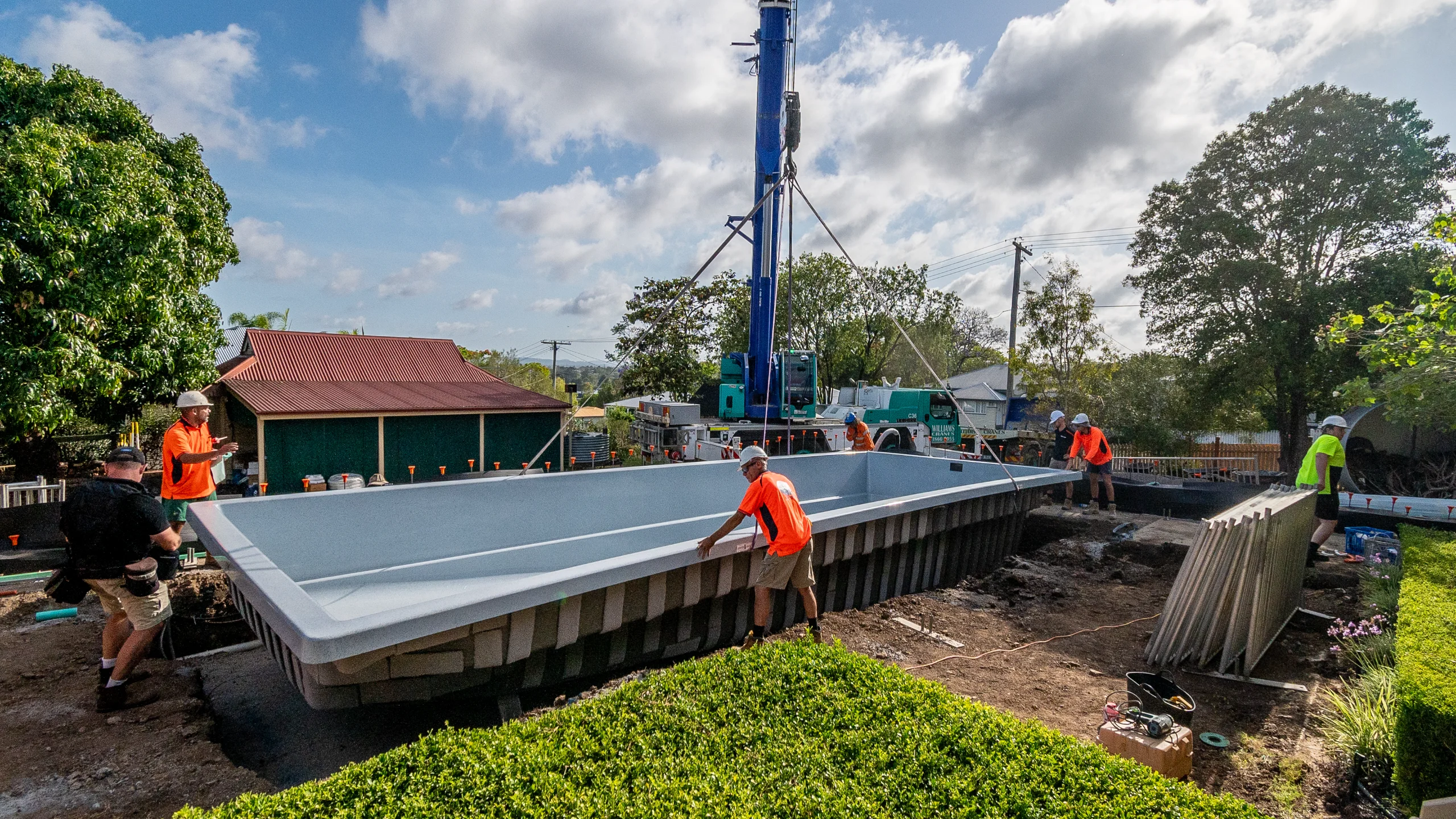
A shipping container pool is a lined steel freight container installed above ground. A fibreglass pool is a single moulded shell installed in an excavation.
The advertised prices cover different items. In Australia, published container pool prices range from $8,100 to $18,000 ex works, plus $450 for delivery. These prices cover the product only. Base preparation, crane hire, fencing, decking, electrical connection and approval cost extra.
The lining determines the service life of a shipping container pool. Salt-chlorinated water can accelerate steel corrosion if the coating is damaged.
The pool types also differ in depth. A container pool has one depth from end to end. The Amalfi fibreglass shell ranges from 0.90 m to 2.00 m, allowing a child to stand at one end and swim at the other.
For a permanent pool on an owner-occupied property in Queensland, the fibreglass shell is generally the better option. A shipping container pool is preferable only in limited circumstances.
What is a shipping container pool, and what is it lined with?
A shipping container pool uses a repurposed steel freight container as its structure. The base shell meets ISO 668 Series 1 standards. A waterproof lining or coating holds the pool water because bare steel cannot do so on its own.
The pool is built off site and delivered with factory-fitted, pre-plumbed filtration equipment behind hatch doors. It can be installed above ground without excavation. Setup takes a few days. Australian container-pool suppliers use these features in their product descriptions.
Suppliers list seven waterproofing methods:
- A fibreglass insert. A moulded fibreglass liner is installed inside the steel container. The fibreglass holds the water, while the container provides structural support.
- A vinyl liner. A flexible sheet lines the steel container. It typically requires replacement every 5 to 9 years.
- A tiled finish. Tiles provide the finished swimming surface and are installed over an underlying waterproof layer.
- A fibreglass shell built inside a steel skeleton. One Australian supplier uses this method. The fibreglass forms the pool vessel, and the container steel forms the frame.
- A sprayed or rolled DIY waterproofing system. The owner applies a liquid membrane intended for container conversions.
- An epoxy or elastic polymer coating. The coating bonds to prepared steel. Published service lives are 8 to 10 years or less before refinishing is required.
- Plaster. A plaster interior may last about ten years.
Published service-life figures are available for vinyl liners, epoxy or elastic polymer coatings, and plaster. Sellers do not publish figures for fibreglass inserts, tiled finishes, fibreglass shells built inside steel skeletons, or sprayed or rolled DIY waterproofing systems.
A steel container with a fibreglass insert is different from a fibreglass pool, although some sellers use the same description for both. In a container pool, the fibreglass is a lining and the steel container provides the structure.
A fibreglass pool consists of a single shell that is moulded and cured in a factory. It is delivered in one piece and placed in a prepared excavation. The shell provides both the structure and the swimming surface. Its interior has a smooth, coloured gelcoat resin layer that forms part of the shell. It does not require a separate lining.
What do steel and salt water do to a container pool over time?
Salt-chlorinated water accelerates corrosion where the steel is exposed by a breach in the coating. For this reason, container pools usually use regular chlorine instead of a salt system. If the lining remains intact, the water does not contact the steel.
Converting a shipping container into a pool requires cutting, welding, and drilling. The coating must remain intact in these areas:
- Cut edges around openings
- Weld seams
- Filtration-system fixings
- Hatch-door fixings
- The water line, which is repeatedly exposed to wet and dry conditions
Container pool surfaces require periodic renewal. Published service lives include:
- Epoxy or elastic polymer coating: 8 to 10 years or less before refinishing
- Plaster interior: about 10 years
- Vinyl liner: about 5 to 9 years before replacement
Refinishing and liner replacement require draining the pool. These maintenance cycles continue for the life of the pool.
A fibreglass pool shell does not contain steel that chlorinated or salt-chlorinated water can corrode. Its laminate is chemically inert. The gelcoat is part of the shell rather than a coating applied over another material, so water cannot get behind an interface. Lifetime structural warranties on fibreglass shells are standard industry practice in Australia.
Before purchasing a container pool, ask the seller what the coating warranty covers at welds, cut edges, and the water line, and how long that coverage lasts. Coverage limited to the middle of a flat wall does not address these areas.
How do size, shape and depth compare on a container pool vs a fibreglass pool?
A shipping container pool has a fixed width, vertical walls and one depth across its full length. A fibreglass pool is available in different lengths and widths. Most fibreglass models have a floor that slopes from a shallow end to a deep end. Container-pool suppliers publish the container’s external and internal dimensions. The container determines the pool dimensions, so the width is fixed and the shape is rectangular or square.
| Shipping container pool (suppliers' published specifications) | Fibreglass pool | |
|---|---|---|
| Length | About 3 m up to the full 40 ft container; 12.04 m internal swimming length | Allure 5.00 m, Empire 6.00 m, Bedarra 7.50 m, Elysian 8.30 m, Amalfi 9.00 m, Kensington 11.00 m |
| Width | Fixed by the container: 2.44 m external, about 2.29 m internal | Allure 2.50 m, Empire 3.00 m, Bellino 3.60 m, Bedarra 3.80 m, Avellino and Kensington 4.00 m |
| Depth | About 2.29 m internal and customisable, the same depth from end to end | Graded: Amalfi 0.90 m to 2.00 m, Castello 0.98 m to 1.92 m, Empire 1.00 m to 1.75 m, Allure 1.10 m to 1.60 m |
| Floor | Flat and level, with flat vertical walls | Graded shallow end to deep end; the Infinity 3 and Infinity 4 hold a constant 1.45 m |
| Shape | Rectangular or square only | Moulded shells in fixed length-and-width combinations: Latina 4.50 m × 3.50 m, Florentina 6.50 m × 2.50 m, Castello 7.50 m × 3.60 m, Kensington 11.00 m × 4.00 m |
| Water volume | Not published by the sellers | Published by model: Infinity 3 6,275 L, Florentina 16,250 L, Amalfi 30,600 L, Kensington 51,700 L |
A container pool filled to its internal depth is about 2.29 m deep across the entire pool. This is above head height for most adults and all children. Small swimmers cannot stand on any part of the floor. If you specify a shallower depth, the entire pool is shallower because the floor remains level.
Most fibreglass pools have different depths at each end. The Amalfi ranges from 0.90 m to 2.00 m across its 9.00 m length. The Castello ranges from 0.98 m to 1.92 m, and the Empire ranges from 1.00 m to 1.75 m. This design provides a shallow area for standing and a deeper area for swimming.
A container pool does not include a moulded step or bench in the shell. Swimmers use a ladder or stairs installed by the supplier. For comparison, the Infinity 3 and Infinity 4 fibreglass models have flat floors. The Infinity 3 measures 3.00 m × 3.00 m, and the Infinity 4 measures 4.00 m × 4.00 m. Both have a constant depth of 1.45 m.
Prices are live all-inclusive installed prices (pool, standard installation, filtration and handover) for standard site conditions in South East Queensland.
What does a container pool cost compared to a fibreglass pool?
Container pool prices are usually product-only prices. Fibreglass pool prices are usually installed prices. The published figures are not directly comparable.
An Australian container pool supplier publishes these ex-works product prices:
- 20 ft customisable: $8,100
- 30 ft new: $11,250
- 40 ft with a blue interior: $12,000
- 40 ft above-ground modular steel: $18,000
These prices do not include installation. Delivery from Lowood, Queensland, costs an additional flat fee of $450 Australia-wide. Delivery is by tilt-tray or side-loader, with a lead time of 5 to 7 business days.
The delivery site must provide:
- Level ground for the truck
- At least 6 m of overhead clearance
- A 15 m straight access route
The product price also excludes:
- Base preparation
- Crane hire
- Fencing
- Decking or a surround
- Electrical connection for the filtration system
- Approval
In Queensland, pool fencing is required under pool safety laws. These six items are not included in the $8,100 product price. No Australian container pool seller publishes an installed total that includes them.
| Pool size | Length | Depth | Installed from |
|---|---|---|---|
| 3m to 4m | 1.45m level | $45,896 | |
| 4m to 5.5m | 1.0m to 1.78m | $45,660 | |
| 6m to 7m | 1.0m to 1.88m | $54,454 | |
| 7.2m to 8m | 0.98m to 1.96m | $60,385 | |
| 8.5m to 11m | 1.0m to 2.0m | $72,546 |
Live all-inclusive installed pricing for standard site conditions in South East Queensland — updated straight from our quoting system.
A fibreglass pool is quoted with an installed price. If the site requires additional preparation, that work is measured and listed separately in the quote.
Additional site costs include:
- Concrete slab removal: $170 per square metre
- Earthmoving: $50 per cubic metre
- Stormwater diversion: $600 allowance
The excavation method depends on two measurements:
- The narrowest access point
- The distance between the excavation and the truck position
Access that is at least 3 m wide, with the truck within 5 m of the excavation, allows direct loading into the truck. Access under 1.38 m requires a mini excavator. Access under 1.57 m requires a mini excavator and a small bobcat. Wider access uses a bobcat.
Cartage costs depend on the distance that spoil must be moved:
- 0 to 20 m
- 20 to 40 m
- 40 to 60 m
Every fibreglass shell is installed with a crane. The required crane size depends on the lift distance:
- 0 to 15 m: a small slew, 13 to 16 tonnes
- 15 to 20 m: a medium slew, 40 tonnes
- 20 to 30 m: a standard slew, 55 to 60 tonnes
- 30 to 36 m: a standard slew with counterweight
- 36 to 48 m: a large slew, 80 to 120 tonnes
Both container pools and fibreglass pools require suitable site access. Access requirements affect the total price.
MFP Easy installs more than 250 pools each year across South East Queensland. Site-dependent costs are confirmed in the quote after the site is measured.
Do you need council approval for a container pool in Queensland?
A shipping container pool in Queensland is subject to the same pool safety requirements as an excavated pool. Under Queensland's pool safety standard, QDC MP 3.4, a pool that can hold water more than 300 mm deep is a swimming pool for the purposes of pool safety laws. This applies regardless of its construction or whether it can be moved.
The following requirements apply:
- A compliant barrier. The barrier must be at least 1,200 mm high and include a non-climbable zone. Gates must be self-closing and self-latching.
- A CPR sign. A CPR sign must be displayed near the pool.
- A pool safety certificate at sale or lease. Form 23 is required when a property with a pool is sold or leased. The pool must also be recorded on the Queensland pool safety register.
An above-ground installation does not remove the barrier requirement. Access to a shipping container pool usually requires a deck, stair or platform. The barrier and non-climbable zone must account for this access structure. Consult the certifier who will assess the barrier before finalising the deck design.
Building approval is a separate requirement. Australian container-pool sellers do not publish clear information about structural approval requirements for above-ground or raised installations. Ask a certifier what approvals and structural certification are required before ordering the pool.
| Installed price | 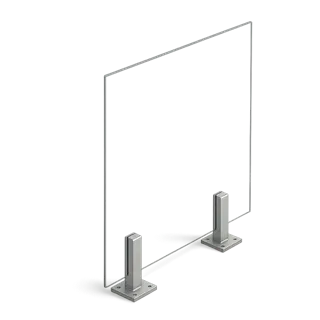 Frameless glass Frameless glass | 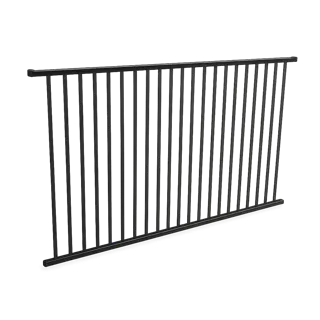 Flat-top metal Flat-top metal |
|---|---|---|
| Fencing, per metre | $462 | $198 |
| Self-closing gate, per unit | $495 | $330 |
| Panels on a retaining wall, per metre | $297 – $737 | $385 – $605 |
| Earthing (where required) | $40/m | $150 per job |
| Timber post upgrade, per metre | — | $66 |
| Typical pool: 20m fence + 1 gate | $9,735 | $4,290 |
Live rates from our quoting system — glass and metal fencing installed to QLD pool-barrier standards alongside your pool build.
How long does a container pool last, and what happens when you sell?
A shipping container pool lasts as long as its lining. No Australian container-pool seller publishes a service life for the pool itself. Published service-life estimates apply to the lining:
- Epoxy or elastic polymer coatings may require refinishing after 8 to 10 years or less.
- Vinyl liners generally require replacement after 5 to 9 years.
- Plaster interiors may last about 10 years.
Sani-Tred, a waterproofing manufacturer, publishes a case study of a container pool built in Austin, Texas. This was a US DIY project, not a commercial product. The case study reports that small rust spots were covered with a two-part paste epoxy. It also reports that the pool was repainted every 2 to 3 years with a two-part pool epoxy. This single project does not establish a general maintenance schedule. Australian container-pool sellers do not publish coating-maintenance intervals.
Some published container-pool warranties are as short as three years. By comparison, some fibreglass pools have a lifetime structural warranty. A container pool’s service life depends on maintaining and renewing its coating. How long a fibreglass pool lasts depends on the laminate used to mould the shell.
Container-pool sellers state that their pools can be transported and repositioned. One published 3 m container pool weighs about 2 tonnes and has an integrated lifting point. Fibreglass shells can also be moved by crane. Published shell weights include:
- Allure: 477 kg
- Empire: 622 kg
- Bellagio: 700 kg
- Bedarra: 838 kg
- Amalfi: 926 kg
- Kensington: 1,223 kg
The main difference at sale is not weight. A fibreglass pool is installed in a prepared excavation and remains with the property. A shipping container pool is designed so it can be removed. There is no published information showing how valuers or buyers assess either type at sale.
The same pool safety requirements apply when the property is sold. Form 23 is required when a property with a pool is sold or leased. The pool must also be listed on the Queensland pool safety register. A movable pool is still treated as a pool for the register.
What is a stock tank pool, and does it still need a fence?
A stock tank pool is a round galvanised steel tank designed to provide water for cattle or horses. It still requires a fence. QDC MP 3.4 classifies anything capable of holding water more than 300 mm deep as a swimming pool. Stock tank pools meet this threshold because they hold thousands of litres of water. Stock tank pools became popular in the US before spreading to Australia.
Australian suppliers describe stock tanks as sealed, watertight and made from thick, rust-resistant metal. They do not require liners or assembly. Common diameters range from 1.8 m to 2.4 m, and installation typically takes one weekend.
Published setup costs include:
- 2.4 m galvanised tank: $1,000 to $1,400
- Pump and filter: $200 to $400
- Basic decking or surround: $400 to $700
- Fittings and sealant: $50 to $100
- Total, all in: usually $1,500 to $2,500
These costs do not include the required barrier.
Suppliers also state that many livestock troughs use rivets or seams that can leak over time. They import fully sealed tanks to avoid this issue.
Stock tank suppliers publish tank diameters but do not publish tank depths or expected service life in Australian conditions.
For a purpose-built small pool, see plunge pools. A plunge pool uses a moulded fibreglass shell with a graded floor installed in an excavation. It has the same 1,200 mm barrier requirement as a stock tank pool.
When should you choose a container pool over a fibreglass pool?
Choose a shipping container pool if excavation is not possible or the pool may need to be relocated. Choose a fibreglass pool for a permanent installation.
A shipping container pool may be suitable when:
- The property is rented or transitional. The pool can be removed by crane using its integrated lifting point and moved to another address. A fibreglass pool is installed in a prepared excavation and is not designed to be relocated.
- The site cannot be excavated. A shipping container pool can be installed above ground without excavation or spoil removal. Setup takes a few days. The delivery vehicle must still be able to access the installation area.
- You want a long, narrow swimming area. A 40 ft container pool has an internal swimming length of 12.04 m and a fixed internal width of about 2.29 m.
- You accept regular lining maintenance. Coating may require renewal within 8 to 10 years. A vinyl liner may require replacement every 5 to 9 years. A plaster interior may last about ten years. Product prices start at $8,100 ex works.
A fibreglass pool may be suitable when:
- Children need a shallow area where they can stand. Fibreglass shells have graded depths. The Amalfi starts at 0.90 m, the Castello at 0.98 m, and the Empire and Elysian at 1.00 m. A container pool has the same depth from end to end. A shallower specification raises the entire floor.
- You need more width. A container pool has a fixed internal width of about 2.29 m. The Bellino is 3.60 m wide, the Bedarra is 3.80 m wide, and the Avellino and Kensington are 4.00 m wide.
- You do not want to renew the surface on a regular schedule. Gelcoat is part of the fibreglass shell. A container pool lining requires replacement or refinishing at published intervals.
- You want salt-chlorinated water. Container pools usually use regular chlorine because salt-chlorinated water can accelerate steel corrosion if the coating is breached. A fibreglass shell does not contain steel.
- The pool will be a permanent improvement to an owned property. A fibreglass pool is delivered in one piece and installed in a prepared excavation. It remains with the property.
A swim spa is another manufactured alternative to an excavated pool. Australian swim-spa retailers sell these as finished units that use a swimming current instead of a long swimming area.
What is a swim spa, and how is it different from a fibreglass pool?
A swim spa is a self-contained unit with large jets that create a current for swimming in place. Australian retailers deliver swim spas fully assembled. Most models include 2 to 4 hydrotherapy seats. The current can move up to 2,400 litres of water per minute through the centre of the unit.
A swim spa differs from a fibreglass pool in four main areas.
Footprint. Swim spas are generally 4 m to 8 m long. According to swim-spa retailers’ published comparisons, lap pools are typically 15 m to 20 m long. Fibreglass pools in a similar length range serve a different purpose. The Elysian measures 8.30 m × 3.30 m, and the Amalfi measures 9.00 m × 3.60 m. Their floors grade across the length of the pool. The water remains still while the swimmer moves through it.
Depth. Swim spas are generally 1.3 m to 1.5 m deep. Fibreglass pools can have graded depths. The Amalfi ranges from 0.90 m at the shallow end to 2.00 m at the deep end.
Capacity. A swim spa typically has 2 to 4 hydrotherapy seats and one swimming current. Swim-spa retailers do not publish occupancy figures. Buyers can only assess capacity from the dimensions. Swim spas are generally 4 m to 8 m long. By comparison, the Kensington fibreglass pool measures 11.00 m × 4.00 m and holds 51,700 L.
Heating. Published swim-spa running costs assume the use of a heat pump during winter. A fibreglass pool generally remains near ambient temperature unless heating equipment is installed.
Australian swim-spa retailers do not publish information about shell materials or rated occupancy.
Which costs more to run, a swim spa or a small fibreglass pool?
Running costs depend on the product, water volume, heater type, climate, and usage pattern. Only the swim spa has a published estimate.
An Australian swim-spa retailer estimates that its product adds approximately $100 to $200 per month to the power bill. This estimate applies to a 4.5 m swim spa in a temperate climate, used 2 to 3 times per week during winter with a heat pump. It does not cover daily use, maintaining the water temperature between swims, or operation in a colder climate.
A fibreglass pool operates differently. It holds a large volume of water near ambient temperature: 12,800 L in an Allure, 30,600 L in an Amalfi, and 51,700 L in a Kensington. Heating equipment is purchased separately. Running costs depend on the selected equipment and how many months it operates.
Running-cost estimates for either product require the water volume, heater type, climate, and usage pattern.
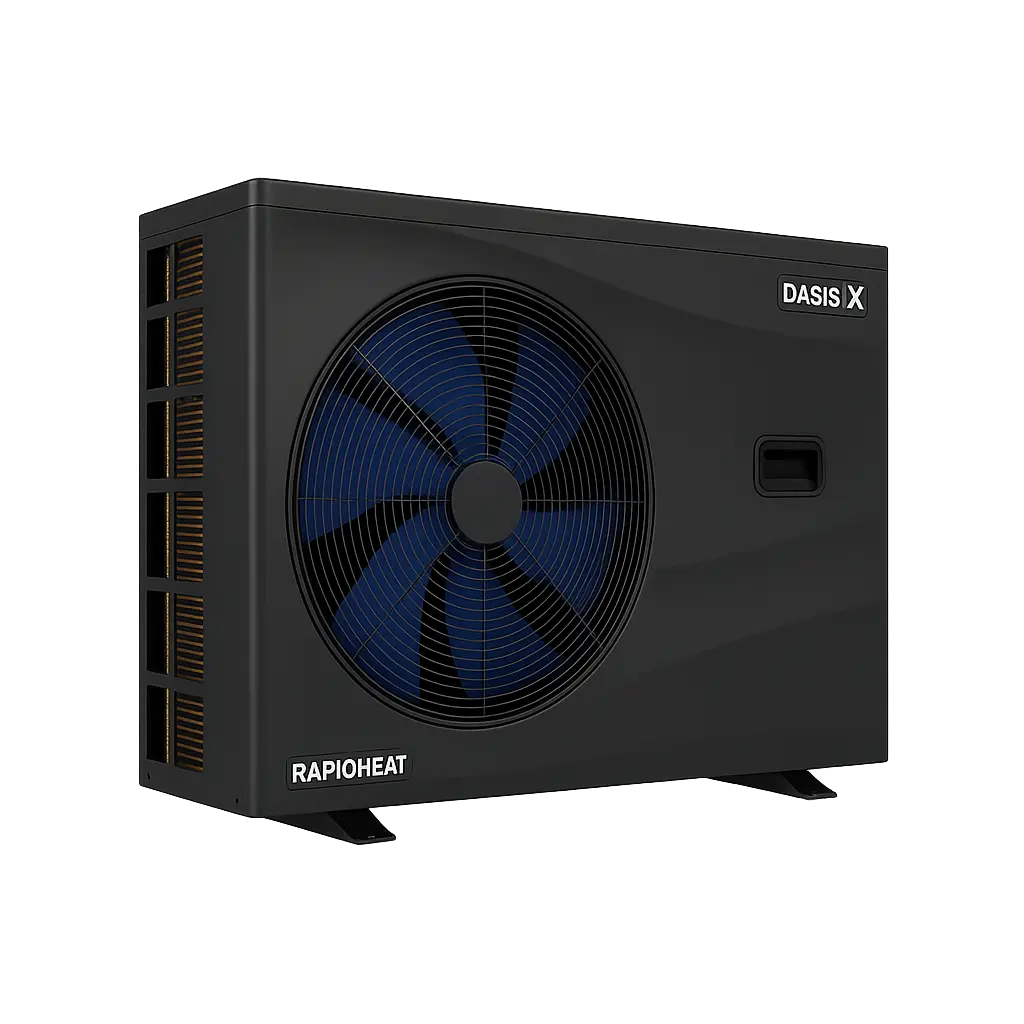
Sunlover Oasis 9kW
$4,125 supplied & installed
Sunlover Oasis 13kW
$5,220 supplied & installed
Sunlover Oasis 19kW
$7,150 supplied & installed
Sunlover Oasis 24kW
$10,550 supplied & installed
Live pricing from our quoting system — the same numbers you'd see on an MFP Easy proposal.
When does a swim spa beat a plunge-sized fibreglass pool?
Choose a swim spa when you need swim training in a space that is too small for a lap pool. It can also suit properties that cannot be excavated or that you do not own.
In Australia, a good-quality swim spa typically costs $20,000 to $30,000 before installation. The minimum installed cost is $30,000 to $40,000. Models designed to replicate lap-pool swimming cost $45,000 to $75,000.
A swim spa is typically 4 m to 8 m long and 1.3 m to 1.5 m deep. A lap pool is typically 15 m to 20 m long. A courtyard that can fit a swim spa may not fit a lap pool. According to swim-spa retailers, a swim spa also holds about five times less water than a swimming pool.
Choose a plunge-sized fibreglass pool for general family use. These pools have graded depths:
- The Latina is 4.50 m × 3.50 m and ranges from 1.37 m to 1.78 m deep.
- The Florentina is 6.50 m × 2.50 m, ranges from 1.10 m to 1.70 m deep, and holds 16,250 L.
- The Istana is 6.20 m × 3.30 m, ranges from 1.20 m to 1.68 m deep, and holds 21,500 L.
Children can stand in the shallow end. Several people can swim or sit in the pool at the same time without a current running.
A swim spa is delivered as an above-ground unit. A plunge-sized fibreglass shell is installed in an excavation.
If the yard has enough length, lap pools are designed for swim training. A swim spa provides an alternative when there is not enough length.
Prices are live all-inclusive installed prices (pool, standard installation, filtration and handover) for standard site conditions in South East Queensland.
FAQs
How much does a shipping container pool cost in Australia?
Published Australian prices range from $8,100 for a customisable 20 ft pool to $18,000 for a 40 ft modular steel pool. A 30 ft pool costs $11,250. A 40 ft pool with a blue interior costs $12,000, plus a flat $450 delivery fee.
These are ex-works product prices. Additional costs include base preparation, placement, fencing, decking, electrical connection, and approval.
Do you need council approval for a shipping container pool?
In Queensland, pool safety laws apply to shipping container pools. QDC MP 3.4 defines any pool that holds water more than 300 mm deep as a swimming pool, even if it is movable.
The pool must have a 1,200 mm barrier, a non-climbable zone, self-closing and self-latching gates, and a CPR sign. Container pool sellers do not publish the specific requirements used by building certifiers.
What is the average lifespan of a shipping container pool?
Shipping container pool sellers do not publish an average lifespan. Available estimates apply to the pool lining:
- Epoxy or elastic polymer coating: 8 to 10 years or less before refinishing
- Vinyl liner: 5 to 9 years before replacement
- Plaster interior: about 10 years
Some shipping container pool warranties may be as short as three years.
How deep are container pools?
A shipping container pool has an internal depth of about 2.29 m. The depth can be customised, but the flat floor means it remains the same throughout the pool. There is no shallow end. The Amalfi fibreglass shell ranges from 0.90 m at the shallow end to 2.00 m at the deep end.
Is a shipping container pool worth it?
A shipping container pool can be suitable for a rented property, a site that cannot be excavated, or when a 12.04 m swimming length is required. It is less suitable when children need a shallow end, the pool must be wider than 2.29 m, or the pool is intended to remain with the house.
Can you use a stock tank for a swimming pool?
Yes. Australian suppliers sell fully sealed single-piece galvanised stock tanks that are typically 1.8 m to 2.4 m in diameter. Installation usually takes one weekend and costs $1,500 to $2,500, including a pump, filter, and basic decking.
Under QDC MP 3.4, a stock tank pool is classified as a swimming pool. The 1,200 mm barrier requirement applies.