Best Fibreglass Pool Colour: Light vs Dark Compared
Which fibreglass pool colour to choose: light vs dark trade-offs, the finish two-thirds of our customers pick, and colours to avoid.
Written by Tehbyn Nova, Head of Operations & Growth · Technically reviewed by Caleb Druhan, General Manager (QBCC licence 15087383) on
Published · Updated
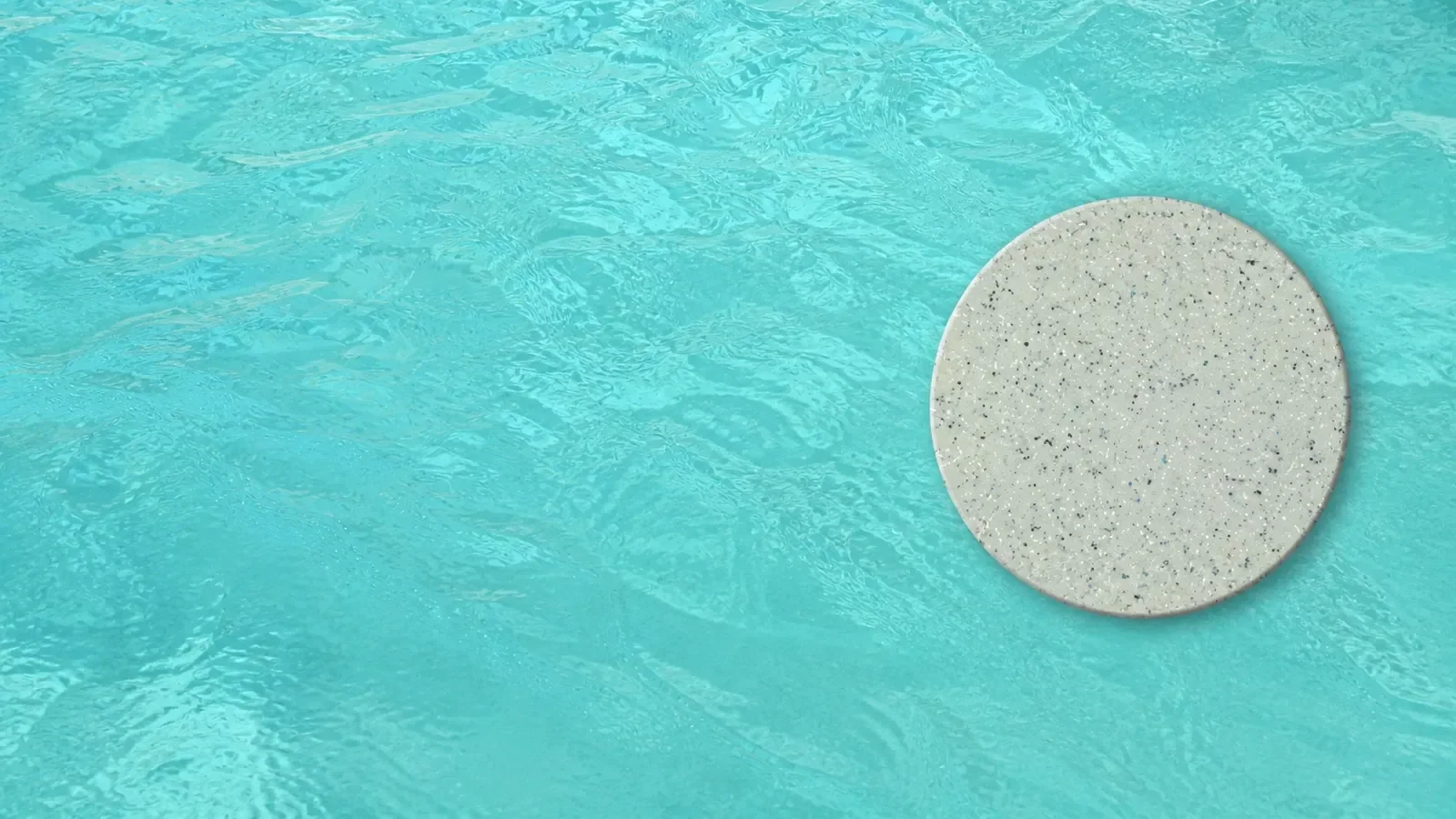
What is the best colour for a fibreglass pool?
The best fibreglass pool colour depends on the yard’s lighting, pool surrounds and landscaping. A mid-tone blue or light grey is suitable for most South East Queensland yards.
A fibreglass pool gets its colour from the gelcoat. This pigmented outer layer is moulded into the shell during manufacturing. It is not paint, plaster or a liner.
Consider the following factors:
- Available light. Direct sunlight, shadow and shade change the appearance of the gelcoat. Heavy planting can make the water appear darker and greener.
- Surround material. Paving, coping and decking affect the pool’s appearance. Light paving increases blue and turquoise tones. Dark decking makes blues and greys appear deeper. Also consider this when adding a waterline band to the selected finish.
- Floor visibility. For households with young children or non-swimmers, choose a finish that makes people on the pool floor easier to see. Light finishes provide better floor visibility than dark finishes.
Our fibreglass pool colour range includes Hamptons Blue, Silver Mist, Autumn Grey and Moonlight, with seven more Aqua Technics finishes available by custom order.
What is the most popular fibreglass pool colour in Australia?
There is no published data that identifies the most popular fibreglass pool colour across the Australian market. Builders typically report the best-selling colour from their own catalogue, and their results vary.
However, MFP Easy 12 month sales data shows Aquatechnics Colour Guard Silver Mist was the most popular colour. Of the 323 pools ordered from us in the 12 months to 10 August 2026, 220 were Silver Mist. This represents 68.1%, or about two-thirds, of our accepted projects during that period. Silver Mist is a light neutral tone, which can make a pool appear larger than a deeper finish in the same shell.
We build and install fibreglass pools in South East Queensland. The 68.1% figure applies only to our own orders. It is not an estimate of market share or survey data.
Our data shows which finish was selected by the largest share of our customers during the stated 12-month period. It does not determine which finish is suitable for a specific yard. The surrounding paving should also be considered.
“Silver Mist is nearly seven out of ten orders for a simple reason: it's the Whitsundays look. That bright tropical water is what most people picture when they imagine their own pool. We get plenty of interest in the darker finishes like Moonlight and Autumn Grey, but in my experience one half of the couple usually talks the other out of it pretty quickly. Practically there's nothing in it, every colour swims, runs and wears the same, so pick the water you want to look at every day.”

Is a light or a dark fibreglass pool colour better?
Neither option is better for every pool. The right choice depends on the pool, surrounding area and household requirements and personal preference.
| Light finishes | Dark finishes | |
|---|---|---|
| Water brightness and sparkle | Reflect more sunlight, making the water look brighter and more sparkling | Produce less brightness and sparkle than light finishes |
| How large the pool looks | Pearlescent white, light grey and light blue can make a smaller pool look larger | Do not make the pool look larger |
| How soon debris shows | Make leaves, dirt and debris easier to see, which may require more frequent cleaning | Make leaves and debris less noticeable against the pool floor |
| Seeing the pool floor | Make it easier to see a swimmer or hazard on the pool floor | Make the pool floor harder to see and may require extra lighting at night |
| Solar heat | Reflect more sunlight | Absorb more sunlight |
| Reflecting the surrounds | Show more of the water colour | Reflect more of the house, plants and sky |
Pool floor visibility has safety implications. A dark gelcoat reduces the contrast between the pool floor and a swimmer lying on it. This can make supervision more difficult, particularly for young children and non-swimmers. Extra lighting may be required if the pool is used at night.
A dark finish may suit a yard where leaves fall throughout the year or where a dark, reflective appearance is preferred. A light finish may suit households with small children, smaller pools, or situations where clear visibility of the pool floor is important.
Should I choose a white or a blue fibreglass pool?
Neither colour is better in all situations. Consider how the pool will look in your yard and the type of debris that may fall into it. Leaf litter is more visible on a pale finish than on a darker finish.
Water has a faint blue colour. It absorbs red, orange and yellow wavelengths more readily than blue wavelengths. In a pool, the blue light that scatters back is visible to the eye.
A white shell does not add pigment, so the water appears pale blue. This is why white was traditionally the standard colour for pools and spas.
A blue gelcoat adds pigment, making the water appear stronger and more saturated than it would in a white pool. In our current range, the blue finish is Hamptons Blue and the light neutral finish is Silver Mist.
A grey gelcoat does not make the water look grey. When filled, grey-based pools can appear soft blue, teal or light green-blue. As a result, a grey sample can look different from the finish in a filled pool.
Which fibreglass pool colours should I avoid?
No colour in a current fibreglass pool range is unsuitable by itself. Suitability depends on the pool surrounds, yard and household. Avoid these four situations:
- Choosing a finish from a colour card without comparing it with your paving, coping and house. These surrounding materials affect how the water colour appears. Compare the finish with your materials outdoors.
- Choosing a very dark finish for an unshaded, west-facing yard. Dark gelcoats absorb more sunlight than light gelcoats. They can also create a mirrored surface that reflects the sky rather than nearby plants.
- Choosing a finish that makes the pool floor difficult to see when the household includes young children or children who cannot swim. A darker gelcoat can reduce visibility from the pool edge and the house.
- Choosing a finish from a printed chart or screen. Printed charts and screens do not reproduce gelcoat colours accurately. Suppliers therefore describe these swatches as indicative only.
How do depth, sunlight and landscaping change my fibreglass pool colour?
Depth, sunlight and landscaping affect how the gelcoat colour appears after the pool is filled.
| Factor | Effect on colour |
|---|---|
| Water depth | The gelcoat appears darker and more saturated in deep water than in shallow water because light travels further before reflecting back. |
| Under water vs a dry swatch | The colour appears darker under water than on a dry sample. |
| Light level and time of day | Direct sunlight, shadow and shade affect the water colour. The colour also changes by time of day and season. |
| Planting | Vegetation gives the water a greener appearance. Dense planting makes it appear darker and greener, while sparse planting keeps it lighter. |
| Hard surrounds | Light paving strengthens bright blue and turquoise tones. Dark decking or fencing makes blues and greys appear deeper. A grey shell with black coping and a grey concrete patio appears soft blue. |
| Surface movement | Wind and water features add reflected light and shimmer, changing the perceived colour. |
Water depth, light and surface movement depend on the pool and site. Planting, paving, coping and decking are design choices that also affect the finished colour. Select them with the gelcoat colour.
Which fibreglass pool colours are trending right now?
As at August 2026, Silver Mist has been the leading colour in every half-year for which we have records, including the current half-year.
Hamptons Blue, Autumn Grey and Moonlight were added to the range on 24 July 2026 and we expect both Hamptons Blue and Autumn to be particularly popular. Moonlight is a darker colour which is suitable for many modern home styles.
A new colour system is a product release. It shows that the manufacturer has introduced new pigments. It does not show that buyer preferences have changed.
How do I make the final decision on my fibreglass pool colour?
Use these four steps to choose a fibreglass pool colour:
- View the gelcoat wet, in daylight. This shows how it will look under water and in sunlight.
- Compare it with your selected paving and coping. These materials affect how the water colour appears.
- Inspect a finished pool with the same finish and depth. The same gelcoat can look different in shallow and deep pools.
- Make your selection based on the overall result. Pool colour changes with the time of day and cloud cover. This variation is normal.
FAQs
What is the most popular pool colour?
Blue is the most popular pool colour across published Australian builder ranges, with classic mid-blue shades the most common. These claims refer to each builder’s own catalogue, not the overall market. Check which range is being measured when comparing popularity claims.
Is black a safe pool colour?
Safety depends on how clearly you can see the pool floor. A dark finish can make a person on the floor harder to see from the pool edge. This is particularly important for households with young children or children who cannot swim. Dark pools may also require more lighting for night swimming than light-coloured pools.
Is it better to have a lighter or darker pool liner?
A fibreglass pool does not have a liner. Its colour comes from the gelcoat moulded into the shell during manufacture. Unlike a vinyl liner, this surface cannot be replaced separately.
A lighter gelcoat makes the pool floor and debris easier to see. A darker gelcoat makes both less visible.
Will my pool look like the colour swatch?
Not exactly. Printed charts, screens and physical swatches do not reproduce gelcoat colours accurately. Suppliers provide swatches as a guide only. The colour will appear darker under water than on a dry sample. It will also appear darker in the deep end than in the shallow end.
Can I change the colour of a fibreglass pool later?
No. The gelcoat colour is moulded into the shell during manufacture and cannot be changed after installation. Choose the colour when ordering the pool.