Fibreglass Pool Tiles: Waterline Tile Options & Costs
Can you tile a fibreglass pool? Waterline tile works on a fibreglass shell with a flexible adhesive system. Tile types, install method and cost.
Written by Tehbyn Nova, Head of Operations & Growth · Technically reviewed by Caleb Druhan, General Manager (QBCC licence 15087383) on
Published · Updated
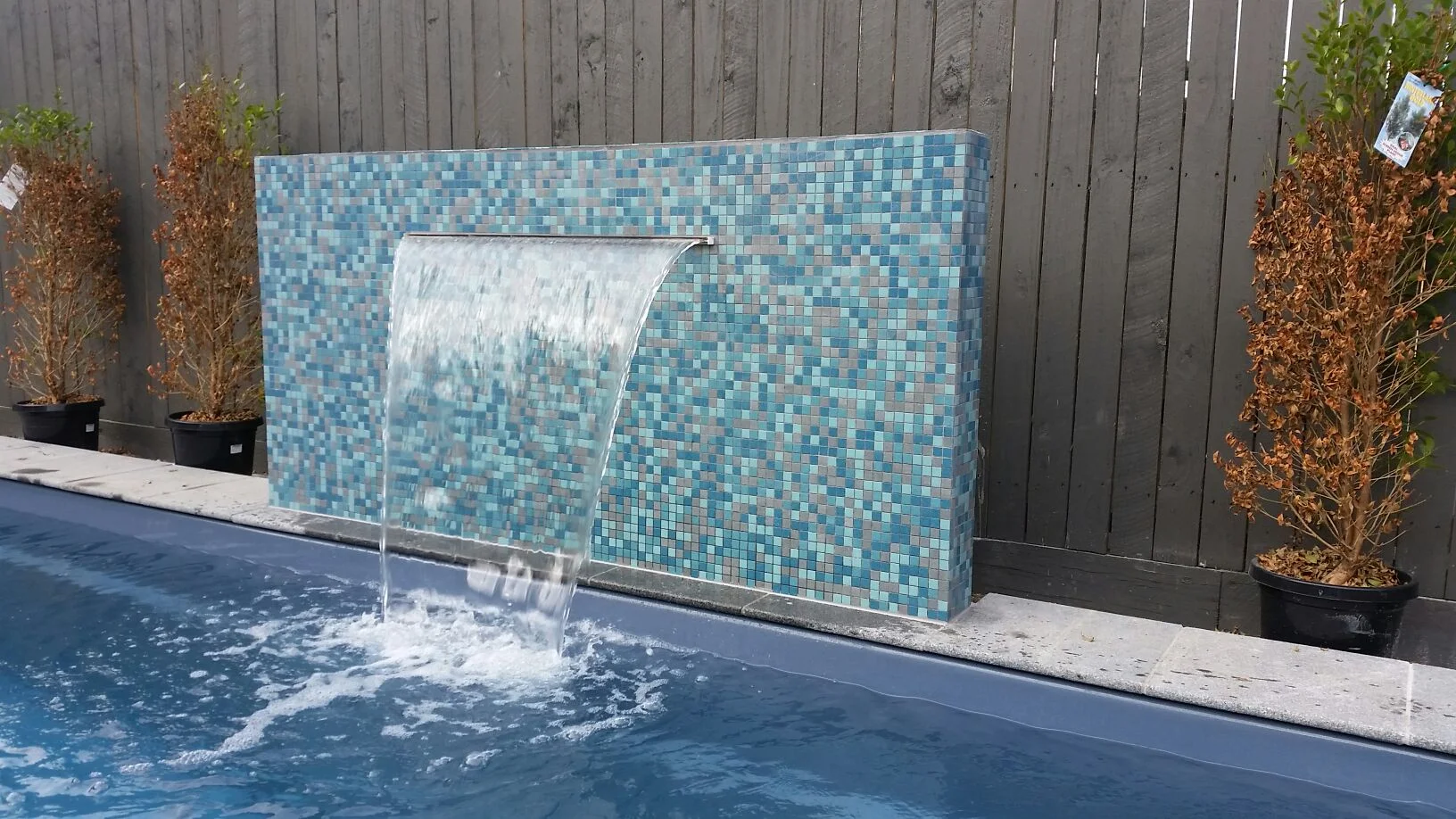
Direct answer
Fibreglass pool tiles, also spelled fiberglass in US sources, are installed along the waterline of a moulded fibreglass shell. They can also be installed along the edges of steps and seats or as individual tiles on a step face.
Can you tile a fibreglass pool?
Yes. Tile can be installed along the waterline of a fibreglass pool using flexible adhesive and grout. Do not use a rigid cement bed because the fibreglass shell moves.
Concrete pool shells are rigid, so tiles can be installed with cement-based mortar. Fibreglass shells flex during transport, installation, and thermal expansion and contraction. The tile installation system must accommodate this movement.
For a durable installation:
- Use adhesive and grout that can flex with the shell.
- Abrade and degrease the gelcoat before applying adhesive. The factory surface is smooth and non-porous, so it does not provide a suitable bond without preparation.
This method applies to new pool installations and refurbishments of existing pools.
Do fibreglass pools come with waterline tile?
No. A fibreglass pool shell comes with a moulded gelcoat waterline, not waterline tile. During manufacturing, gelcoat is applied to the mould before the structural fibreglass and resin layers. The finished gelcoat surface is part of the pool shell, so tile is not installed at the factory.
Waterline tile is optional. A fibreglass pool without a tile band is complete and ready for installation.
Can waterline tile be added to a fibreglass pool later?
Yes. Waterline tile can be added after a fibreglass pool shell is installed. Tilers do this for both refurbishments and new installations.
It is simpler to include waterline tile when ordering the pool. The tiler can use the known pool dimensions instead of measuring and cutting tiles to fit an installed shell.
For a retrofit, the tiler measures the shell in its installed position. This includes steps, seats and curved walls. The existing coping also determines where the top of the tile band finishes.
The gelcoat must be prepared before installing the tile. Factory gelcoat is smooth and non-porous, so adhesive does not bond to it without preparation. The surface must be abraded to remove the gloss and degreased to remove grime and body oils. Tile installed over unprepared gelcoat can lift, regardless of the adhesive used.
What tile works on a fibreglass pool?
Ceramic, porcelain, and glass tiles are suitable for a fibreglass pool waterline. Choose based on appearance and budget.
| Tile type | Look | Typical use on a waterline band | Relative cost |
|---|---|---|---|
| Ceramic | Natural, textured, traditional | The normal choice, run as the full band | Lower than glass |
| Porcelain | Classic | The full band | Lower than glass |
| Glass | Decorative | Small quantities for effect | The most expensive of the three |
Ceramic is the standard option for a full waterline band. Porcelain provides a classic appearance. Glass costs more and is generally used in small quantities for decorative effects.
Select the shell colour before choosing the tile. Matching the tile band to the shell colour is easier after the finish is selected. Review the fibreglass pool colour range, choose a shell colour, and then select a matching tile.
What adhesive sticks tile to a fibreglass shell?
Use a flexible adhesive and grout system to attach tile to a fibreglass shell. Do not use a sand-and-cement mortar bed or standard cementitious tile adhesive. These products can debond from the gelcoat over time.
ARDEX pool tiling bulletin TB198 recommends R-class adhesive for waterline tiles on fibreglass shells. It limits tiling to areas above, at and just below the waterline.
Fibreglass pool shells move during transport, installation and temperature changes. The tile adhesive and grout must accommodate this movement. Cement-based mortar and grout are suitable for rigid concrete pool shells, not fibreglass shells.
Waterline tiling is separate from pool installation. The tiler should specify the adhesive and grout system based on the selected tile and pool shell. The system must accommodate shell movement.
How is waterline tile installed on a fibreglass pool?
Waterline tile is installed on a fibreglass pool in six steps:
- Lower the water level below the tile band. For a retrofit, the water level must be lowered before preparation starts. Do not drain a fibreglass pool without approval from the builder. The water helps hold the shell in place. The builder determines how far to lower the water and for how long. This step is not required for a new pool that has not been filled.
- Abrade and degrease the gelcoat. The tiler sands the tile band to remove the gloss and create a keyed surface. The area is then degreased. Adhesive does not bond reliably to untreated gelcoat because it is smooth and non-porous.
- Set out the tile band. The tiler marks the band from the finished water level so the tiles are level with the water. For a retrofit, the measurements are taken from the installed shell and the tiles are cut as required.
- Install the tiles with flexible adhesive. The tiler beds the tiles into flexible adhesive along the band. If included in the design, the same tiles are installed along the edges of steps and seats and in step faces.
- Grout the joints. The tiler applies the grout specified for the flexible system. Cement grout is not used because it does not accommodate the required movement.
- Allow the system to cure and refill the pool. The tiler specifies the required curing time. Refill the pool only after curing is complete.
Can you fully tile a fibreglass pool?
No. On a fibreglass pool, tile is limited to a waterline band, step and seat edges, or selected areas on a step face. Tile does not replace the interior finish.
A fully tiled pool requires a concrete shell. The rigid shell supports tile installed in cement-based mortar across the interior. A fibreglass pool uses the factory-applied gelcoat as its interior finish.
If you want a fully tiled interior, compare a fibreglass pool versus concrete pool.
What does tiling a fibreglass pool cost?
Waterline tiling is not included in an MFP Easy fibreglass pool quote. The pool shell includes a moulded gelcoat waterline. Waterline tiling is booked separately with a tiler.
The tiler calculates the price based on:
- The pool perimeter
- The selected tile
Costs vary by pool size and tile type. For example, a plunge pool and a lap pool have different perimeters. Glass and ceramic tiles also have different prices.
Adding or removing waterline tiles does not change the published installed price of the pool.
| Pool size | Length | Depth | Installed from |
|---|---|---|---|
| 3m to 4m | 1.45m level | $45,847 | |
| 4m to 5.5m | 1.0m to 1.78m | $45,613 | |
| 6m to 7m | 1.0m to 1.88m | $54,443 | |
| 7.2m to 8m | 0.98m to 1.96m | $60,374 | |
| 8.5m to 11m | 1.0m to 2.0m | $72,535 |
Live all-inclusive installed pricing for standard site conditions in South East Queensland — updated straight from our quoting system.
The waterline tile price is confirmed in writing after the perimeter is measured and the tile is selected.
How long does tile last on a fibreglass pool, and what happens if it comes loose?
The lifespan of a waterline tile band on a fibreglass pool depends mainly on how it was installed. Tile can lift for three common reasons:
- The adhesive was rigid. A sand-and-cement mortar bed or standard cementitious adhesive can lose its bond when the pool shell moves.
- The gelcoat was not prepared. If the factory gloss was not abraded and degreased, the adhesive may not bond correctly.
- The installation system could not accommodate enough movement. A flexible system can still fail if shell movement exceeds its tolerance.
When a tile lifts, it exposes the gelcoat beneath it. The gelcoat must be inspected, cleaned, and repaired as needed before the tile is replaced. Installing new tile over damaged or contaminated gelcoat can cause the failure to recur.
Tile bands are typically repaired in sections. The failed section is removed and re-laid. The rest of the perimeter can remain in place unless it also shows signs of failure.
How does the tile line meet the coping and paving?
From the water outward, the tile band ends at the coping profile. The coping covers the beam at the top of the pool shell. The paving extends from the coping into the surrounding area.
Choose the coping profile and material before setting the tile band height or selecting the tile. Coping profiles finish at different points over the shell wall, so the selected profile determines the available tile band height.
Install a flexible, sealed movement joint where the shell meets the coping. Do not use grout alone at this junction. The shell and surrounding area move independently, which can crack the grout.
What does a fibreglass pool look like with and without tile?
Without a mosaic waterline band, the gelcoat continues from the pool floor to the coping. The water provides the only additional colour.
With a tile band, a horizontal row of tiles follows the waterline. The same tiles can also be added to steps and seats to make their edges more visible from outside the pool.
In South East Queensland, grime usually appears first at the waterline. A tile band covers this part of the gelcoat and provides a surface that can be scrubbed.
Choose tile colours using physical samples. Colours can vary by dye lot, and screens may not display them accurately.
FAQs
Can you do a waterline tile on a fibreglass pool?
Yes. First, abrade and degrease the gelcoat under the tile band. Then install the tiles using flexible adhesive and grout.
This method differs from installation on a concrete pool. Concrete shells are rigid and use cement-based mortar. Do not use a rigid tile bed on a fibreglass shell because shell movement can cause the tiles to debond.
What is the best type of tile for a pool waterline?
Ceramic is the standard choice for a pool waterline band and provides a natural, textured finish. Porcelain offers a classic appearance and is also suitable for a full band. Glass is the most expensive option and is typically used in small quantities as an accent.
All three materials are highly durable at the waterline. Choose based on appearance, budget, and compatibility with the pool shell colour.
Do you need waterline tiles in a pool?
No. A fibreglass pool has a finished gelcoat surface and does not require waterline tiles. You can add tiles to change the appearance, highlight steps and seats, and make waterline grime less visible on the gelcoat.
Can waterline tile be added after the pool is installed?
Yes. Tilers can add waterline tile to an installed fibreglass pool. They measure and cut the tile to fit the shell and existing coping.
The water level must be lowered below the tile band. Contact the builder before lowering it because the water helps hold the shell in the ground.
Specifying waterline tile when ordering the pool avoids additional cutting and fitting.
Can a fibreglass pool be tiled all over like a concrete pool?
No. Tiles can be installed as a waterline band, along the edges of steps and seats, or as sections on a step face. A fully tiled pool requires concrete construction and is not an upgrade to a fibreglass shell.