Fibreglass Pool Cleaners: Types, Specs & Buying Guide
Which pool cleaner suits a fibreglass pool: robotic, suction, pressure and in-floor compared, what gelcoat needs, and Australian price bands.
Written by Tehbyn Nova, Head of Operations & Growth · Technically reviewed by Caleb Druhan, General Manager (QBCC licence 15087383) on
Published · Updated
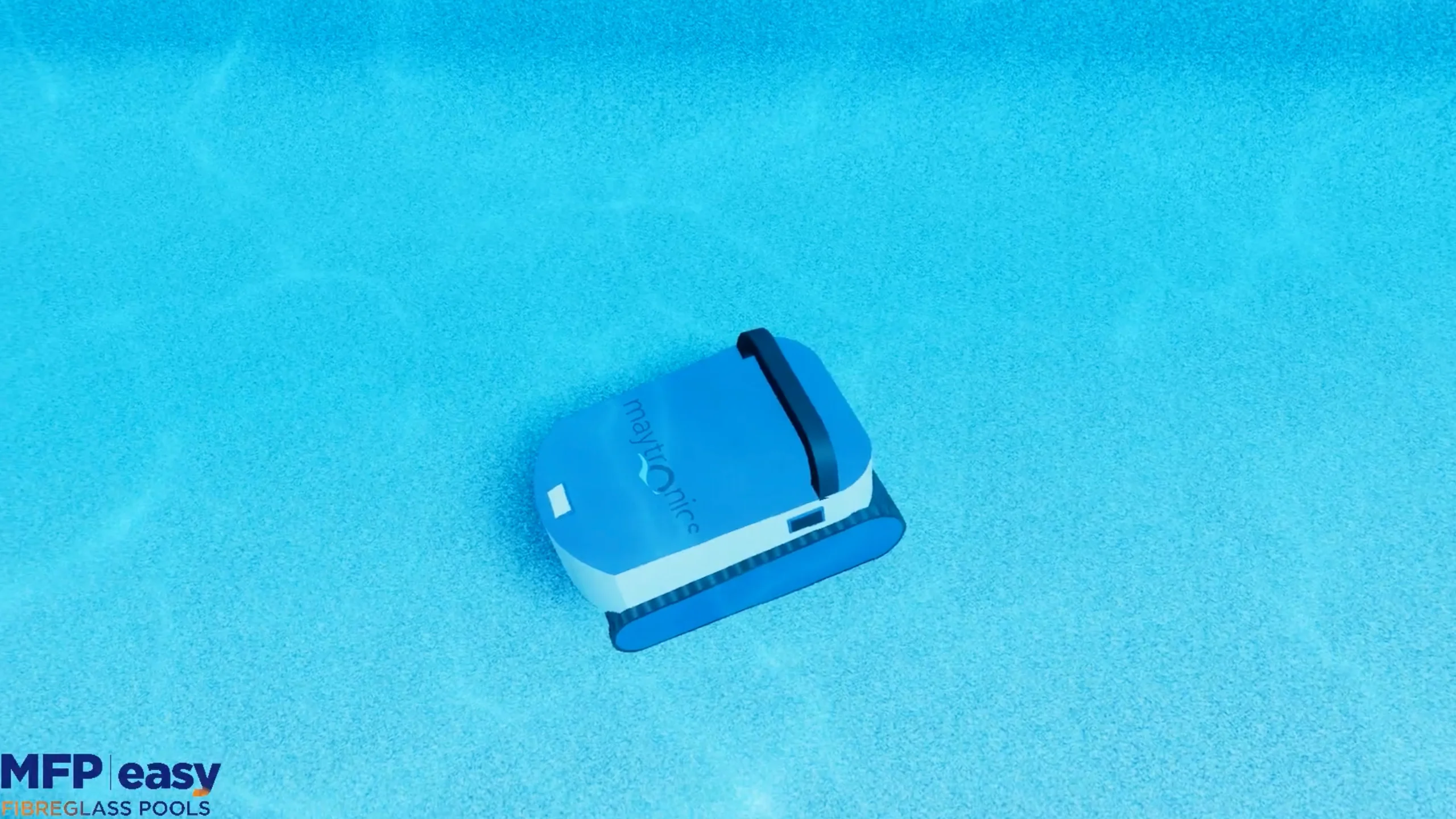
A fibreglass pool cleaner must grip smooth gelcoat surfaces and use brushes that are suitable for gelcoat. Robotic, suction, pressure, and in-floor cleaners can be used in a fibreglass pool.
A robotic pool cleaner has a motor, brushes, and a filter. A suction cleaner uses the pool pump.
“Fibreglass pool cleaner” can refer to:
- A machine that moves around the pool and collects debris.
- A bottled gelcoat cleaner that is applied by hand to remove waterline marks.
The machine removes debris from the pool. The bottled cleaner treats marks that require treatment rather than vacuuming.
Debris removal is one part of fibreglass pool maintenance. Other tasks include water balance, filtration, and adding pool chemicals.
What type of pool cleaner suits a fibreglass pool?
Four types of automatic cleaners can be used in a fibreglass pool:
- A robotic pool cleaner has its own motor and bag or cartridge. Collected debris does not enter the pool filter.
- A suction cleaner uses the pool pump. Collected debris enters the pump basket and filter.
- A pressure cleaner uses a model-specific drive system. Confirm the drive arrangement with the retailer.
- An in-floor cleaning system uses pop-up heads installed in the pool floor. The heads operate in sequence and move debris towards a drain at the deep end.
| Cleaner type | How it drives | Climbs walls and waterline | Runs off the pool pump | Typical Australian price |
|---|---|---|---|---|
| Robotic pool cleaner | Its own electric motor, filtering into its own bag or cartridge | Model-dependent, and the one capability to confirm on a smooth gelcoat wall | No. It is independent of the pool's pump and filter | $995 to $3,295 |
| Suction cleaner | Flow from the pool's own pump pulls it around the floor and walls | Model-dependent | Yes. It draws through the skimmer, and its debris reaches the pump basket and filter | $475 to $750 |
| Pressure cleaner | Confirm the drive arrangement with the retailer, model by model | Model-dependent | Confirm with the retailer | $945 and up |
| In-floor cleaning system | Pop-up heads moulded into the floor, firing in sequence | No. The heads are set into the floor, the steps and the benches | Plumbed into the pool's circulation, with debris caught in a leaf canister beside the pump | Priced with the pool |
MFP Easy builds and installs one-piece fibreglass pools in South East Queensland. Pools in the range are 3.0 m to 11.48 m long. Shallow ends start at 0.90 m, and deep ends extend to 2.0 m.
The floor, curved wall coves, steps and swim-out use the same gelcoat surface. Debris can collect in the coves and around the steps. Check whether the cleaner can cover these areas.
The prices in the table are from Pool Shop Australia's cleaner comparison table for 2026. The pressure-cleaner range is specific to that retailer. Its only listed pressure cleaner is the Jetvac Pressure Pool Cleaner at $965.00. The stated price of $945 and up is therefore a retailer range, not a market-wide range. CHOICE has not tested pressure cleaners, so there is no independent comparison baseline for this type.
Pool Shop Australia and CHOICE identify suction cleaners as the lowest-cost hardware option and robotic cleaners as the highest-cost option. Robotic cleaners also have the widest price range. Pool Shop Australia places pressure cleaners between suction and robotic cleaners.
A mainstream suction cleaner costs less than $800. A mainstream robotic pool cleaner usually costs between $1,300 and $1,900.
What should you look for in a cleaner that will run on gelcoat?
Evaluate these specifications when choosing a cleaner for a gelcoat interior:
- Scrubbing surface: Use soft nylon bristles or a microfibre brush plate. Wire brushes, stainless-steel brushes, steel wool, scouring pads, and stiff bristles can scratch gelcoat. Confirm that the brushes are rated for delicate surfaces.
- Drive system: Confirm that the drive system supports smooth gelcoat. Smooth walls provide limited grip. Before purchase, verify that the cleaner can climb the walls of a smooth-shell pool.
- Navigation pattern: Check whether the cleaner uses random or systematic navigation. A random-pattern cleaner crosses the floor repeatedly. A systematic cleaner follows a set pattern. For pools with coves, moulded steps, or a swim-out, identify any areas the cleaner may miss.
- Filtration fineness: Check the size of particles the filter can capture and retain. A coarse basket captures leaves and gum nuts but may allow fine silt to pass through and settle again. A finer cartridge or bag retains silt. Check the filtration rating and replacement cost.
- Unit weight: Confirm that the operator can lift and carry the cleaner. The cleaner must be removed after each cycle and returned before the next cycle. Weight affects handling, not cleaning performance.
Check the scrubbing surface first. The cleaner uses the same brush during every cycle. Scratches can create rough areas where algae and stains can develop.
A cleaner removes debris from pool floors and walls. It does not replace water balancing or sanitising chemicals. These specifications do not affect water balance, sanitising chemicals, or the service life of a fibreglass pool.
Which robotic cleaners work best in a fibreglass pool?
The best robotic pool cleaner depends on the pool and how the cleaner will be used. The main operational difference is whether the cleaner is corded or cordless.
Mr Pool Man’s Australian robotic pool cleaner guide, updated April 2026, lists models in three price bands:
- Under $1,500: corded Zodiac VX42 4WD at $1,299, corded Zodiac CX40 at $1,449, and cordless Chasing Hydro 3S at $1,499.
- $1,500 to $1,700: corded Hayward SharkVAC XL and cordless Robo-Tek Robo-Combo at $1,599 each, corded Zodiac CX50 at $1,649, corded Chasing Hydro 4 at $1,699, and cordless Aiper Scuba X1 at about $1,699.
- Above $1,700: corded Robo-Tek Robo-Plus V2 at $1,790, cordless Madimack GT Freedom i45 at $1,881, and cordless Aiper Scuba X1 Pro at about $1,899.
Other sources list lower entry prices. CHOICE tested robotic cleaners priced from $419 to $2,749 and advised buyers to expect to pay over $1,000. These figures were last updated in December 2021 and provide an older tested baseline rather than current retail pricing.
Pool Shop Australia describes its robotic cleaner range as costing $995 to $3,295. However, its listed models range from the Kokido Vektro AUTO at $450.00 to the Dolphin X40 Plus at $2,495.00. Cleaners under $1,000 are available, but they are below the price band that specialist retailers describe as mainstream.
Our supply list includes two robotic cleaners. The prices come from the same catalogue used for our quotes:
Dolphin EON 120D Cordless
Robotic pool cleaner
$2,299 supplied
Dolphin S2000
Robotic pool cleaner
$2,199 supplied
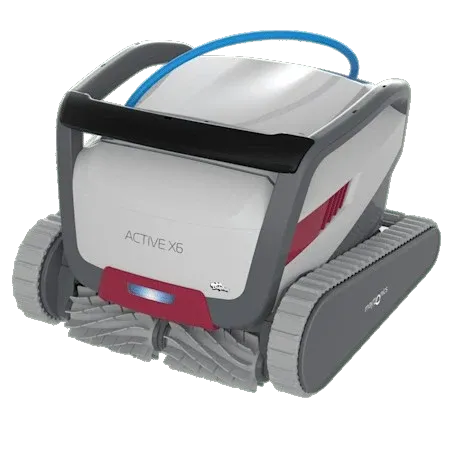
Dolphin Active X6 2026
Robotic pool cleaner
$3,699 supplied
Cord length is generally not a constraint for a fibreglass pool. The longest shell in our range is 11.48 m. A corded cleaner with a cord rated beyond 11.5 m can reach all areas of a domestic fibreglass pool.
A corded cleaner uses mains power and can run continuously for its full cycle. A cordless cleaner uses a battery and must be removed and recharged between cycles. This determines whether another cleaning cycle can start immediately.
Price does not determine whether a cleaner is suitable for gelcoat. Check the brush material, drive system, and navigation pattern for each model.
“A good quality robotic cleaner is the one accessory I'd call a necessity rather than a nice-to-have. It genuinely changes how much time your pool takes each week. We use and recommend Maytronics, one of the most established names in robotic cleaners, and part of the reason is practical: parts and servicing are available through most pool shops, so you're never stuck when it needs attention. For a fibreglass pool it's a no brainer.”
Do suction cleaners work on a fibreglass pool?
Yes. Suction cleaners work in fibreglass pools. They are generally less expensive than pressure and robotic cleaners.
A suction cleaner uses the pool pump rather than a separate motor. The pump pulls water through the cleaner’s hose. This flow moves the cleaner around the pool and sends debris through the skimmer, pump basket, and filter. Where suction-cleaner debris ends up is the pool’s filtration system, which must process the debris.
A robotic pool cleaner collects debris in its own bag or cartridge and returns filtered water to the pool.
In December 2021, CHOICE tested suction cleaners priced from $249 to $799. These prices are an older baseline. Pool Shop Australia currently lists models from the Zodiac MX6 at $489.95 to the Zodiac AX20 Activ at $750.00. These prices are within its quoted range of $475 to $750 for suction cleaners.
Before buying a suction cleaner, check the replacement cost and expected service life of the shoe or disc that contacts the pool floor. This part wears out and must be replaced.
What vacuum and vacuum head should you buy for a fibreglass pool?
Choose a vacuum head based on the material that contacts the pool surface. Use soft nylon on gelcoat. Do not use stiff-bristled or metal-bristled heads.
There are two types of fibreglass pool vacuums:
- Powered vacuums: These include battery-powered handheld vacuums for cleaning sections of the pool floor and cordless robotic cleaners that run a full cleaning cycle.
- Manual vacuum heads: These attach to a telescopic pole and hose. The pool pump provides suction, and the user moves the head across the pool floor.
Manual vacuuming is part of how to clean a pool. Other tasks include skimming the surface, brushing the walls, and emptying the baskets.
Because the vacuum head remains in contact with the gelcoat, its contact material should be soft nylon. When choosing a manual head, compare the contact material, whether it uses brushes or wheels, and whether it swivels to remain flat when the pole angle changes.
Can a fibreglass pool clean itself?
An in-floor cleaning system is the closest option to self-cleaning for a fibreglass pool. It must be specified before the pool is manufactured.
The system uses pop-up cleaning heads and a debris drain built into the pool shell. The heads operate in sequence and rotate 360 degrees. They direct water across the pool floor, moving debris towards a drain at the deep end. The debris then enters a leaf canister beside the pump.
The manufacturer states that this circulation also helps distribute chemicals and maintain a consistent water temperature. This claim has not been independently tested.
The cleaning heads and debris drain are installed in the shell at the factory. They are colour-matched to the pool interior and sit flush with the floor, steps and benches. The system is priced as part of the pool.
FAQs
What can I clean my fibreglass pool with?
Use the following tools and products:
- A soft nylon pool brush on a telescopic pole
- An automatic cleaner for debris
- A bottled gelcoat surface cleaner for waterline marks
Do not use wire brushes, stainless-steel brushes, steel wool, scouring pads or stiff bristles. These can scratch the gelcoat.
What's the best thing to clean fibreglass with?
Use soft nylon bristles. Harder materials can leave micro-scratches in the gelcoat, which is the outer surface of a fibreglass pool shell. These scratches create rough areas where algae and stains can develop, making the shell harder to clean.
Will vinegar clean fibreglass?
Do not use vinegar to clean a fibreglass pool. When added to the pool, vinegar affects the water chemistry instead of cleaning the shell. Clean gelcoat with a soft nylon brush. The cleaner and filter will remove the loosened material.
How can I remove calcium buildup from my fibreglass pool?
A robotic, suction, or pressure cleaner cannot remove calcium buildup. These cleaners collect debris such as leaves, dirt, and silt from the pool floor and walls. Calcium scale forms when the water chemistry is unbalanced. Correct the water balance to address it.
Do cordless pool vacuums really work?
Cordless pool cleaners use an onboard motor, filter, and rechargeable battery. Unlike corded units, they must be recharged after each battery cycle. Maytronics Australia states that one of its cordless models supports pools up to 15 metres and cleans floors, walls, the waterline, steps, and ledges as shallow as 20 cm.