Fibreglass Pool Kits vs Installed Pools: Costs Compared
A fibreglass pool kit buys the shell — about a quarter to a third of a finished pool. Here's what the other 70% costs, and when a kit works.
Written by Tehbyn Nova, Head of Operations & Growth · Technically reviewed by Caleb Druhan, General Manager (QBCC licence 15087383) on
Published · Updated
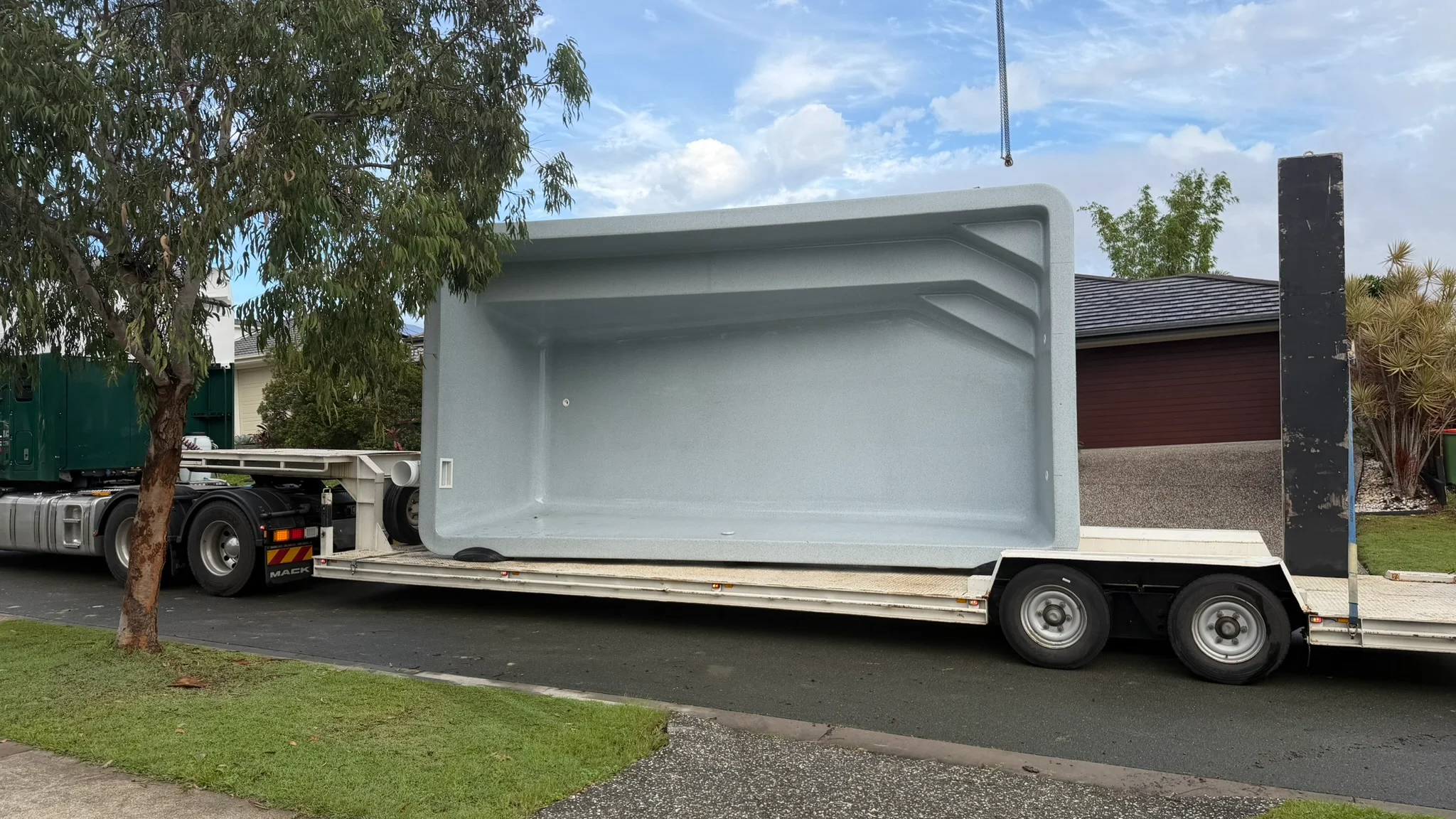
A fibreglass pool kit includes the moulded shell and fittings. The shell typically accounts for one-quarter to one-third of the cost of a finished, certified fibreglass pool. The remaining ~70% covers site work, licensed trades and certification. Kit and installed prices differ because they cover different scopes of work.
MFP Easy does not sell shell-only kits. We install fibreglass pools across Brisbane, the Gold Coast and the Sunshine Coast. Our installed prices are based on our own quotes. Kit buyers must fund and coordinate the finishing items listed below after the shell arrives.
A fibreglass pool kit may suit some sites and owners. To compare a kit with an installed pool, include the same scope of work in both prices.
What does a fibreglass pool kit include vs an installed pool?
A fibreglass pool kit includes the pool shell and hardware. An installed pool also includes site work and trade services. These services are usually completed by separate contractors on different days. For an installed pool, the price breakdown is approximately one-third for the shell and two-thirds for site work and trades.
| Fibreglass pool kit | Installed fibreglass pool | |
|---|---|---|
| Pool shell | Included — one-piece moulded fibreglass shell with gelcoat | Included |
| Fittings and hardware | Usually included — skimmer box, returns, main drain, and sometimes lights | Included |
| Filtration equipment | Often supplied as boxed equipment, including the pump, filter, and chlorinator | Supplied, installed, commissioned, and operating |
| Delivery to site | Sometimes included; otherwise quoted separately | Included |
| Site inspection and set-out | Your responsibility | Included |
| Excavation and spoil removal | Not included — you engage the earthworks contractor | Included |
| Crane lift | Not included — you book and pay for the crane | Included |
| Bedding, levelling and backfill | Not included | Included |
| Plumbing to the equipment pad | Not included — requires licensed work | Included |
| Electrical supply, bonding and earthing | Not included — requires licensed work | Included |
| Coping and surrounds | Not included | Included |
| Compliant pool barrier | Not included | Included |
| Temporary fencing during the build | Your responsibility | Included |
| Building approval and certification | Your responsibility as the owner-builder | Included and lodged by us |
| Water fill and handover | Your responsibility | Included |
| Responsibility if a problem occurs | You coordinate with each trade separately | The builder manages the work under one contract |
With a kit, you arrange the contractors, quotes, and work dates. You must also schedule the work in the required order.
What does it cost to finish a fibreglass pool kit?
Finishing a fibreglass pool kit costs more than the kit itself. The shell accounts for roughly one-quarter to one-third of the finished pool cost. The remaining items account for about 70%. Some costs are predictable, but most depend on site conditions. For example, crane costs differ between a flat corner block and a site that requires lifting the shell over a two-storey house.
| Item after the kit | What it covers | Cost |
|---|---|---|
| Excavation and spoil removal | Digging the hole, trucking the spoil off site | Priced per site — access is the driver |
| Crane lift | Craning the shell from the truck into the hole | Priced per site — reach and setup |
| Bedding and backfill | Sand or crusher-dust base, staged backfill as the shell fills | Priced per site |
| Plumbing | Suction and return lines, equipment pad connections — licensed work | Priced per site |
| Electrician | Power to the pad, bonding and earthing — licensed work | $1,250–$1,750 |
| Filtration installation | Setting, plumbing and commissioning pump, filter and chlorinator | Priced per site |
| Coping and surrounds | Paving or coping to the pool edge, drainage falls | Priced per site — square metres decide it |
| Compliant pool barrier | The permanent fence, gates and latching that certification depends on | Priced per site — perimeter length |
| Temporary fencing | Required around an open excavation and an unfenced pool | About $500 |
| Certification stack | Building approval, inspections, final pool safety certificate | $2,000–$4,500, typically around $3,000 |
| Water fill | Tanker or metered fill to operating level | $250–$700 depending on council |
Four items depend mainly on the site: excavation, the crane lift, coping and surrounds, and the pool barrier. Excavation costs depend on machine access and spoil removal. Crane costs depend on the required reach, where the truck can legally stand, and any obstacles between the truck and the excavation. Coping and surround costs depend on the paved area and the drainage falls. Barrier costs depend on the perimeter length and whether a boundary fence can form part of the barrier. These costs cannot be confirmed until the site has been measured.
Site access is the main factor affecting these costs. Direct excavator access is less expensive than lifting an excavator over a house or removing spoil by hand. Restricted access can more than triple excavation costs for the same hole. The relevant measurements are the clear width of the side gate, the height of any eaves the machine must pass under, the location of sewer and stormwater lines, and whether a crane can operate from the street without requiring a closure. Site slope can affect both excavation costs and the retaining or step-down work around the pool. The pool cost calculator applies these variables to the selected pool shape and size.
The fibreglass shell must sit on a level, compacted base of sand or crusher dust. The installer adds backfill in stages while the shell fills with water. This process balances the pressure inside and outside the shell as the water level rises. An incorrect backfill sequence can move the shell and require repairs after the coping has been installed.
What licensed and certified work does a kit still require?
Buying the pool shell does not change the compliance requirements. In Queensland, licensed trades must complete the plumbing and electrical work, including bonding and earthing around the pool. The pool build and barrier must also be certified before the pool can be used. The person managing the project is responsible for meeting these requirements.
Certification requires inspections at specific stages. The certifier determines which stages apply. Confirm the inspection schedule before work starts, and do not complete work that must remain accessible for inspection. If an inspection identifies a problem after work is finished, you may need to remove and rebuild that work.
The pool barrier must meet the standard applied by the certifier. The certifier may check the gate swing, latch height, climbable zone, and clearance under the fence. Boundary fences, retaining walls, and stairs near the pool can affect compliance. Do not fill or use the pool until the barrier passes certification.
As an owner-builder, you must schedule inspections, manage the required documents, coordinate trades, and address any non-compliant work. Before buying a kit, contact a building certifier in your council area. Ask which requirements apply and when each inspection must occur.
Does a shell warranty survive an owner-builder install?
Whether a fibreglass pool shell’s structural warranty applies when someone other than an approved installer installs it depends on the manufacturer and the product’s warranty conditions. Ask the kit supplier to confirm the requirements in writing before you pay a deposit.
Installation conditions can affect structural warranty claims. These conditions may cover bedding, backfill sequencing, and the water level maintained during backfilling. With a kit installation, you are responsible for this work.
Before paying a deposit, read the full warranty document and verify its installation requirements. Obtain the supplier’s response as a written term rather than relying on verbal confirmation.
When does a fibreglass pool kit make sense?
A fibreglass pool kit is suitable when you only need to purchase the shell. Common situations include:
Remote and rural sites. Full installation may include significant freight and travel costs outside an installer's service area. If local contractors are available, the owner can coordinate the installation using a kit.
Experienced owner-builders with trades already arranged. Owners who have a plumber, electrician and earthmoving contractor, and understand the inspection sequence, can add the shell to their existing process.
Owners completing part of the work with their own equipment. Owners who have access to earthmoving equipment can handle the excavation themselves, reducing the largest site-specific variable in the finishing cost.
When does an installed pool win?
An installed fibreglass pool is suitable for owners who want one builder to manage the full project. One contract covers every scope in the comparison table. This reduces gaps between trades and gives the owner one point of accountability. At handover, the pool is certified and ready for use, and the barrier is signed off.
“Our team of professional installers have years of experience installing fibreglass shells. We expertly monitor the pool shell walls for bowing or bending during backfill and water fill, make sure the pool sits exactly level, and that the plumbing is airtight. While a pool shell kit is an option for some, a professional install means years of swimming in peace of mind, knowing your shell is built to last.”

What does an installed fibreglass pool cost instead?
An installed fibreglass pool from MFP Easy costs between $46,053 and $108,867. This price includes the pool shell, excavation, crane, backfill, plumbing, electrical work, filtration, approvals, certification and handover. The range covers 40 models:
| Range | Installed price |
|---|---|
| Entry — small pools | from $46,053 |
| Top of range — largest lap pools | up to $108,867 |
Each model has a specific fibreglass pool price within this range. The final price also depends on the site. The main site factors are slope, access and removal of an existing pool. We confirm these factors after measuring the site.
Shell size and shape also affect the price. Browse by pool type to compare shells for small, medium and large yards, including lap pools.
To compare a kit price with the cost of a finished pool, book a site consultation. We will assess the site and provide a price.
FAQs
How much does a fibreglass pool kit cost compared with an installed pool?
A fibreglass pool kit includes the shell and fittings. This typically accounts for one-quarter to one-third of the total cost of a finished pool. The buyer must pay for and coordinate the remaining ~70%.
Most of these additional costs depend on the site and cannot be quoted from a catalogue. As a result, two identical pool shells installed in different backyards can have different total costs. A kit price covers a fixed set of items, while an installed price covers the full build and varies by site.
What is a fibreglass pool shell price actually buying?
A fibreglass pool shell price usually includes:
- The one-piece moulded shell with a gelcoat surface
- Plumbing fittings, such as the skimmer box, return lines, and main drain
- Delivery to the site, in some cases
Delivery may be quoted separately. The price does not include excavation, crane lifting, licensed plumbing and electrical work, the pool barrier, or certification.
Can you install a DIY fibreglass pool yourself?
You can supply and coordinate a DIY fibreglass pool installation. However, licensed trades must complete the plumbing and electrical work, including bonding and earthing. The pool installation and barrier must also be certified before use.
As an owner-builder, you are responsible for meeting these requirements and arranging inspections at the required stages.
Can you owner build a pool in QLD?
Pool construction requires licensed plumbing and electrical work, including bonding and earthing. The pool and barrier must also be certified, regardless of who supervises the project.
Before paying a deposit on a pool shell, ask QBCC and a private certifier whether an owner-builder permit is suitable for your project. Do not rely on information from a kit vendor’s website.
Are factory seconds fibreglass pools worth buying?
A factory seconds fibreglass pool is a discounted shell with a cosmetic or structural defect. Before buying one, get a written description of the defect and confirm whether the structural warranty applies to that shell.
The discount applies only to the shell. Excavation, crane lift, licensed trades, fencing, and certification still cost the same. Consider the total project cost, the type of defect, and the warranty terms before buying.
Do you sell fibreglass pool kits?
No. MFP Easy sells and installs fibreglass pools. We do not sell shell-only kits.
We install pools across Brisbane, the Gold Coast, and the Sunshine Coast. The price covers a certified, ready-to-use swimming pool under one contract. You do not need to engage trades, book inspections, or arrange a separate freight quote for the shell.
Does a fibreglass pool kit still need council approval and a pool fence?
Yes. A pool built from a kit requires building approval, inspections, and a compliant pool barrier. The barrier must be certified before the pool is filled or used. If you buy the shell separately, you must arrange these requirements yourself.