Fibreglass Pool Maintenance: Schedule, Costs & Care
What a fibreglass pool needs week to week: the cadence, water balance targets, running costs and the gelcoat rules, for South East Queensland.
Read more
Pool care on a fibreglass pool is refreshingly light work. The smooth gelcoat surface gives algae almost nothing to grip, so the heavy jobs that come with concrete — acid-washing, re-marbelite, chasing stains out of a porous surface — simply aren't part of the picture. For most of our owners across South East Queensland, clear water comes down to about fifteen minutes a week and a rough eye on a handful of numbers.
The weekly routine is three jobs: skim the surface, test the water, and empty the skimmer and pump baskets. Most weeks, that's the lot.
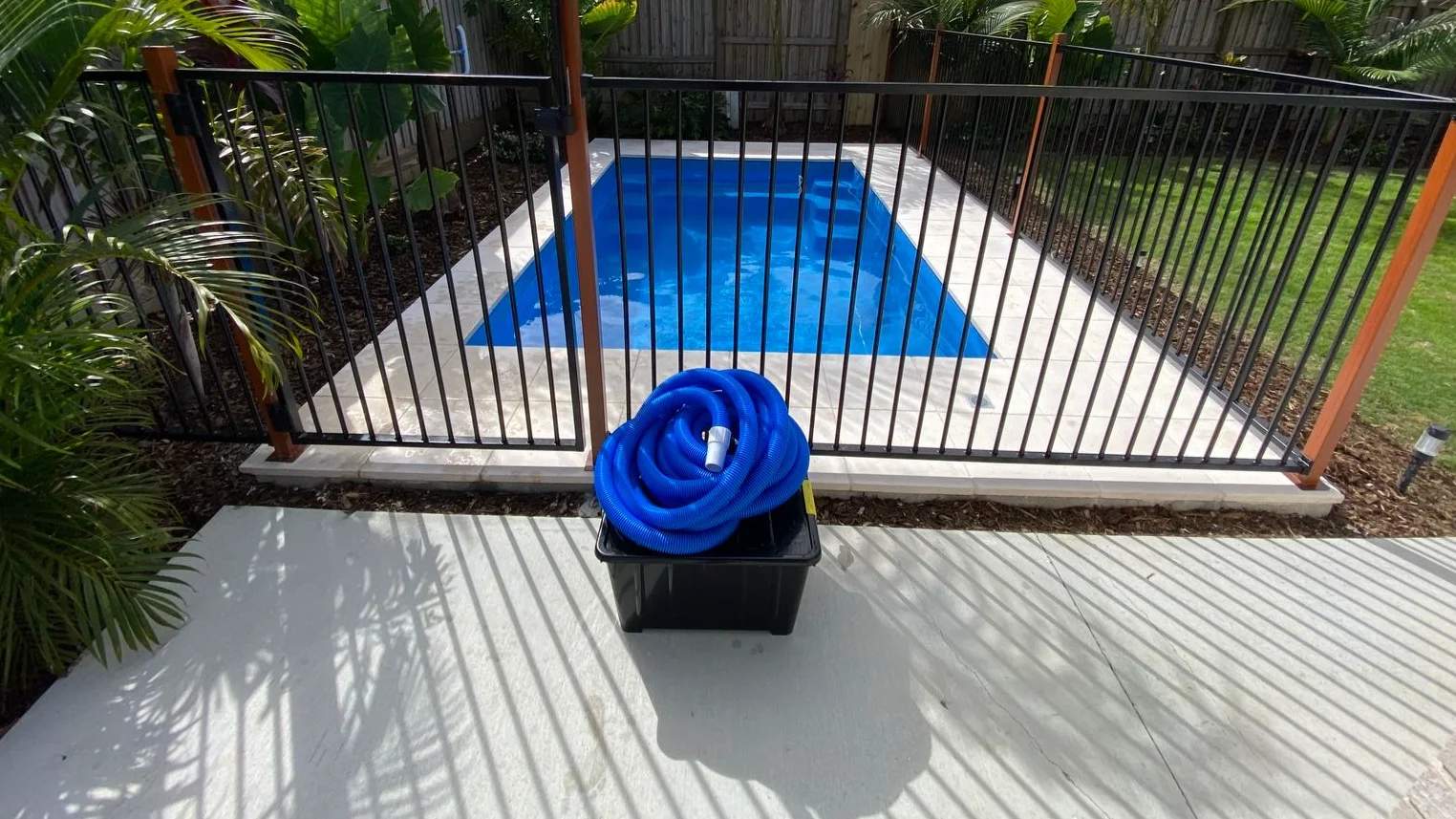
Skim off leaves and bugs before they sink and start breaking down. Empty the baskets so the pump keeps its flow — a clogged basket makes the whole system work harder for less. Run the filter long enough to turn the water over once a day: six to eight hours through summer, three or four once the weather cools. Brush the waterline and steps every couple of weeks to lift the thin film that builds where the water meets the shell.
Once a month, backwash or rinse the cartridge and take a sample to a pool shop for a second opinion on the chemistry. The full step-by-step is in our fibreglass pool maintenance guide.
Balanced fibreglass pool water sits at a pH of 7.2 to 7.6, free chlorine of 1 to 3 ppm, and total alkalinity of 80 to 120 ppm. Hit those and the water stays clear, comfortable to swim in, and gentle on the gelcoat. Getting the pH right does the most work here — it decides how effective your chlorine is and how the water feels on skin and eyes.
| Reading | Target range | Why it matters |
|---|---|---|
| pH | 7.2 – 7.6 | Controls how hard your chlorine works and how the water feels on skin. |
| Free chlorine | 1 – 3 ppm | Your sanitiser — the reading to watch daily through summer. |
| Total alkalinity | 80 – 120 ppm | Buffers the pH so it stops bouncing after you dose. |
| Calcium hardness | 100 – 200 ppm | Lower than a concrete pool needs — the gelcoat takes no calcium of its own. |
Test twice a week through summer and weekly over winter. Dose in small amounts, re-test the next day, and resist the urge to fix everything at once — overshooting one reading drags the others out with it. If the water ever goes cloudy or green, that's a chlorine problem first, and the fix is usually to shock the pool back up to a breakpoint dose.
The gelcoat is the surface you're really protecting, and it asks for very little. Two habits matter most.
Never tip undiluted acid or granular chlorine straight onto the shell floor. We've seen both bleach a pale patch or blister the surface where the concentrate settles — dilute in a bucket of pool water first, or broadcast granular chlorine across the deep end with the pump running. Keep the water level at the middle of the skimmer mouth, too. Let it drop below and the waterline band dries out in the sun and starts to chalk, which is the one part of a fibreglass shell that shows neglect.
Skip abrasive pads and harsh scourers. A soft pool brush or a magic-eraser-style block lifts waterline grime without scratching the finish.
Summer storms are what turn local pools green. A big afternoon downpour dumps phosphates and organic matter into the water and dilutes your chlorine at the same time, so a pool that was crystal on Friday can be cloudy by Sunday. Test and re-chlorinate after every heavy storm, and if the water keeps clouding despite good chlorine, check phosphates — persistent algae feeds on them.
Winter is the easy season here. The water rarely drops cold enough to close a pool down, so most owners wind the filter back to three or four hours a day, keep a light chlorine residual ticking over, and throw a cover on to hold heat and keep leaves out. A little upkeep now beats a green thaw in spring — the winter prep guide walks through it.
Each of these goes deeper than the summary above — dosages, timings and the SEQ-specific detail behind every job.
What a fibreglass pool needs week to week: the cadence, water balance targets, running costs and the gelcoat rules, for South East Queensland.
Read more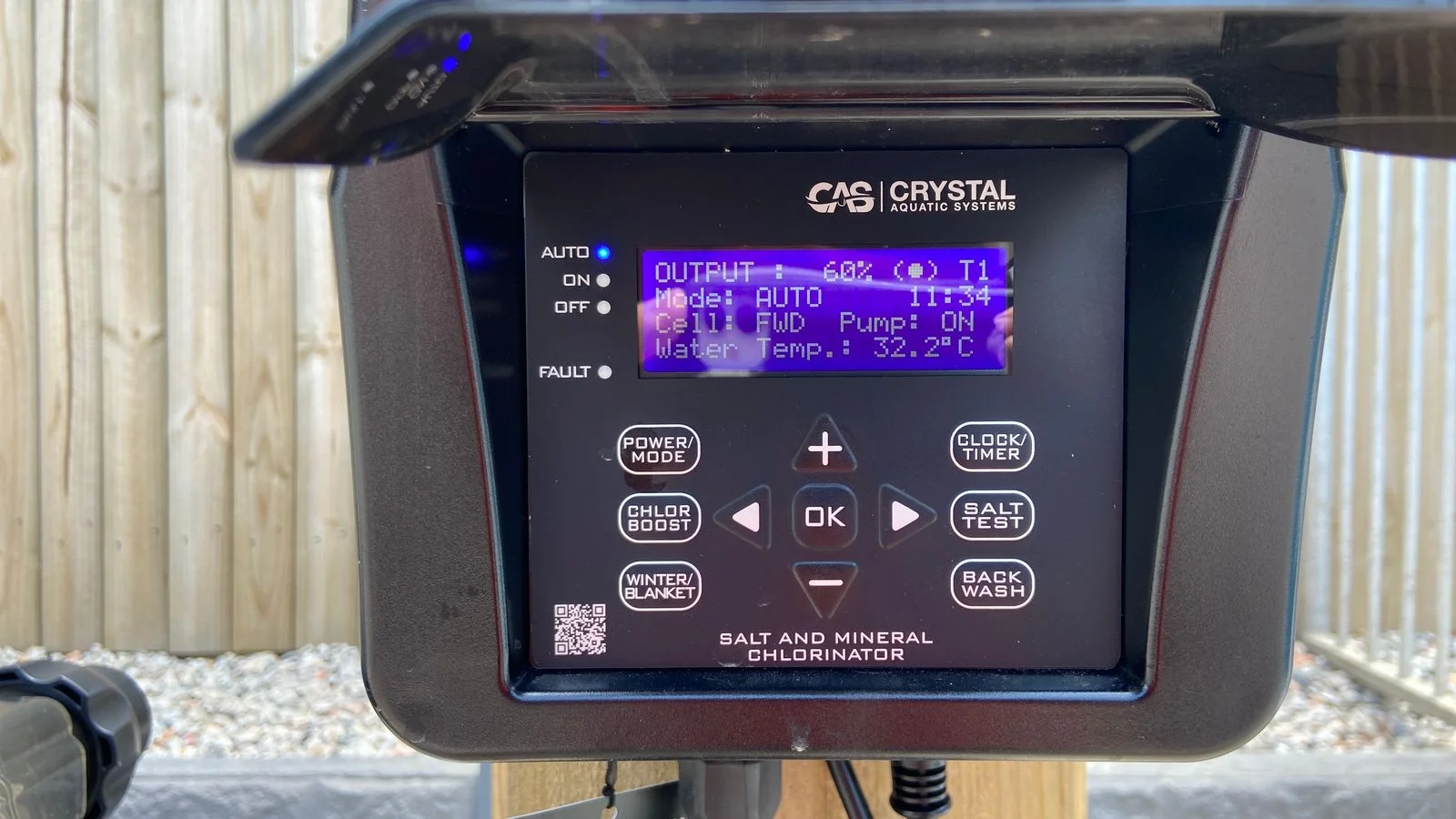
Pool pH should sit between 7.2 and 7.6 (aim for 7.4). Learn why it matters, how to raise or lower pH, and how often to test - from SEQ's fibreglass pool builder.
Read more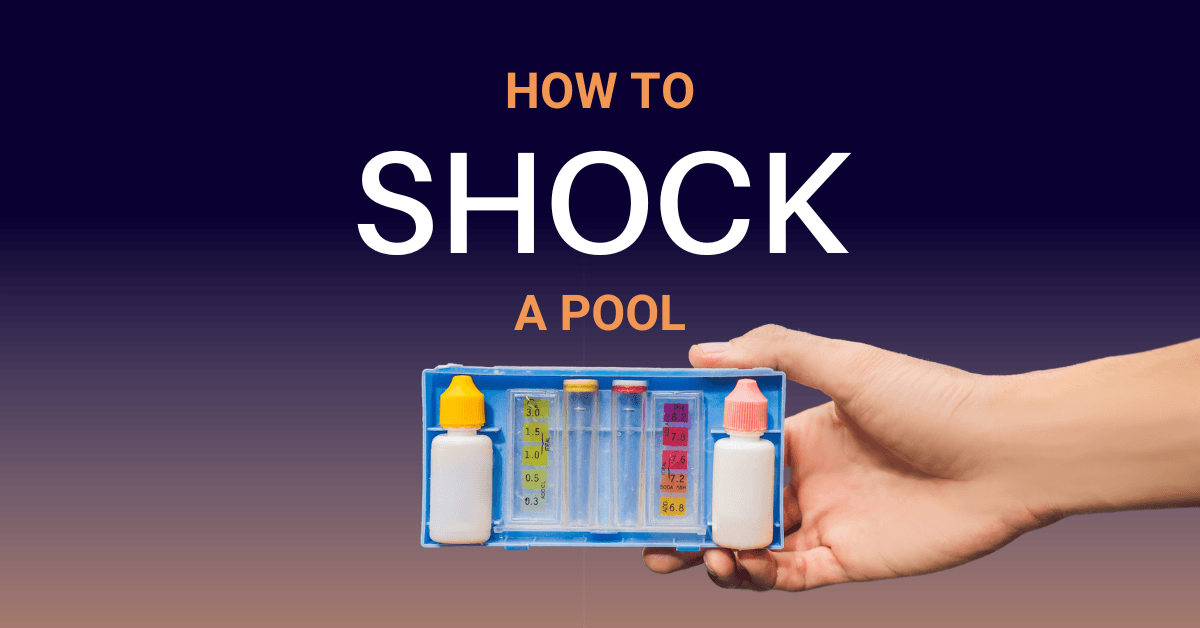
How to shock your pool the right way: breakpoint chlorination explained, a dosage table by pool volume, cal-hypo vs dichlor, and fibreglass-safe steps for SEQ.
Read more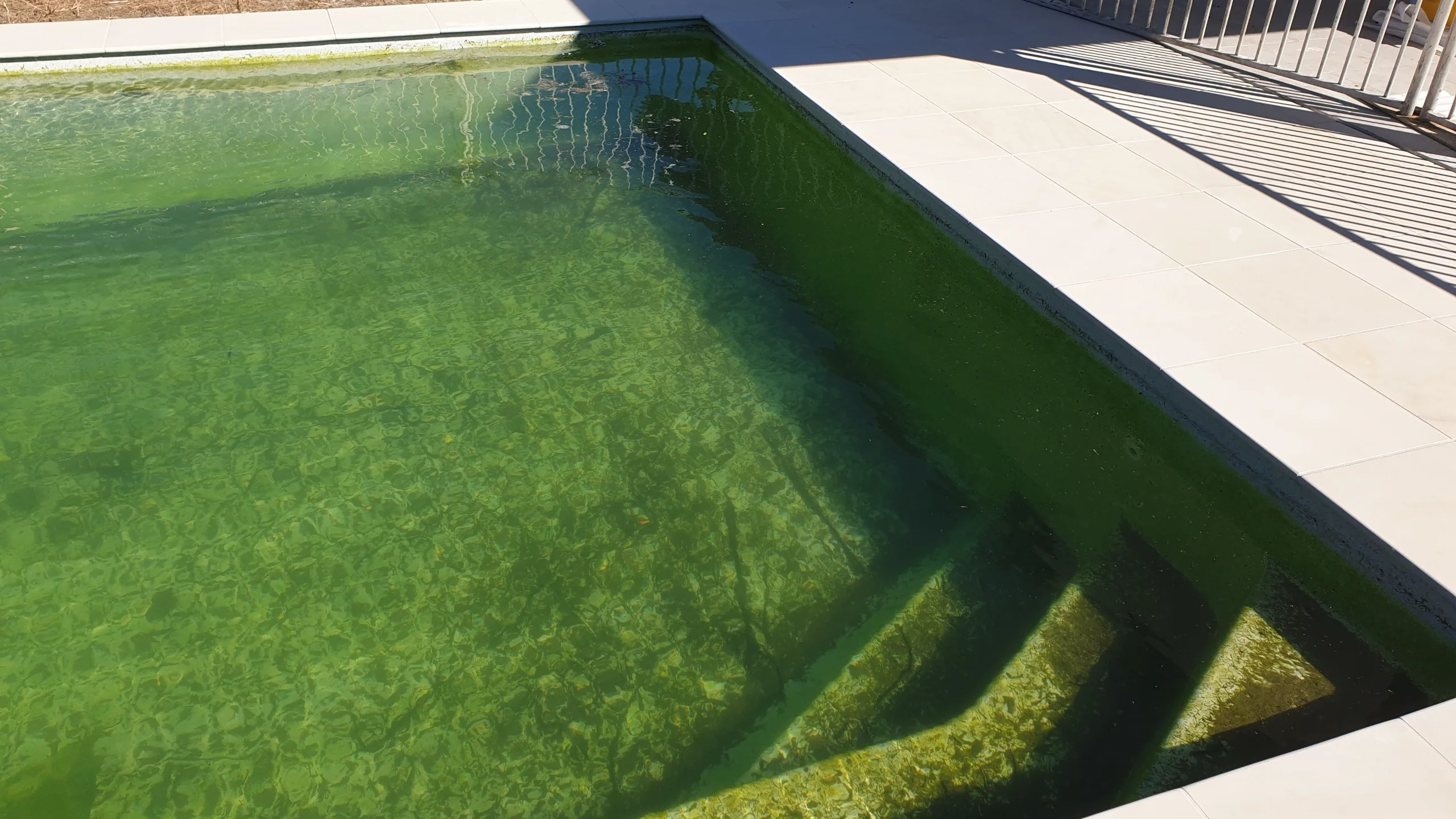
A green pool comes down to nutrients, sunlight and low sanitiser. The SEQ prevention routine, an algae ID table, and the exact shock-and-clear protocol.
Read more
Fibreglass pool light not working? Fix common faults - tripped safety switch, failed transformer, water in the lens - and know when it's an electrician's job.
Read more
Pool winter maintenance in Australia: how to winterise a fibreglass pool in SEQ — reduced-run mode, cover use, chemistry and spring prep.
Read moreTwice a week through summer and once a week over the cooler months, plus an extra test after any heavy storm or a pool party. Testing is what catches a chlorine drop before it turns into a green pool.
Yes. The non-porous gelcoat gives algae almost nothing to cling to, so there's no acid-washing, re-marbelite or re-tiling. Most owners spend around fifteen minutes a week skimming, testing and emptying baskets.
Between 7.2 and 7.6, aiming for about 7.4. That range keeps chlorine effective, the water comfortable to swim in, and the surface protected.
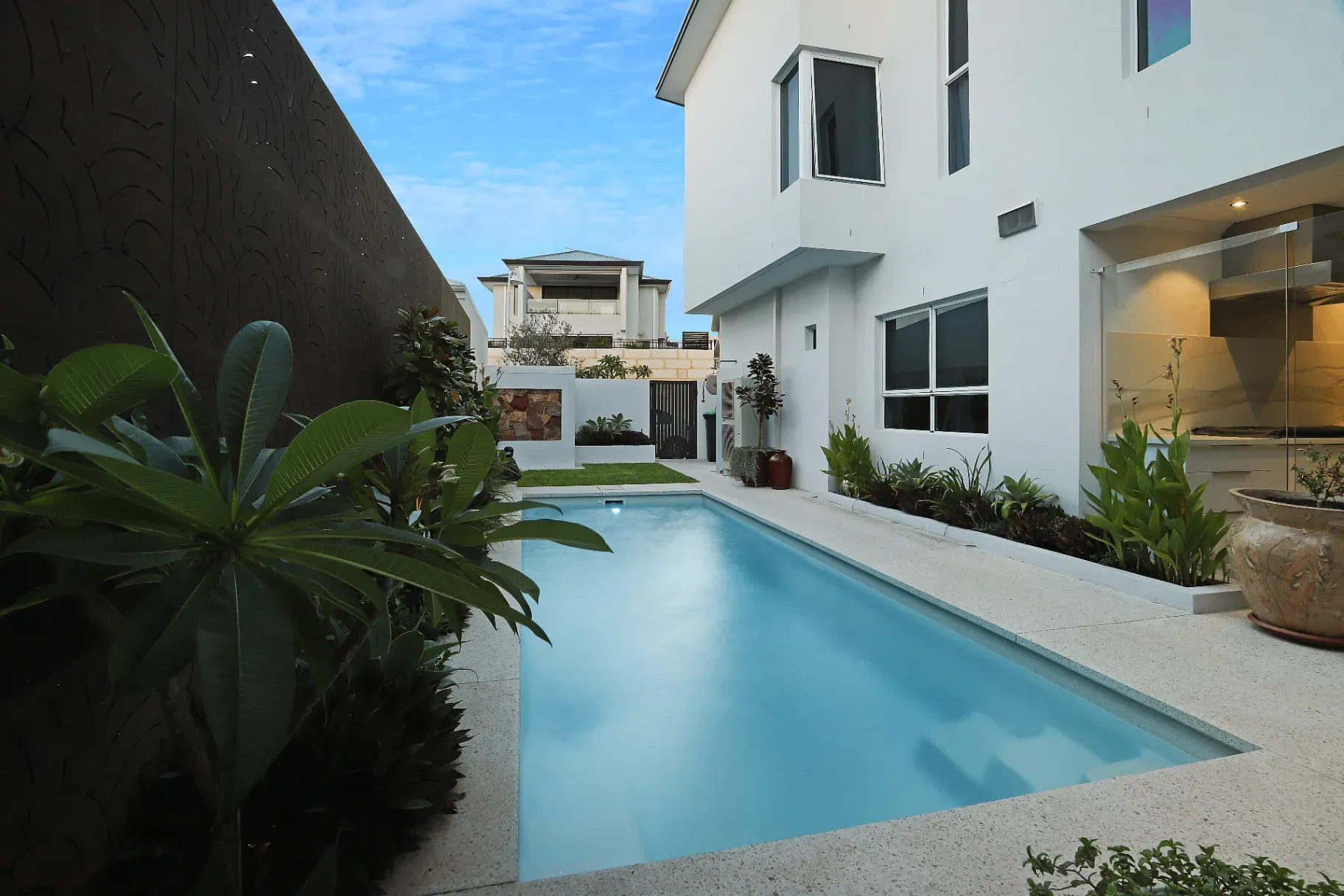
Book a free consultation and we'll walk you through the pool, the running costs and the upkeep — no pressure, no obligation.
Mon-Fri 8am-5pm, Sat 9am-1pm