Pool Covers for Fibreglass Pools: Types, Costs & Safety
Blanket, safety cover, automatic cover or enclosure: what each does on a fibreglass pool, what it costs, and what QLD pool safety law requires.
Published · Updated
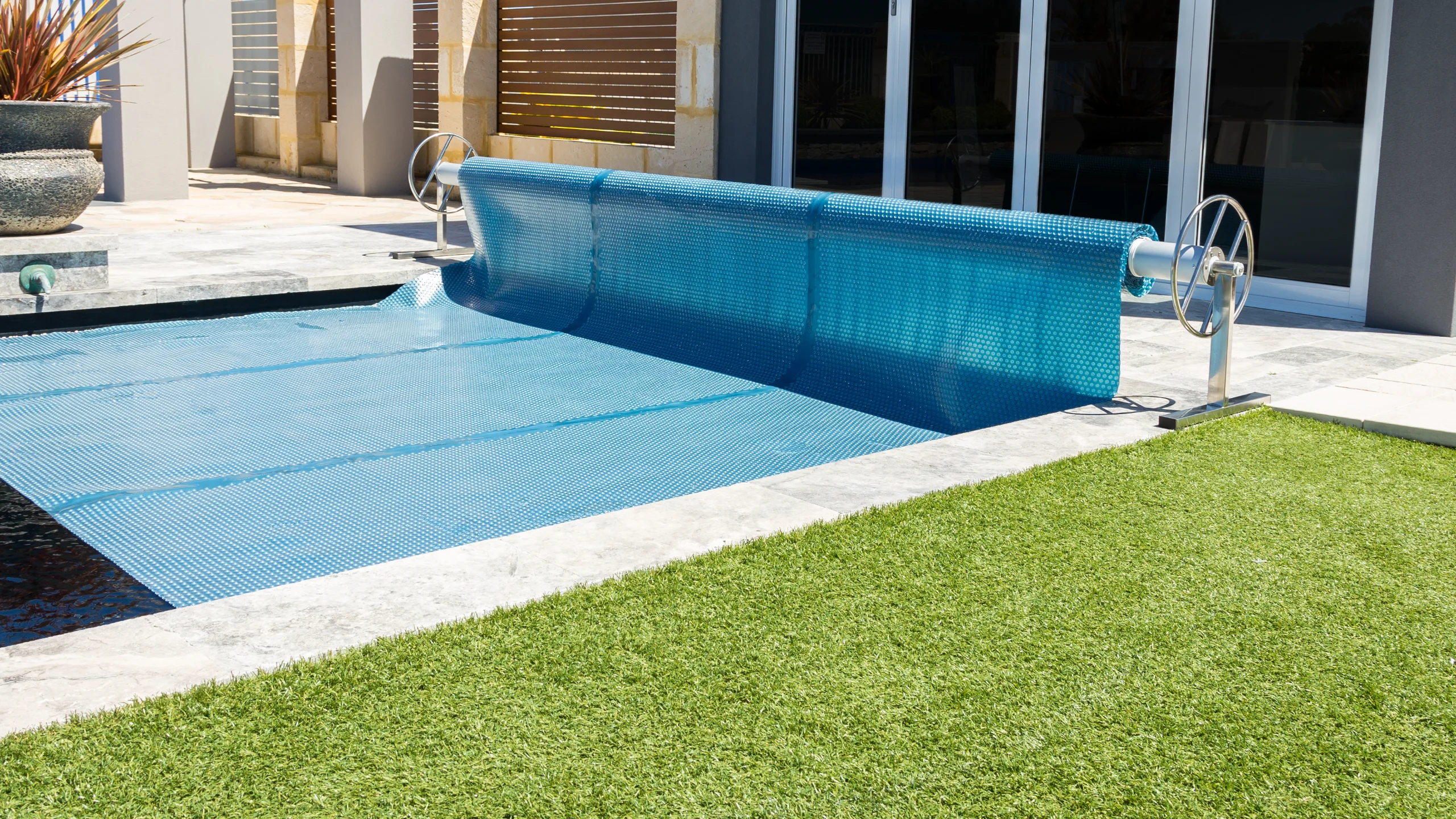
Pool covers for fibreglass pools are available in four main types:
- Solar blanket: A floating bubble sheet that reduces heat loss and evaporation. A roller allows the blanket to be added or removed in one pass.
- Debris or safety cover: A cover made to fit the pool shell. It keeps leaves and dirt out of the water while the pool is not in use.
- Automatic pool cover: A motorised sheet that moves on tracks along the pool edge. It uses a keyed or coded poolside control, and its housing is built into the coping.
- Pool enclosure: A retractable structure that covers the entire pool. It protects the water and swimmers from cold, wind and UV, and can extend the swimming season.
In Queensland, these covers do not replace a compliant pool barrier. A compliant fence is required whether or not the pool has a cover.
What kind of pool cover suits a fibreglass pool?
Four types of covers suit fibreglass pools:
- A solar blanket with a roller reduces heat loss and evaporation.
- A debris or safety cover keeps leaves and dirt out of the pool.
- An automatic cover opens and closes using a control.
- A pool enclosure protects the pool from cold, wind and UV.
Choose a cover based on its required function.
A fibreglass pool has a single moulded shell with a fixed outline, curved corners and a curved waterline. A solar blanket must be cut for the specific shell model. It is not supplied by the metre and trimmed on site. Pricing is also based on the shell model. Our quoting catalogue includes 31 blanket-and-roller line items under Heating, alongside the heat pumps.
| Cover type | What it is for | How it fits a moulded shell | Handling |
|---|---|---|---|
| Solar blanket and roller | Holding heat in the water and cutting evaporation | Cut to the shell model so the bubble sheet follows the moulded outline and floats on the water surface | Wound on and off a roller parked at one end; one person, one pass |
| Debris or safety cover | Keeping leaves and dirt off the water while the pool is not in use | Specified and quoted per shell by the cover maker, because the moulded outline is fixed | Put on and taken off by hand |
| Automatic pool cover | Closing and opening the pool without handling a sheet | Housing and track sit in the coping and the surrounds, and a straight track run is the normal case on a moulded geometric outline | A keyed or coded control at the pool; nothing is lifted |
| Pool enclosure | Shielding the water and the swimmers from cold, wind and UV | Stands over the pool on its own frame and does not attach to the shell | Retracted and closed on its own frame |
A cover also affects water chemistry. This requires an adjustment on salt pools.
UV breaks down free chlorine. A cover blocks UV, and cover manufacturers rate quality covers at up to 99% of UV blocked. If the chlorinator output remains unchanged, the cell continues producing chlorine while less chlorine is being broken down. The free chlorine level can then increase without reducing the chemical bill. Pool stain-remediation specialists report free chlorine levels above 40 ppm in covered pools.
The chlorinator setting is part of fibreglass pool maintenance. Reduce the chlorinator output when you start using a cover. Then test the free chlorine level to confirm the new setting.
What does a pool cover cost for a fibreglass pool?
Pool cover costs depend on the cover type and supplier.
A solar blanket and roller is included as a line item in the pool quote, together with filtration and heating. It is selected during the pool build.
Safety and debris covers are quoted by the cover manufacturer for the specific pool shell. Automatic pool covers are separate systems quoted by the cover supplier. Pool enclosures are separate structures quoted by an enclosure specialist.
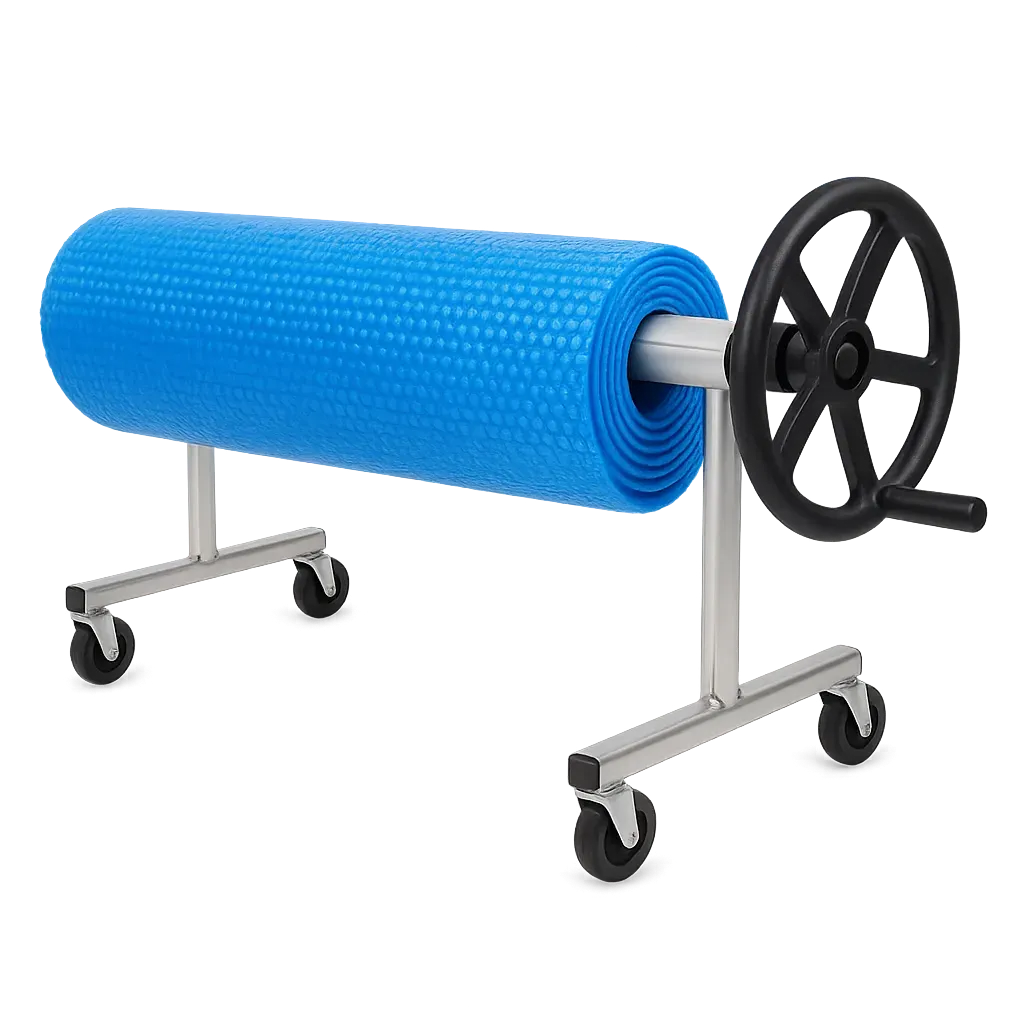
3mm Daisy Thermal Blanket with Stainless Steel Roller
$2,190 supplied & installed
3mm Daisy Thermal Blanket with Stainless Steel Roller
$2,540 supplied & installed
3mm Daisy Thermal Blanket with Stainless Steel Roller
$2,840 supplied & installed
3mm Daisy Thermal Blanket with Stainless Steel Roller
$3,140 supplied & installed
Live pricing from our quoting system, sized to each pool model in the range.
| Cover type | Who quotes it | When it is decided |
|---|---|---|
| Solar blanket and roller | Us, on the pool quote | At the build, with the filtration and the heating |
| Debris or safety cover | The cover maker, per shell | Any time after the pool is in the ground |
| Automatic pool cover | The cover supplier, per pool | At the build, before the coping is set |
| Pool enclosure | An enclosure specialist, per structure | Any time, as a separate structure |
In the United States, Latham publishes a price of $10,000 to $20,000 for an automatic pool cover.
Can a fibreglass pool have an automatic cover?
Yes. An automatic cover is usually planned during the pool build. The housing and track are installed in the coping and surrounding area before the shell is set. Retrofitting a cover requires changes to finished coping and paving.
Most fibreglass pools have a simple geometric shape that supports a straight track. Some Australian fibreglass shells include a built-in cover housing. If you want an automatic cover, check which shells support one before choosing a model.
Cover manufacturers state that automatic covers can reduce heating costs by 70%, evaporation by 90% and chemical use by 60%. For a salt pool, reduce the chlorinator output to account for the lower chemical requirement.
Salt water and salt residue can corrode the metal parts near the pool. Salt water does not affect the fibreglass shell.
An automatic cover requires professional installation. A licensed electrician must install the wiring. The cover operates from a keyed or coded control near the pool.
Does a pool cover count as pool safety in Australia?
No. In Queensland, a pool cover is not a barrier. It does not reduce or replace the requirement for a compliant pool fence.
Queensland Development Code MP 3.4 sets the barrier requirements. The barrier must be at least 1200 mm high and must not have gaps wider than 100 mm. A licensed pool safety inspector issues the Form 23 pool safety certificate. The pool is also recorded on the Queensland pool safety register.
We build across ten South East Queensland councils: Brisbane, Gold Coast, Ipswich, Logan, Moreton Bay, Noosa, Redlands, Sunshine Coast, Lockyer Valley and Somerset. The same barrier requirements apply in each council area.
| Installed price | 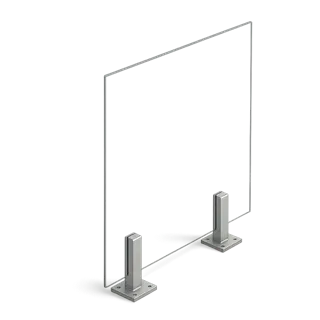 Frameless glass Frameless glass | 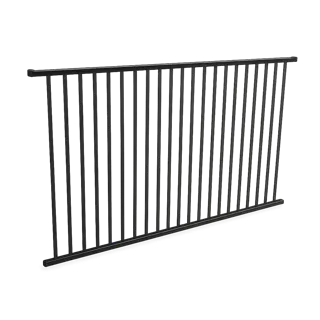 Flat-top metal Flat-top metal |
|---|---|---|
| Fencing, per metre | $462 | $198 |
| Self-closing gate, per unit | $495 | $330 |
| Panels on a retaining wall, per metre | $297 – $737 | $385 – $605 |
| Earthing (where required) | $40/m | $150 per job |
| Timber post upgrade, per metre | — | $66 |
| Typical pool: 20m fence + 1 gate | $9,735 | $4,290 |
Live rates from our quoting system — glass and metal fencing installed to QLD pool-barrier standards alongside your pool build.
Safety covers sold in the United States are built to ASTM standards and may be rated to hold the weight of several adults. This is a United States product standard and does not apply in Queensland. A pool cover is not assessed as a barrier in Queensland. Its load rating does not change the fencing requirements.
A pool cover can keep a small child’s line of sight and footing away from the water surface. It can also keep debris out. It does not replace supervision or a compliant barrier.
Is a pool enclosure worth it over a fibreglass pool?
A pool enclosure can extend the swimming season. It is a retractable structure that protects the pool and swimmers from cold, wind and UV. Australian suppliers use aluminium frames, polycarbonate panels, tempered or laminated glass, mesh screening and PVC components. Warranties range from 5 to 15 years.
We do not supply pool enclosures. Enclosure specialists quote them separately, so they do not appear on our pool quotes.
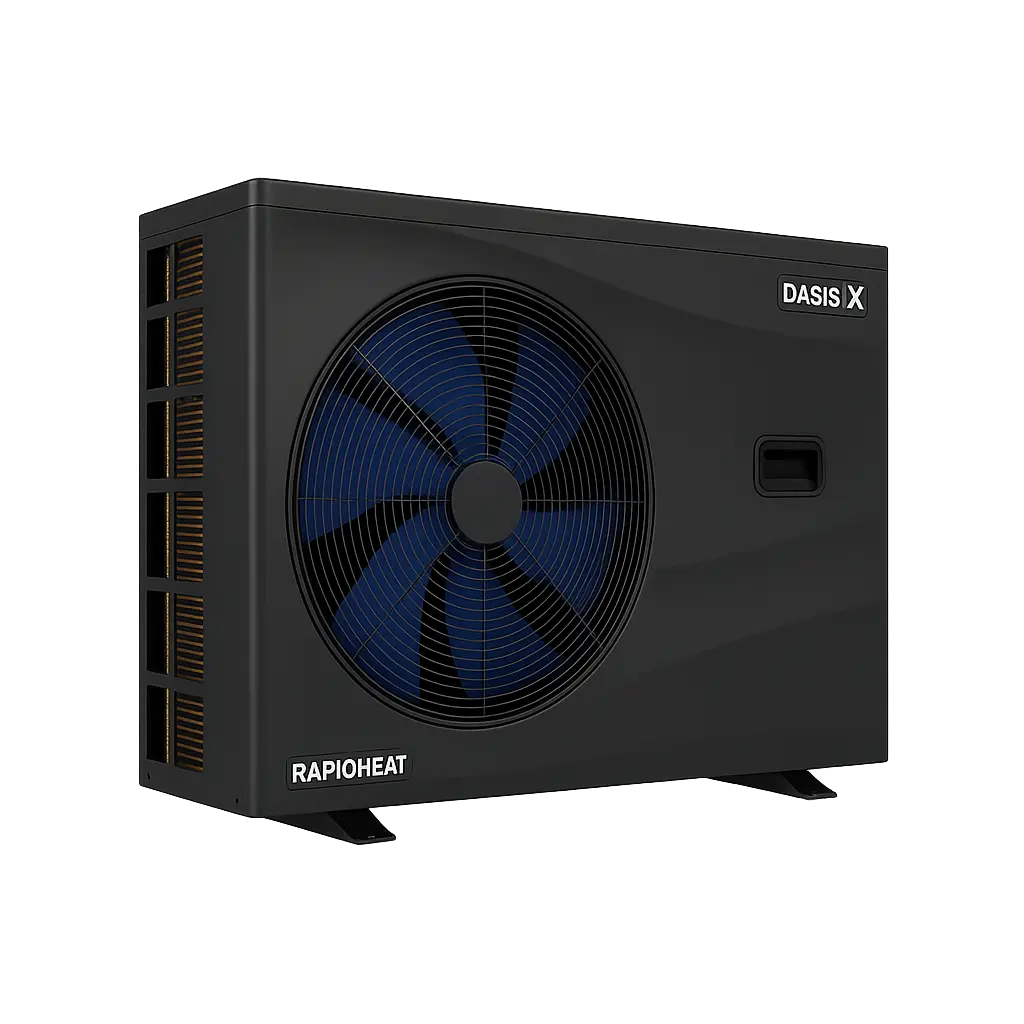
A heat pump is another option for extending the swimming season. An enclosure protects the pool from the surrounding conditions, while a heat pump heats the water. You can review published pool heating costs in Australia before deciding. A solar blanket can help retain the heat added by a heat pump.
Sunlover Oasis 9kW
$4,125 supplied & installed
Sunlover Oasis 13kW
$5,220 supplied & installed
Sunlover Oasis 19kW
$7,150 supplied & installed
Sunlover Oasis 24kW
$10,550 supplied & installed
Live pricing from our quoting system — the same numbers you'd see on an MFP Easy proposal.
What is the best pool cover in Australia?
For most Australian fibreglass pools the best cover is a solar blanket on a roller. It addresses the two costs Australian conditions impose on every pool — evaporation, and the UV that breaks down free chlorine — at the lowest price of the four cover types, and one person can put it on or take it off in a single pass. Which cover earns its place after that depends on where the pool is:
- Queensland and the north — evaporation and debris rule the choice. A blanket cuts the water a subtropical summer pulls off the surface, and a fitted debris cover earns its keep through storm season and leaf drop. Heat retention matters least where the season is already long.
- New South Wales, Victoria and the cooler south — heat retention is the point. A blanket holds overnight warmth, an automatic cover does the same without the handling, and a pool enclosure extends the season further than any cover can.
- Every state — no cover is a safety barrier. A compliant pool fence is required regardless of what sits on the water.
What pool cover suits a Queensland pool?
A solar blanket and roller, chosen at the build — it is the one cover type on our own quotes, cut to the shell model and selected alongside the filtration and heating. In South East Queensland the blanket earns its place on evaporation alone through summer, and because it blocks the UV that consumes free chlorine, a covered salt or mineral pool needs the chlorinator turned down and the water re-tested once the cover goes into use. A debris cover can be added any time after the pool is in the ground; an automatic cover has to be decided before the coping is set.
FAQs
Is it worth getting an automatic pool cover?
An automatic pool cover may be worth the cost if you are unlikely to use a solar blanket. It closes using a control, while a solar blanket must be rolled on manually. The automatic cover is quoted separately and must be selected before the coping is installed.
What are the common problems with automatic pool covers?
The two common problems are corrosion and installation sequencing.
The system has metal moving parts near the water. In a salt pool, salt water and salt residue can damage these parts.
The track and housing must be installed in the coping. Installing a cover after the pool surrounds are finished requires removing some of the finished work.
How much does an automatic pool cover cost in Australia?
Suppliers quote automatic pool covers for each pool. The cost depends on:
- Pool width
- Track length
- Housing
- Electrical work by a licensed electrician
The supplier must measure the pool and inspect the coping before providing a quote.
What is the easiest pool cover to put on?
A solar blanket on a roller is the easiest to install. Place the roller at one end of the pool. One person can pull the handle along the pool to unwind the blanket across the water. Reverse the process to remove the blanket before swimming. Store the blanket on the roller between uses.
Do you need to turn the chlorinator down when the cover is on?
Yes. For a salt pool, reduce the chlorinator output when the cover is on. Test the free chlorine and adjust the output based on the result.
Increase the output when the cover is removed because UV exposure increases chlorine loss.