Mineral Pool Systems: Equipment, Chlorinators & Filters
Compare mineral pool chlorinators, filters and MFP filtration packages, including automatic pH, UV and equipment configuration requirements.
Written by Tehbyn Nova, Head of Operations & Growth
Published · Updated
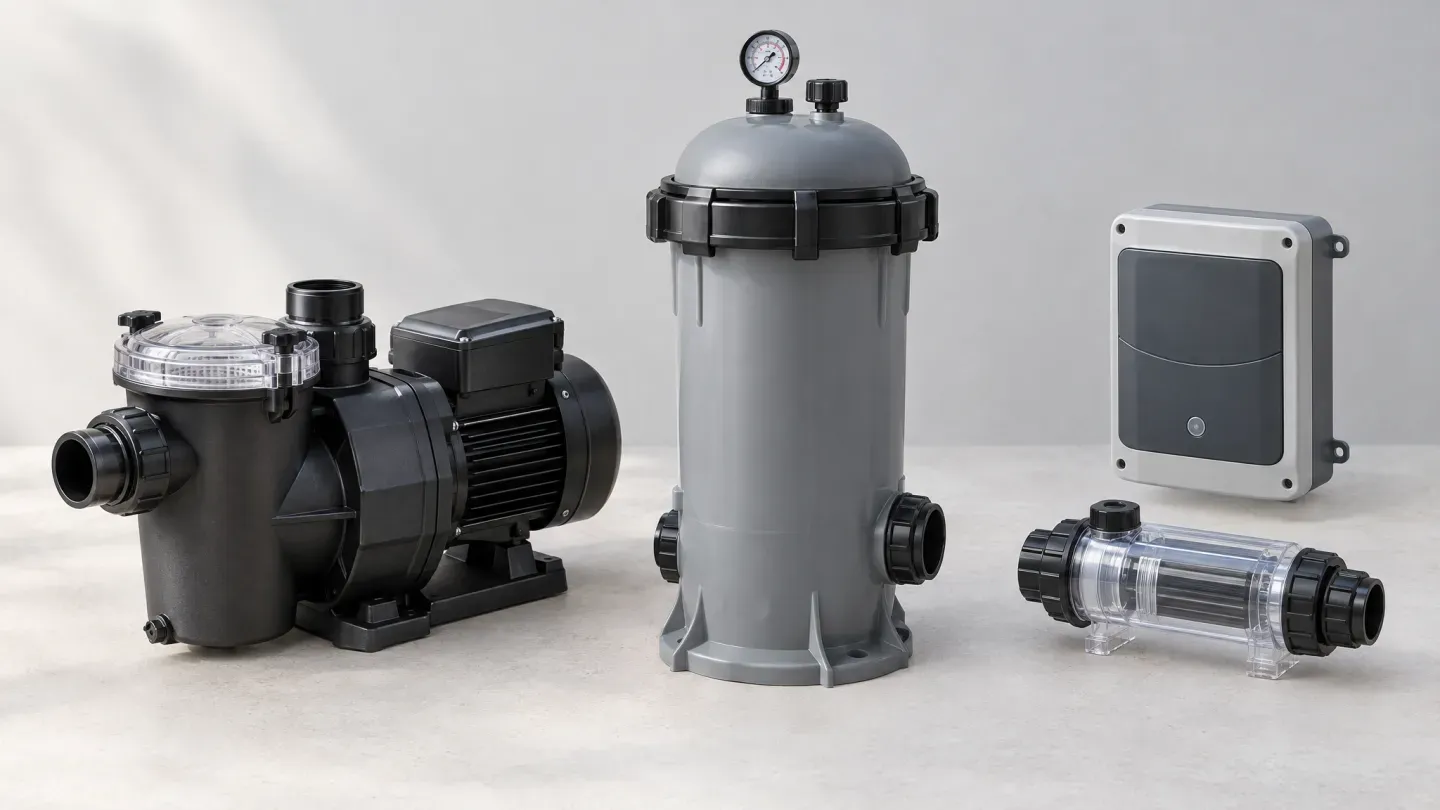
A mineral pool system consists of three compatible components: a chlorinator cell rated by the manufacturer for a specific mineral blend, the filter and filter media specified by the system manufacturer, and the mineral blend dissolved in the pool water. The components are specified for use together, so the required equipment depends on the selected system. A mineral pool system is not a single product added to an existing pool.
A mineral pool system uses chlorine for sanitation. The chlorinator cell generates chlorine in the pool water from the dissolved minerals.
The pump, plumbing, valves, skimmer, returns, cleaner, heating, and lights are the same components used in other pools.
What is a mineral pool system?
A mineral pool system consists of a chlorinator cell, a filter and filter media, and a mineral blend. The manufacturer specifies these components for use together.
- The chlorinator cell. The manufacturer rates the chlorinator cell for a particular mineral blend and salt concentration. The cell passes an electric current through the water flowing across its plates.
- The filter and its media. The filter removes suspended particles from the circulating water. The manufacturer specifies glass, sand, or a cartridge element as the filter media.
- The mineral blend. The mineral blend dissolves in the pool water and provides the salts that the cell electrolyses. The cell is designed to operate with the blend’s specified composition and concentration.
A saltwater pool contains dissolved sodium chloride. Mineral pools contain a dissolved blend of magnesium chloride and potassium chloride. Many blends also contain sodium chloride, and some products add trace silver or copper ions. The cell electrolyses the dissolved salts to generate chlorine in the pool water, using the same reaction that a salt chlorinator applies to sodium chloride.
A mineral pool is a chlorine-sanitised pool. The system generates chlorine on site from the minerals dissolved in the water. The minerals are the feedstock, and chlorine is the sanitiser.
Our standard mineral package is PureSwim.
What equipment does a mineral pool need?
A mineral pool requires three mineral-specific items: a chlorinator cell and power supply rated for the mineral blend, the mineral blend, and a test kit that measures the mineral level. The remaining equipment is the same as the equipment used in chlorine and saltwater pools.
| Equipment | Mineral-specific or identical? |
|---|---|
| Chlorinator cell and power supply | Mineral-specific |
| The mineral blend | Mineral-specific |
| Test kit that reads mineral level | Mineral-specific |
| Circulation pump | Identical to any pool |
| Plumbing and valves | Identical to any pool |
| Skimmer box and return fittings | Identical to any pool |
| Suction or robotic cleaner | Identical to any pool |
| Heating (gas heater or heat pump) | Identical to any pool |
| Pool lighting | Identical to any pool |
| Pool blanket | Identical to any pool |
The chlorinator cell and power supply must have a manufacturer rating for the mineral blend. The mineral blend is a consumable used by the system, and the test kit must measure its concentration.
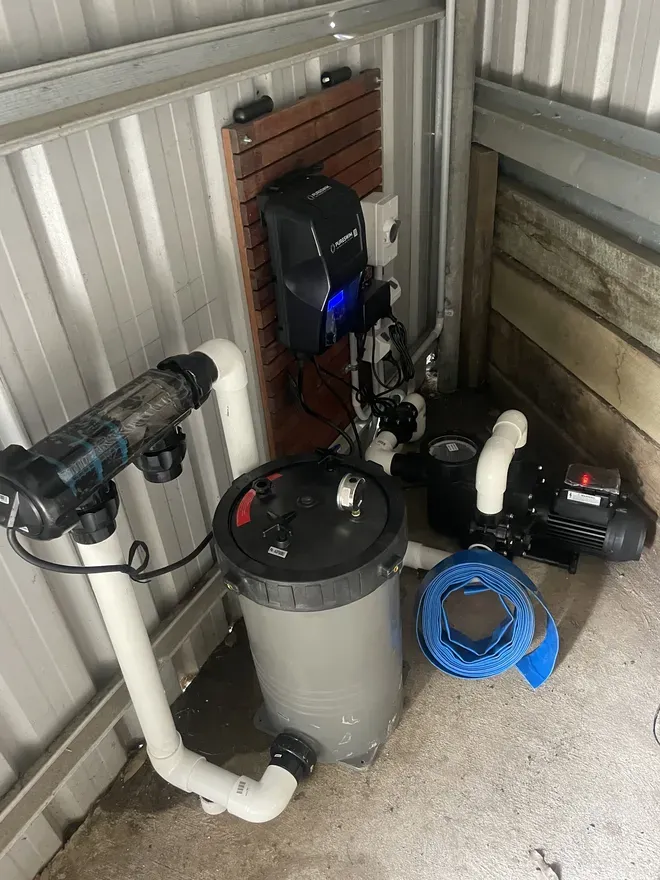
The mineral blend changes the water chemistry but does not change the pool hydraulics. The pump moves the same volume of water through the same plumbing at the same head, while the skimmer and cleaner perform the same functions. Heating, lighting, and pool blankets also operate in the same way in mineral, chlorine, and saltwater pools.
Filter requirements vary by system because the manufacturer specifies the filter media.
Every pool we build includes a magnesium chlorinator, an oversized cartridge filter, and a premium variable-speed pump as standard. The handover also includes the first year’s minerals, a 4-in-1 minerals test kit, and a sample bottle. We install more than 250 pools each year across South East Queensland, and all of them use this equipment package.
Which filtration packages does MFP offer?
The current range includes PureSwim mineral-chlorinator packages and Naked freshwater packages. Equipment sizing depends on the selected pool and spa configuration.
| Package | Included equipment | Selection requirement |
|---|---|---|
| PureSwim Everyday | Pump, filter, mineral chlorinator, light, minerals & start-up kit | No additional selection requirement. |
| PureSwim Comfort — Auto pH | Everyday + automatic pH dosing | No additional selection requirement. |
| PureSwim Protect — UV Sanitation | Comfort + Theralux UV/AOP purification | No additional selection requirement. |
| PureSwim Ultimate — Full Automation | Protect + app control of everything (Pool Plus Manager + WiFi) | Requires spa jets, deck jets or a water feature. |
| Naked Everyday — Chlorine Free | Pump, filter, Naked freshwater system, light, start-up kit · auto pH included | No additional selection requirement. |
| Naked Protect — Chlorine Free + UV | Everyday + Theralux UV/AOP purification | No additional selection requirement. |
| Naked Ultimate — Chlorine Free + Full Automation | Protect + app control of everything (Pool Plus Manager + WiFi) | Requires spa jets, deck jets or a water feature. |
Package names and inclusions come from our current quoting catalogue. Equipment sizing depends on the pool and spa configuration.
“Chlorine Free” is the Naked range’s catalogue name. These freshwater systems use a different sanitising system from the mineral chlorinators described in this guide.
Do you need a special chlorinator for a magnesium pool?
Yes. A magnesium pool requires a chlorinator cell that the manufacturer rates for the intended mineral blend.
A chlorinator cell is an electrode assembly that generates sanitiser. The manufacturer specifies the cell’s plate coating and chlorine output curve for a particular salt concentration and blend chemistry. A cell rated only for sodium chloride operates outside its specification when used with a magnesium blend.
Using a cell outside its rated chemistry can have the following consequences:
- Warranty exposure. Operating outside the rated chemistry is a common warranty exclusion. If the cell fails early, you may need to pay for its replacement.
- Incorrect chlorine output. The controller assumes that the cell produces the output specified for its rated chemistry. With an unspecified blend, the actual chlorine output can differ from that value.
- Accelerated cell wear. Operating outside the specified salt concentration and blend chemistry can degrade the plate coating faster, shorten the cell’s service life, and require earlier replacement.
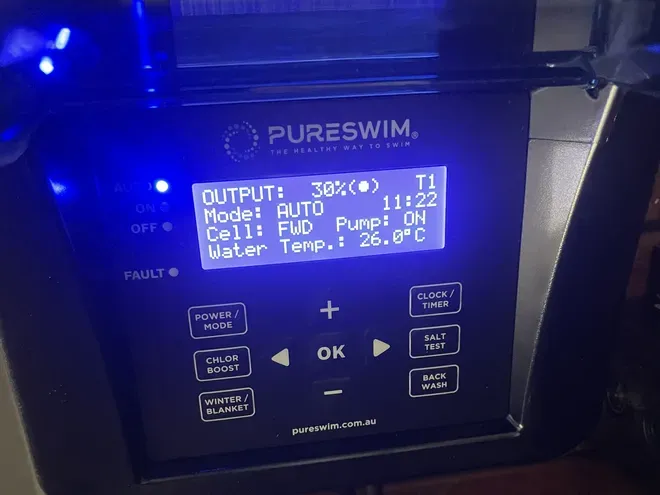
A mineral pool still uses the chlorinator to generate sanitiser. Converting the pool changes the substances dissolved in the water: the mineral blend replaces the sodium chloride, but it does not replace the chlorinator cell.
Does a mineral pool need glass media, sand or a cartridge filter?
A mineral pool needs the filter media specified by the system manufacturer. Requirements vary between mineral systems. A manufacturer may require glass media for one system, while another system may support cartridge filtration.
The three filtration formats are:
- Glass media. Crushed recycled glass that is graded and loaded into a media filter instead of sand. The filter is cleaned by backwashing.
- Sand. Graded silica sand that forms a bed inside a media filter. Standard sand filters are supplied with this format, and the filter is cleaned by backwashing.
- Cartridge. A pleated filter element installed in a housing without a media bed. The element is removed and cleaned with a hose.
MagnaPool specifies glass media for its system and advises against using cartridge filtration with that system. This requirement applies specifically to MagnaPool.
We install an oversized cartridge filter as standard with the magnesium chlorinator on every pool we build. This does not conflict with MagnaPool’s requirement because filter selection depends on the manufacturer’s specification for each system, not on the water type alone.
Magnesium-rich blends bind fine suspended particles into clumps that the filter can capture. The filter and its media must retain these clumps. The filter specification is therefore particularly important for a mineral system, and selecting a filter independently of the system can reduce the benefits for which the system was purchased.
Where do mineral cartridges and ioniser sanitisers fit?
The term "mineral system" applies to two different product classes: mineral pool systems and trace-metal sanitisers. Buyers can therefore select the wrong class.
A mineral pool system contains mineral salts dissolved throughout the pool water. The system circulates the water through a chlorinator cell, which uses the dissolved salts to generate chlorine continuously on site. The minerals remain in the pool water. This is the class we install.
A trace-metal sanitiser is a copper or silver cartridge, or an electrode ioniser, installed in the circulation line. It doses metal ions into the water flow. These ions act as an algaecide and support the sanitiser already present in the pool.
A trace-metal cartridge does not electrolyse the water, add magnesium or potassium salts, or generate chlorine. Another source must maintain the chlorine residual. The cartridge supports this residual rather than replacing it. Manufacturers use the term "mineral system" for both product classes, so the product name alone may not distinguish them.
Can ozone or AOP run alongside a mineral system?
Yes. Ozone or advanced oxidation (AOP) can operate alongside a mineral chlorinator. The ozone or AOP unit is installed in the return line and provides supplementary oxidation, while the mineral chlorinator supplies residual sanitiser.
An ozone or AOP unit injects a short-lived oxidiser into water flowing through the pipework. The oxidiser breaks down organic contaminants before the water returns to the pool. Ozone is consumed in the plumbing and does not persist in the pool water. The mineral chlorinator supplies the residual sanitiser that remains in the water between filtration cycles and is measured by a test kit.
Maytronics states that ozone can reduce chlorine demand by up to 80%. This reduces demand on the mineral chlorinator but does not replace it.
What does a mineral pool system cost?
A mineral pool system’s cost consists of five possible line items. The applicable items depend on whether the system is installed with a new pool or added to an existing pool.
- The mineral-rated chlorinator cell and its power supply. Pool volume determines the required cell size.
- The filter and its media. The system specifies the filter housing and media, including what must be replaced over time.
- A controller or dosing unit, if the system includes one. Some systems do not include this equipment.
- The mineral blend for the initial fill. Pool volume determines the required quantity.
- Installation labour for a retrofit. Converting an existing pool requires plumbing and electrical work. A new build includes this work in the pool construction.
The specified filter media determines the initial filter purchase and subsequent replacements. An optional ozone or AOP unit adds a separate cost.
For new pools we build, most of these items are standard inclusions. The magnesium chlorinator, oversized cartridge filter and first year’s minerals are included rather than purchased separately. After the first year, the ongoing requirement is mineral top-ups.
A mineral pool system’s cost covers the equipment package. What a mineral pool costs installed is a separate figure that covers the finished pool.
How do you choose a mineral pool system?
Choose a mineral pool system by evaluating these five criteria in order. The results apply to the specific system, not the brand as a whole.
- Is the cell rated for the blend you will actually buy? A cell is rated for a specific mineral blend and salt level. Ask the supplier to name the compatible blend, then confirm that it matches the minerals you will add. Resolve compatibility before evaluating the remaining specifications.
- Does the filter media match what that system's maker specifies? Filter media requirements differ between systems. MagnaPool specifies glass media and advises against cartridge filtration for its system; other systems specify other media. Follow the specifications for the system you are buying.
- What does the controller do on its own, and what does it leave to you? Some controllers adjust cell output automatically. Other systems require the owner to test the water and set the output. Confirm which process the system uses to determine how much weekly maintenance it requires.
- Are parts and service reachable in Australia? A chlorinator cell wears during use and requires replacement. Australian distribution allows you to obtain a replacement cell without importing it directly and provides access to technicians familiar with the unit.
- What are the warranty terms on the cell, and what voids them? Cell warranties include water chemistry conditions. Operation outside the rated blend or salt level is a common exclusion. Review the exclusions with the stated warranty term to determine whether a failed cell is covered.
Mineral pool systems available to Australian buyers include MagnaPool, Mineral Swim, Theralux, Zodiac, Naked and Hydroxypure. Apply the same five criteria to each system to compare its suitability for your pool and water.
FAQs
Is a mineral pool still a chlorine pool?
Yes. A mineral pool is a chlorine pool. Its chlorinator cell electrolyses a dissolved blend of magnesium chloride and potassium chloride, with sodium chloride also present in many blends, to generate the chlorine that sanitises the pool water. A standard saltwater pool uses sodium chloride alone, but also generates chlorine on site.
Can you run a mineral pool with a standard salt chlorinator?
A standard salt chlorinator is outside its specification when used with a magnesium blend. The manufacturer rates the cell for sodium chloride at a specified concentration. Using a magnesium blend may exclude the cell from warranty coverage, produce an output that differs from the controller’s assumptions, and accelerate wear on the cell plates. The cell must be rated for the blend in use.
Does a mineral pool need a different pump?
No. A mineral pool uses the same circulation pump as any other pool. The mineral blend changes the water chemistry but not the hydraulic conditions under which the pump operates. We install a premium variable-speed pump as standard on every pool based on circulation and energy-use requirements.
Can you convert an existing saltwater pool to a mineral system?
Yes. Converting an existing saltwater pool to a mineral system requires a chlorinator cell rated for the mineral blend and the mineral blend dissolved in the pool water. Before conversion, confirm that the existing filter uses the media specified by the mineral system. For example, MagnaPool specifies glass media and advises against cartridge filtration.
How often do the minerals need topping up?
Top up the minerals when the supplied 4-in-1 test kit shows that the mineral level has decreased, rather than following a fixed schedule. New pools include the first year’s minerals, so top-ups begin after the first year.