Mineral Pools: Magnesium Pool Water, Costs & Equipment
How mineral pools work, the role of magnesium and chlorine, included equipment, installation costs and the maintenance a mineral pool needs.
Written by Tehbyn Nova, Head of Operations & Growth
Published · Updated
Direct answer
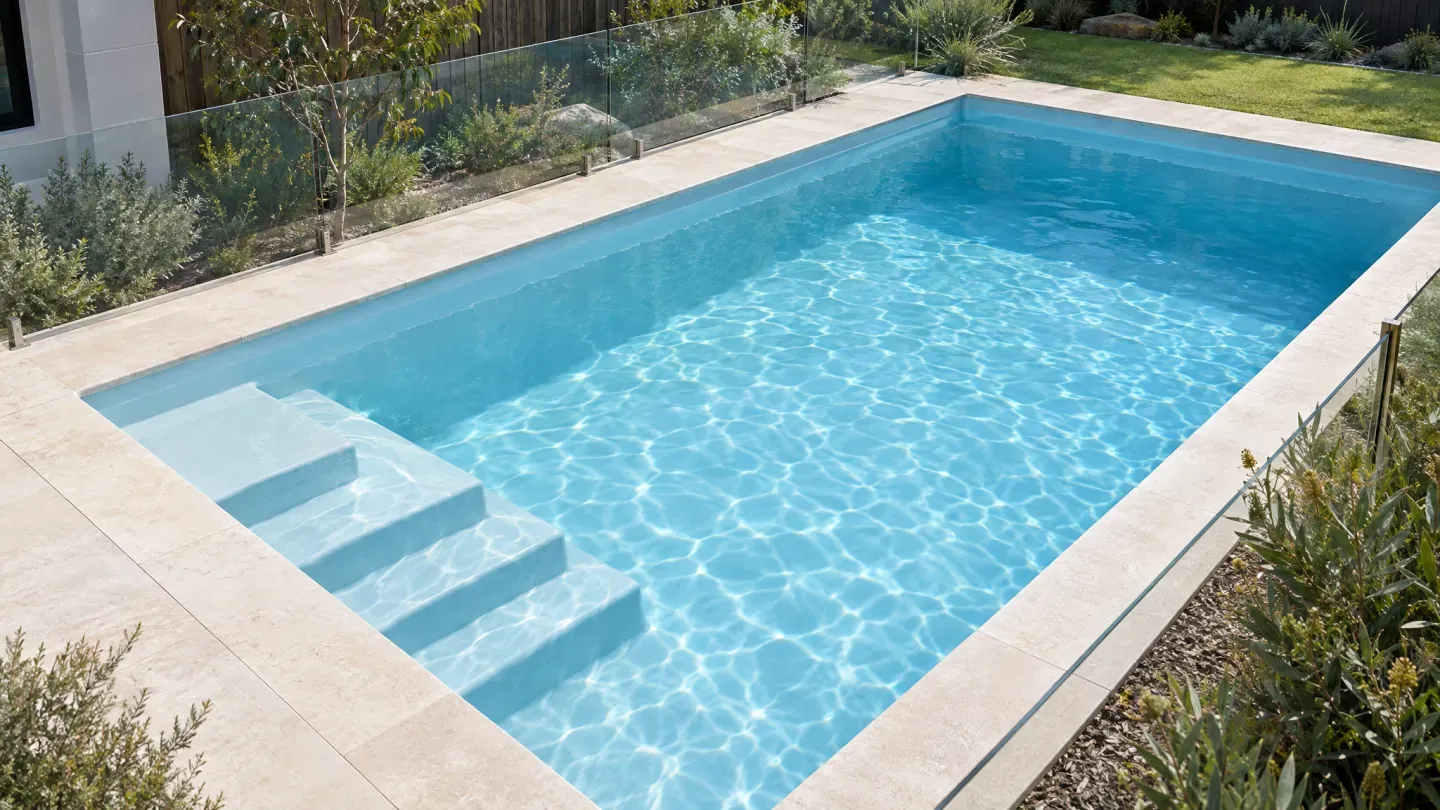
A mineral pool, also called a magnesium pool, is a class of pool water that contains a dissolved mineral-salt blend that contains magnesium chloride. As water passes through the chlorinator cell, the cell generates the sanitiser from the blend. The blend remains dissolved in the water, and the sanitiser is produced on site.
A mineral pool is not chlorine-free or a sodium-chloride salt water pool. At build time, it differs by the choice of chlorinator and consumable, not by the kind of pool.
What is a mineral pool, and is a magnesium pool the same thing?
A mineral pool is a swimming pool that contains a dissolved mineral-salt blend containing magnesium chloride. A chlorinator cell converts the dissolved salts into sanitiser. A magnesium pool is the more common name for the same type of pool.
Pool shops, builders, and mineral-blend brands may use either term for an identical system. Therefore, there is no substantive difference between a mineral pool and a magnesium pool. Compared with a conventional salt pool, which contains sodium chloride, a mineral pool contains a magnesium-based blend. Both systems generate sanitiser from the salts dissolved in the pool water.
We fit a mineral chlorinator as standard in every fibreglass pool we build. The mineral system is included in the pool package rather than offered as an upgrade, so buyers need to understand the included system rather than choose whether to add one.
What is a magnesium swimming pool in Australia?
A magnesium swimming pool in Australia is a backyard pool that passes a mineral blend that contains magnesium chloride through a chlorinator cell. The same system may be described as a magnesium pool, mineral pool, mineral swimming pool, or by its brand name. The name does not change the water or the chlorinator cell.
How does a mineral pool work?
A mineral pool uses electrolysis to generate sanitiser from dissolved mineral salts. The process has four stages and does not consume the minerals.
- The minerals dissolve in the pool water. The mineral blend is added at startup and dissolves completely. The dissolved minerals then circulate with the water moved by the pump.
- The pool water passes through the chlorinator cell. The pump carries water containing the dissolved mineral blend through the cell.
- The cell electrolyses the dissolved mineral salts. The cell processes the salts and generates sanitiser in the water. It continues generating sanitiser while the pump operates, so the pool owner does not need to add sanitiser from a drum.
- The sanitiser treats the water while the minerals remain dissolved. The generated sanitiser enters the pool and sanitises the water. The minerals are not consumed as they pass through the cell and continue circulating during subsequent water turnovers.
Scroll sideways to see the full circuit.
A mineral chlorinator cell and a salt chlorinator cell perform the same electrolysis process. A salt chlorinator cell electrolyses sodium chloride, while a mineral chlorinator cell electrolyses a blend that contains magnesium chloride. Both belong to the same equipment category but process different dissolved salts.
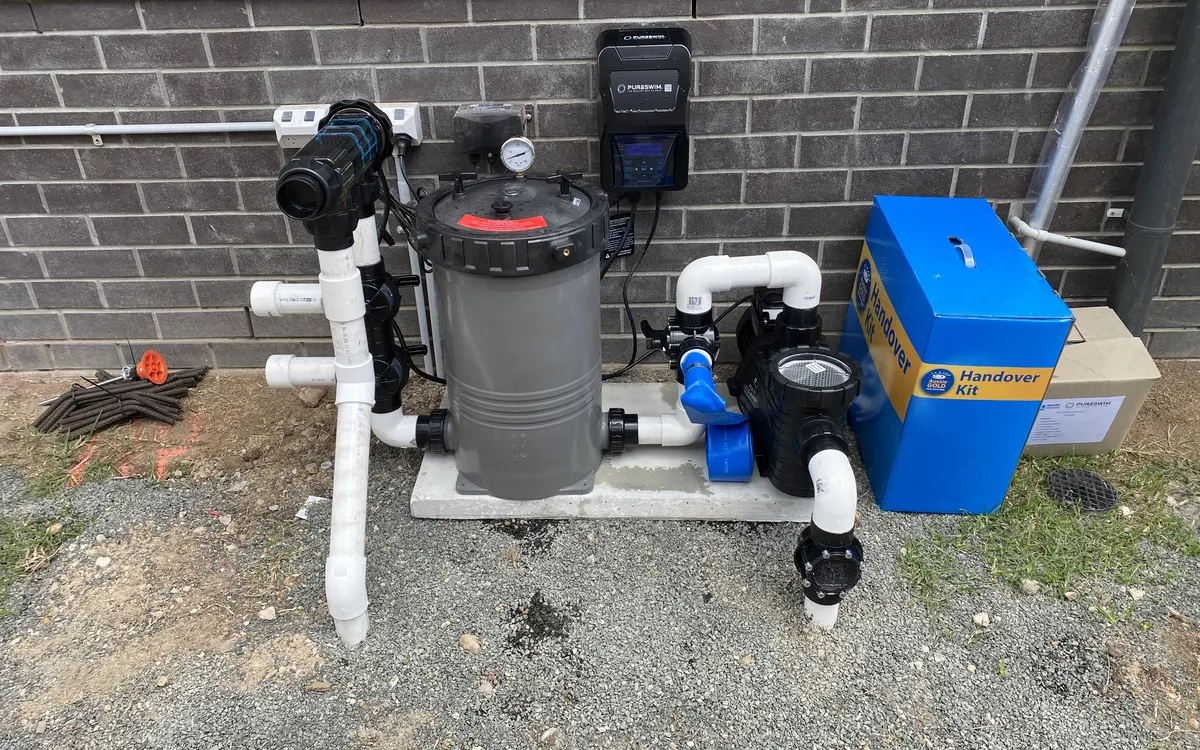
A mineral pool generates sanitiser only while water passes through the cell. Pump run time therefore determines both water circulation and sanitiser production, and affects water quality together with cell operation.
Mineral blends vary by product. MagnaPool, for example, contains 30% magnesium chloride and 70% potassium chloride by weight. Because the cell generates sanitiser from the salts dissolved in the water, mineral pool minerals and their dosing determine the dissolved input available to the cell.
Is there still chlorine in a magnesium pool?
Yes. A magnesium pool contains chlorine generated by its chlorinator cell.
The pool water contains a mineral blend that includes dissolved chloride salts. The chlorinator cell electrolyses these salts to generate chlorine, which sanitises the water. A mineral chlorinator is therefore a chlorine generator installed in the pool’s circulation system.
Describing a mineral pool as “chlorine-free” is incorrect. The chlorine is generated continuously on site from salts dissolved in the water instead of being added from a drum or as tablets. The owner does not handle chlorine as a separate product, but the water remains chlorinated.
A backyard pool can use a magnesium mineral system, a sodium-chloride salt system, or manual chlorine dosing. Magnesium mineral and sodium-chloride systems electrolyse different salts, while manual dosing adds chlorine directly. All three methods result in chlorine in the pool water.
Is a magnesium pool a salt water pool?
A magnesium pool is a mineral pool that uses the same chlorination process as a conventional salt water pool. Both systems contain dissolved salt and use a chlorinator cell to produce sanitiser by electrolysis instead of requiring manual sanitiser dosing.
The systems differ in salt composition and concentration. A conventional salt water pool uses sodium chloride, which is sold as ordinary pool salt. A mineral pool uses a mineral blend that contains magnesium chloride. The systems also require different salt concentrations in the water.
The term "magnesium salt water pool" does not describe a third type of pool. It describes a mineral pool that operates like a conventional salt water pool. The pool shell and plumbing layout do not change between the two systems.
What does mineral pool water feel like to swim in?
Mineral pool water is chlorinated, contains a different mixture of salts from manually dosed chlorine pool water, and requires balanced chemistry.
Swimmers describe balanced mineral pool water as softer or silkier against the skin. These descriptions refer to the water’s composition. Swimmers also report that they can keep their eyes open without the stinging they expect from pool water. Mineral pool water that is out of balance is not comfortable for open eyes.
Balanced mineral pool water does not produce the sharp chemical smell commonly associated with pools. That smell is associated with chlorinated water that is out of balance, not with chlorinated water in general.
How long can you stay in a magnesium pool, and should you shower after?
A backyard magnesium pool is a swimming pool that generates chlorine from salts dissolved in the water. It is not a mineral spa or float tank, so spa or float-tank soaking limits do not apply.
There is no specific time limit for swimming in a backyard magnesium pool. Swimmers can leave when they are finished or become cold, and children require the same supervision as they do in any swimming pool. The sanitisation method does not impose a separate time limit.
Showering or rinsing after swimming is optional but useful in any pool. Rinsing removes pool water from the skin and hair before it dries. It is not required for the mineral pool system, and skipping the rinse does not affect the pool or the swimmer.
Can you heat a mineral pool?
Yes. A mineral pool uses the same heating systems as other pools. Its mineral content does not affect heater selection. Heat pumps, gas heaters and solar systems are suitable. Each system is sized according to the pool volume and the intended swimming season, as it would be for a salt or chlorine pool.
| Model | Compatible pool length | Supplied and installed |
|---|---|---|
| Sunlover Oasis 9kW Heat Pump | Up to 6.5 m | $4,125 |
| Sunlover Oasis 13kW Heat Pump | Up to 8.3 m | $5,220 |
| Sunlover Oasis 19kW Heat Pump | Up to 9 m | $7,150 |
| Sunlover Oasis 24kW Heat Pump | Up to 11 m | $10,550 |
Prices and pool compatibility come from our quoting system. Heater selection also depends on the site and intended use.
Heating affects water balance, chlorinator cell output and evaporation:
- Water balance changes as temperature rises. Scaling becomes more likely in warmer water. Check the balance of a heated mineral pool more frequently during the heated months than when the pool remains cold through winter. The higher water temperature, rather than the heater, causes these changes.
- Chlorinator cell output varies with water temperature. Check the cell’s actual output when operating the pool at a higher temperature for an extended period. A setting that was suitable for cold water may not be suitable for warm water.
- Evaporation removes water but not minerals. A heated pool evaporates faster than an unheated pool. The remaining water contains the same quantity of minerals in a smaller volume, which increases the mineral concentration. Replace evaporation losses with water, not additional minerals.
A heated mineral pool requires water-balance checks, cell-output checks and water top-ups for more of the year than an unheated mineral pool.
Does a mineral pool work better in a fibreglass, concrete or vinyl shell?
A mineral pool can use a fibreglass, concrete or vinyl-lined shell. The relevant difference is the composition of the interior surface and its contact with the pool water.
Fibreglass. A fibreglass pool shell has a moulded gelcoat interior. Gelcoat is a sealed, non-porous surface formed in the mould, so mineral pool water does not soak into it. This makes gelcoat a low-risk surface for mineral pool chemistry. Every mineral system we fit uses a moulded gelcoat shell.
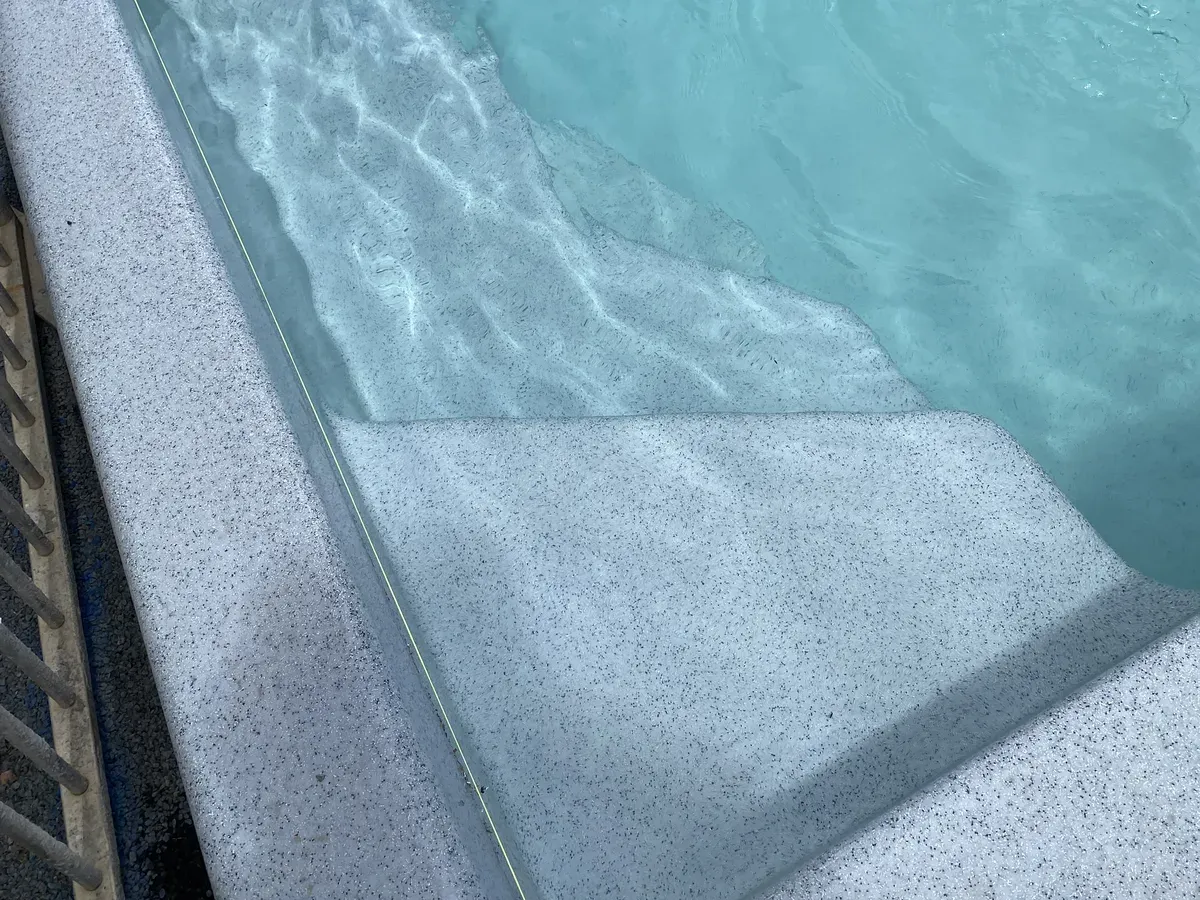
Concrete. A concrete pool has a porous cementitious interior applied on site, usually as render or pebblecrete. The pool water contacts the cement matrix directly rather than a sealed surface over it. The concrete finish therefore interacts with pool water chemistry differently from moulded gelcoat.
Vinyl. A vinyl-lined pool has a separate sheet liner installed inside the pool structure. The liner is not formed as part of the structure. Compatibility with mineral water depends on the liner product rather than the mineral system.
In all three shell types, fittings, light housings, ladders and handrails must be specified for the water they contact. Mineral pool compatibility therefore applies to these components as well as the interior surface.
The equipment is the same for all three shell types. The same chlorinator cell, pump and filter can treat water in fibreglass, concrete and vinyl-lined pools because the mineral system connects to the circulation system rather than the shell. The interior surface that contacts the treated water is the main difference.
Mineral water alone is not a reason to select or exclude a shell type. Before installing the system, confirm the composition of the interior surface and the water compatibility ratings of the fittings.
What does a mineral pool need that an ordinary pool doesn't?
A mineral pool requires four items that an ordinary chlorinated pool does not. These are consumables and components of mineral pool systems and equipment, not differences in the pool structure.
- A chlorinator cell rated for the mineral blend. The chlorinator cell generates chlorine by electrolysing the salts in the mineral blend. A generic salt cell is designed for sodium chloride at standard sodium-chloride concentrations, not for a mineral blend that contains magnesium and other chloride salts. The chlorinator cell is a required component of the mineral system, not an optional accessory.
- Filtration matched to the system. The chlorinator cell treats only the water circulated through it. The pump, filtration and circulation equipment must provide sufficient pool turnover for the required volume of water to pass through the cell at the necessary frequency.
- The minerals, as an ongoing consumable. The minerals remain dissolved in the water and are not consumed in the same way as a dosed chemical. Evaporation leaves the minerals in the pool, while water removed from the pool also removes dissolved minerals. Mineral levels must therefore be tested and adjusted based on the reading rather than on a fixed schedule.
- A test kit that reads the mineral level. A standard salt test measures sodium chloride and does not measure a mineral blend that contains magnesium and other chloride salts. The test kit must be designed for the blend used by the mineral system so that mineral additions can be based on an accurate reading.
Every pool we build includes a year's supply of minerals, a 4-in-1 minerals test kit and sample bottle, a premium variable-speed pump, an oversized cartridge filter and a startup chemical box. The supplied minerals cover the first year of consumption, and the test kit measures the mineral blend used by the system.
What does a magnesium pool cost to build and to run?
The build cost of a magnesium pool depends on the pool’s size, model and site. Our standard package includes the mineral system, so choosing mineral water instead of an ordinary salt pool adds almost nothing to the build price. As a result, what a mineral pool costs depends mainly on the pool rather than the mineral system.
| Pool size | Length | Depth | Installed from |
|---|---|---|---|
| 3m to 4m | 1.45m level | $45,847 | |
| 4m to 5.5m | 1.0m to 1.78m | $45,613 | |
| 6m to 7m | 1.0m to 1.88m | $54,443 | |
| 7.2m to 8m | 0.98m to 1.96m | $60,374 | |
| 8.5m to 11m | 1.0m to 2.0m | $72,535 |
Live all-inclusive installed pricing for standard site conditions in South East Queensland — updated straight from our quoting system.
We build in South East Queensland from Brendale. The site-specific portion of the installed price depends on the South East Queensland site, not on whether the pool uses a mineral system.
The running cost includes the usual pool operating costs plus mineral top-ups. Power, water-balance chemicals and filter maintenance cost the same as they do for any chlorinated pool of the same size. Minerals remain in the water when water evaporates and are added according to test results rather than a fixed schedule.
The top-up interval depends on water loss. A pool that retains its water requires fewer top-ups than one that loses water through splashing, draining for work or frequent refilling. Two identical pools in the same street can therefore have different annual mineral costs. Our pools have no mineral cost in the first year because the year’s mineral supply ships with the pool.
Is a mineral pool the right choice for your backyard?
A mineral pool is a chlorinated pool that uses a mineral salt blend. Its chlorinator generates chlorine, so it is suitable for owners who want the water characteristics of a mineral blend but not for owners who want a chlorine-free pool. This distinction is central to a mineral pool's benefits and drawbacks.
It suits a new build. For a new pool, the mineral chlorinator, pump, filter and test kit can be specified as a compatible system. The pool can use the intended mineral blend from initial filling, without replacing existing equipment.
It suits an owner who values water feel. Swimmers report that mineral pool water feels softer on the skin. When correctly balanced, the water is also comfortable when swimmers open their eyes and does not produce a pool-chemical smell.
A conversion requires equipment checks. Converting an existing pool requires an audit of the installed equipment. A salt cell rated for sodium chloride is not a mineral cell, and a salt tester cannot measure the mineral blend. Retaining the existing cell and test kit can result in a nominal mineral conversion without appropriate monitoring or control of the water.
It does not suit an owner seeking the lowest consumable costs. A mineral blend that contains magnesium costs more than sodium chloride pool salt. Owners who prioritize the lowest ongoing consumable costs should choose a conventional salt pool.
Marketing can create an incorrect expectation that a mineral pool is chlorine-free. A mineral pool is more suitable for a buyer who understands that it remains chlorinated but uses a different salt blend.
FAQs
What is a magnesium pool good for?
A magnesium pool is a backyard swimming pool that generates sanitiser from a mineral blend containing magnesium. It is used for swimming, cooling off, and supervised family activities. Owners may choose this pool type for the feel of the water and to avoid handling chlorine products. It is not a therapeutic pool and does not carry health claims.
Do you put salt in a magnesium pool?
A magnesium pool uses a mineral blend that contains magnesium chloride, a salt that dissolves in the water. Add this mineral blend rather than sodium chloride pool salt, which is intended for conventional salt chlorinators. Sodium chloride is not the correct salt for the cell fitted to a magnesium pool.
Can you put too much magnesium in a pool?
Yes. A mineral pool can contain too much magnesium. When water evaporates, dissolved minerals remain in the pool and become more concentrated. Adding minerals to replace those lost through evaporation can result in overdosing because the minerals did not evaporate. Test the mineral concentration before adding more minerals instead of adding them on a schedule.
Is a magnesium pool good for hair?
A magnesium pool is a chlorinated pool in which the cell generates sanitiser from a mineral blend dissolved in the water. Swimmers may describe mineral pool water as feeling softer on skin and hair than manually dosed chlorinated water, but this refers to how the water feels, not to a cosmetic or dermatological outcome. Rinse hair after swimming in a magnesium pool, as you would after swimming in any other pool.
Are magnesium pools more expensive than ordinary pools?
Magnesium pools cost about the same to build as ordinary pools in our range because the standard package includes a mineral chlorinator rather than pricing it as an upgrade. The ongoing cost is higher because the magnesium mineral blend used for top-ups costs more than sodium chloride pool salt.