Magnesium Pool Cost: Installed, Running & Conversion Prices
Separate a new mineral pool’s installed price from conversion costs, mineral top-ups, electricity and other ongoing running costs.
Written by Tehbyn Nova, Head of Operations & Growth
Published · Updated
Direct answer
A mineral pool contains added minerals and uses a mineral (magnesium) chlorinator. For pools of the same size and specification, a magnesium pool costs the same to install as any other pool we build. The quoted installation price depends on the shell, excavation, siteworks and extras. Our standard inclusions are a mineral (magnesium) chlorinator, an oversized cartridge filter and the first year’s minerals, so the additional mineral system cost for a new pool is approximately $0.
Annual running costs include mineral top-ups, electricity for the pump and chlorinator cell, balancing chemicals, chlorinator cell replacement and replacement water. Converting an existing pool includes the chlorinator changeover and the minerals required for the initial water treatment. The conversion price also depends on whether the existing pump and filter can be reused.
What does a magnesium pool cost installed?
A magnesium pool costs the same to install as any other pool we build with the same size and specification. The installed price is based on the size category, and each price band includes the complete installation and GST.
| Pool size | Length | Depth | Installed from |
|---|---|---|---|
| 3m to 4m | 1.45m level | $45,847 | |
| 4m to 5.5m | 1.0m to 1.78m | $45,613 | |
| 6m to 7m | 1.0m to 1.88m | $54,443 | |
| 7.2m to 8m | 0.98m to 1.96m | $60,374 | |
| 8.5m to 11m | 1.0m to 2.0m | $72,535 |
Live all-inclusive installed pricing for standard site conditions in South East Queensland — updated straight from our quoting system.
Four factors determine the installed cost of a specific magnesium pool:
- Shell size and series. Each size category contains several pool shell models with different lengths, widths and depths. A larger shell requires more excavation, more spoil removal and greater crane capacity. Moving to a larger size category applies the corresponding price band.
- Site access for the crane and the excavator. The excavator digs the hole, and the crane places the pool shell. Both machines require access to the property and a suitable working position. Restricted frontage, narrow side access or overhead obstructions can require a larger crane or longer reach, which increases the machinery cost.
- Siteworks and ground conditions. Siteworks costs depend on the slope across the pool area, rock or fill in the excavation, unstable soil, and any required levelling or retaining. These conditions are confirmed when the site is measured, so neighbouring properties can have different siteworks costs for the same shell.
- The extras selected. Extras are items selected in addition to the standard package, and each extra is priced separately. Two identical shells on comparable sites can have different totals because of the selected extras.
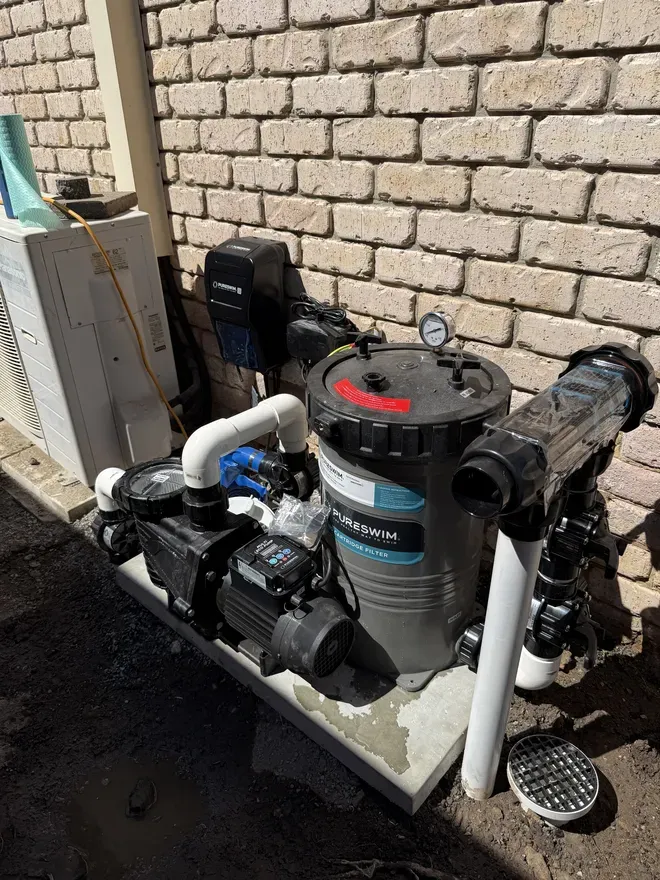
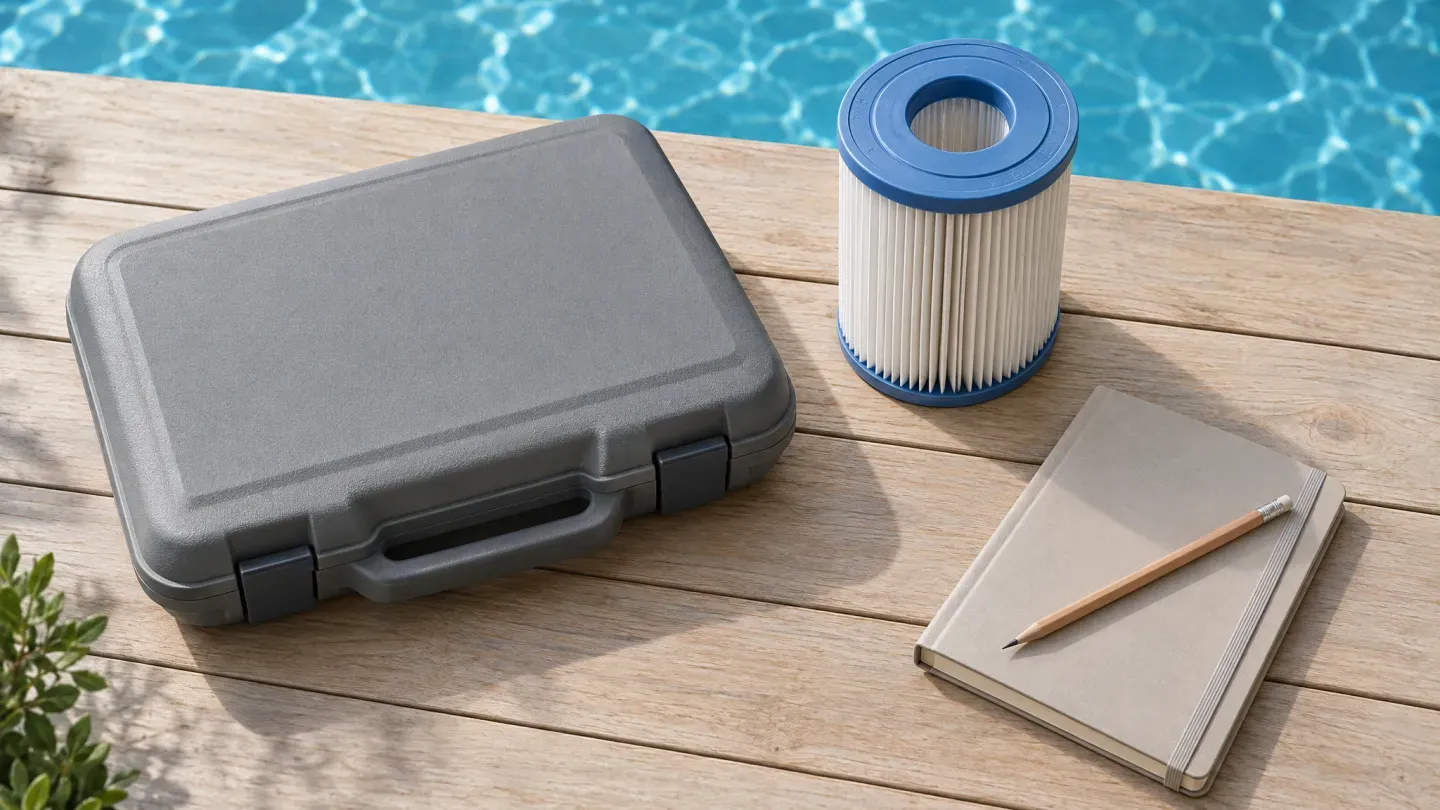
The mineral system does not affect the installed price because it is included as standard. Every pool includes a mineral (magnesium) chlorinator, a premium variable-speed pump, an oversized cartridge filter, a startup chemical box, the first year’s supply of minerals, and a 4-in-1 minerals test kit with a sample bottle. These six items do not appear as separate quote lines because they are included in the installed price band. The quote confirms any site-dependent costs after the site is measured.
Are magnesium pools more expensive than salt pools?
A mineral pool uses mineral pool systems and equipment built around a mineral chlorinator. Across the industry, builders generally quote mineral pools at a premium over salt pools.
On a typical build, two items account for this premium. The mineral chlorinator is a different unit from the basic salt chlorinator used by a salt pool and is priced separately. The initial mineral charge is based on the pool’s water volume and is not required for a salt pool.
Our standard pool package includes the mineral (magnesium) chlorinator, an oversized cartridge filter, and the first year’s supply of minerals. These inclusions reduce the mineral pool premium to ≈ $0 on a new pool we build. Choosing a magnesium pool instead of a salt pool does not add a line to our quote or change the price band.
This ≈ $0 premium applies only to our package. When comparing quotes from other builders, check whether the quoted price includes the mineral chlorinator and the initial mineral charge.
What does a mineral pool cost to run each year?
A mineral pool has five annual operating cost categories: mineral top-ups, electricity for the pump and chlorinator cell, balancing chemicals, chlorinator cell replacement, and water top-up.
| Cost line | What it covers | What swings it | Year one on an MFP build |
|---|---|---|---|
| Mineral top-ups | Replacing the minerals that leave the water over a year | Pool volume, water lost to splash-out, overflow after storm rain, and filter cleaning | $0. The first year's supply of minerals and a 4-in-1 minerals test kit come with the build |
| Pump and chlorinator power | Electricity drawn by the filtration pump and the chlorinator cell | Daily run hours, pump speed and your electricity tariff | A premium variable-speed pump is standard |
| Balancing chemicals | The pH and total alkalinity adjusters that hold the water in range | Bather load, rainfall and the hardness of your fill water | A startup chemical box is standard |
| Chlorinator cell replacement | The cell inside the chlorinator, a wear part on any chlorinated pool, spread across its service life | Daily run hours, and how long the cell lasts before it needs replacing | The chlorinator is fitted new with the build |
| Water top-up | Mains water replacing evaporation and splash-out | Climate, pool surface area, pool cover use and bather load | Not a build inclusion |

A mineral pool contains minerals at the concentration specified for its chlorinator. The owner tests the concentration, and mineral top-ups and dosing maintain the specified level.
Minerals do not evaporate. Splash-out, storm overflow, and water discharged during filter cleaning remove water that contains dissolved minerals. Replacement mains water then dilutes the remaining mineral concentration. A pool that overflows twice during a wet summer therefore requires more minerals than the same pool during a dry summer.
The filter type affects mineral loss during cleaning. We install an oversized cartridge filter as standard on every pool we build. A cartridge filter is cleaned by rinsing the element instead of backwashing the pool. This process does not discharge pool water or the minerals dissolved in it.
Compared with a salt pool of the same volume, a mineral pool differs only in the consumable used to maintain the required mineral concentration. When both pools operate on the same schedule, they use the same pump and chlorinator cell power. They also use the same types of pH and total alkalinity adjusters, use the same type of chlorinator cell, and lose the same amount of water to evaporation. Pool use and location determine the quantities required for these other cost categories.
What does a mineral pool cost per year vs salt and chlorine pools?
A mineral pool has most of the same annual cost categories as a salt pool or manually chlorinated pool. The main differences are the consumable and chlorinator cell costs. Any annual estimate depends on pool volume, operating hours, and the local water supply.
| Cost line | Mineral | Salt | Manually chlorinated |
|---|---|---|---|
| Consumable | A mineral blend, held at the level the mineral chlorinator specifies | Pool salt, held at the level the salt chlorinator specifies | Chlorine, bought and added as the pool consumes it |
| Consumable handling and storage | Dosed into the water at first fill, then topped up when the level drops | Dosed into the water at first fill, then topped up when the level drops | Added to the pool on an ongoing basis and stored between doses |
| Chlorinator cell | Runs a chlorinator cell, replaced as a wear part | Runs a chlorinator cell, replaced as a wear part | Runs no chlorinator cell, so there is no cell replacement line |
| Pump power | Filtration pump and cell drawing power daily | Filtration pump and cell drawing power daily | Filtration pump drawing power daily |
| Balancing chemicals | pH and total alkalinity adjusters | pH and total alkalinity adjusters | pH and total alkalinity adjusters |
The same annual items, grouped by system:
| System | Stated annual cost items |
|---|---|
| Mineral | A mineral blend topped up when the level drops, filtration pump and cell power, pH and total alkalinity adjusters, chlorinator cell replacement as a wear part. Year one on an MFP build: the mineral chlorinator, oversized cartridge filter and first year's minerals are standard, so the consumable line is $0 |
| Salt | Pool salt topped up when the level drops, filtration pump and cell power, pH and total alkalinity adjusters, chlorinator cell replacement as a wear part. Not the package we build |
| Manually chlorinated | Chlorine bought and added as the pool consumes it, filtration pump power, pH and total alkalinity adjusters, no chlorinator cell replacement line. Not the package we build |
Annual cost is one comparison factor. Mineral, salt, and manually chlorinated pools also differ in water feel, owner maintenance requirements, and operating equipment.
What does a magnesium pool cost in Queensland?
A magnesium pool in Queensland costs within the installed price bands shown above. These bands reflect the prices we quote for pools built across South East Queensland. Queensland conditions affect annual operating costs and siteworks costs.
Pools in Queensland are used for a longer part of the year. Pump operating hours, bather load and chemical demand remain at summer levels for longer, so electricity, balancing chemical and mineral top-up costs accrue over more of the calendar. A Queensland magnesium pool has the same five annual cost categories as a magnesium pool elsewhere, but incurs those costs for longer.
Siteworks costs vary by property. Slope, crane and excavator access, and ground conditions can change the siteworks cost in a quote. Two neighbouring properties can have different siteworks costs for the same pool shell and inclusions. We therefore quote an installed price band for each size category and confirm the final price after assessing the site.
What does it cost to convert an existing pool to minerals?
The cost of converting an existing pool to minerals consists of three line items:
- Replacing the existing chlorinator with a mineral chlorinator.
- Supplying the minerals required for the initial water charge. The required quantity depends on pool volume, so a large pool requires more minerals than a plunge pool.
- Reusing or replacing the existing pump and filter, depending on their age, condition, and capacity.
The conversion quote prices these items for the specific pool.
FAQs
Is a magnesium pool expensive?
For pools we build, a magnesium pool costs the same as an equivalent pool without a mineral system. The installed price covers the shell, excavation, siteworks, extras, and a mineral (magnesium) chlorinator as standard. Compared with a salt pool, only the annual mineral top-up cost differs, and this cost is $0 in the first year.
What are the disadvantages of a magnesium pool?
A magnesium pool has three cost-related disadvantages. It requires specific consumable minerals dosed to the level specified by the chlorinator, and cheaper off-the-shelf substitutes are not suitable. The chlorinator cell wears out and requires replacement during the pool’s life. Overflow and splash-out remove water containing dissolved minerals, so the pool must be re-dosed to restore the specified mineral level.
How much does MagnaPool cost?
MagnaPool pricing depends on whether the system is included in a new pool build or installed as a retrofit, whether the chlorinator is included in the build package, and the pool volume, which determines the required mineral charge. For pools we build, the mineral (magnesium) chlorinator is included as standard in the installed price.
Are magnesium pools better than chlorine?
A magnesium pool uses a chlorinator cell and maintains a set mineral concentration in the water. A manually chlorinated pool does not use a chlorinator cell and requires chlorine purchases as the chlorine is consumed. Other costs are the same. Water feel, maintenance requirements, and equipment are separate considerations.
Do you put salt in a magnesium pool?
A magnesium pool requires the minerals specified for its chlorinator, maintained at the required concentration. If salt is specified, add it as part of the mineral mixture. Test the water and add minerals when the concentration falls.
For pools we build, the first year’s mineral supply, a 4-in-1 minerals test kit, and a sample bottle are included.