Fibreglass Pool Resurfacing: Methods, Costs & Lifespan
What fibreglass pool resurfacing involves, the methods available, what Australian contractors charge, and when replacing the pool costs less.
Written by Tehbyn Nova, Head of Operations & Growth · Technically reviewed by Caleb Druhan, General Manager (QBCC licence 15087383) on
Published · Updated
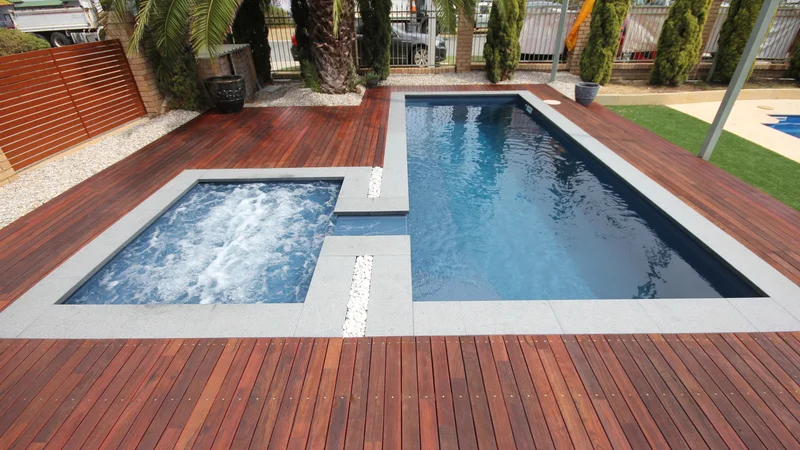
Yes, a fibreglass pool can be resurfaced without replacing or altering the structural shell. The process renews the interior finish. The shell is manufactured gelcoat-first, with structural fibreglass and resin laminate applied behind it. The surface in contact with the water is therefore a finish layer over the structure.
The five resurfacing methods are re-gelcoating, two-pack epoxy coating, polyurethane coating, thermoplastic polymer finishing and pool paint.
Eco Style Pool Renovations lists professional fibreglass pool resurfacing at $6,500 to $15,000. Fibreglass Pool Check lists market-wide costs of $5,000 to $20,000 or more, with localised patch repairs starting at $800.
Fibreglass pools do not have a scheduled resurfacing cycle. Factory gelcoat can last 30 years or more. Resurfacing is required when the surface condition warrants it.
Does a fibreglass pool ever need resurfacing?
Yes, but fibreglass pools do not have a fixed resurfacing schedule.
A fibreglass pool shell is made from glass fibre and resin with a gelcoat finish. During manufacturing, the gelcoat is applied to the mould before the structural glass and resin. The gelcoat provides the pool’s interior colour and finish.
Resurfacing replaces the gelcoat finish. In the United States, resurfacing may also be called refinishing or recoating. Resurfacing does not repair structural damage to the shell.
Cracks, chips and leaking fittings usually require repairs. If when a local patch is enough, it generally costs less than resurfacing. Resurfacing may be suitable when chalking, blistering or crazing affects the entire interior. Damage to the gelcoat and damage to the structural laminate require different work and have different costs.
Concrete pools are often resurfaced based on age. According to hipages, a concrete pool is generally resurfaced after 10 to 15 years. This interval applies to the surface material used in concrete pools.
Moulded fibreglass gelcoat does not have an equivalent fixed interval. MFP Easy expects the factory gelcoat on the pools it installs to last at least 30 years. Resurfacing depends on the condition of the surface.
Renovation contractors provide estimated resurfacing intervals for existing fibreglass pools. Eco Style Pool Renovations estimates 15 to 30 years, depending on the pool’s condition. The Fibreglass Pool Company estimates 15 to 25 years or more for a well-maintained gelcoat surface with correct water chemistry. These estimates apply to existing pools of different ages. They are not a service schedule for a new pool.
MFP Easy builds and installs fibreglass pools in South East Queensland. We do not resurface, recoat or reline existing pools. Remedial and warranty work for pools we have installed includes repairs to cracks, chips and gelcoat damage.
How do you know your fibreglass pool needs resurfacing?
Fibreglass pool surfaces usually wear from the outside in. The following signs indicate how far the gelcoat has deteriorated, from early surface wear to advanced damage:
- Chalking and colour loss. The gelcoat becomes chalky as its surface breaks down. Colour may fade or become discoloured. Chalk residue may come off on your hand or swimsuit.
- Roughness underfoot. The pool floor and steps may feel like fine sandpaper instead of smooth. This indicates that the surface breakdown has progressed beyond initial chalking.
- Staining that no longer cleans off. Factory gelcoat is non-porous, so surface marks usually lift with standard cleaning. As the gelcoat deteriorates, stains can penetrate the surface and may not respond to brushing or chemical treatment.
- Crazing. Fine cracks develop across the gelcoat surface. This generally occurs after staining and before blistering.
- Blistering. Osmotic blistering, also called fibreglass cancer, occurs when water gets behind the gelcoat and separates it from the laminate. Perth Pool Co describes blisters ranging from the size of a match head to a dinner plate, with numbers ranging from a few to thousands. Older blisters can deflate, making them difficult to see when the pool is full. Aussie Pool Renovations states that blistering typically begins 15 to 20 years after construction.
- Gelcoat coming away. Sheets or flakes of gelcoat separate from the laminate. This exposes the structural glass and resin directly to pool water and indicates that the interior requires full resurfacing.
Gelcoat wear is caused by ultraviolet light, water chemistry and hardness, and normal pool use. These are not defects. Surface wear in an ageing pool is a maintenance issue.
Structural problems require separate repairs. Cracks through the laminate, delamination, shell movement and leaks must be repaired before the new surface is applied.
What are the ways to resurface a fibreglass pool?
There are five resurfacing methods. Each requires the same initial preparation.
Factory gelcoat is smooth and non-porous. This helps prevent algae from attaching to the surface, but also makes it difficult for a new coating to adhere. The surface must be sanded to remove the gloss and provide a suitable bond. It must then be cleaned with a degreaser to remove body oils, fats and grime. Any remaining contamination can prevent the new coating from bonding.
| Method | What it is | Published service life | Published cost band | Best for | Source |
|---|---|---|---|---|---|
| Re-gelcoat | The old gelcoat is ground back, a vinyl ester laminate is applied, and a new pigmented gelcoat topcoat finishes the interior | 20 years and beyond, with no cracking, peeling or bubbling | $8,000 – $15,000 for a full resurface; $5,000 – $9,000 for a sprayed cosmetic refresh | A chalked, faded or worn factory gelcoat on a structurally sound shell | Mr Fibreglass (life); Fibreglass Pool Check (price) |
| Two-pack epoxy coating | A two-part epoxy, the paint chemistry that bonds to fibreglass, applied over an abraded and degreased interior | No Australian figure published | $6,000 – $12,000 | A full-interior coating priced below a re-gelcoat | Fibreglass Pool Check |
| Polyurethane coating | A polyurethane film coating applied over an abraded and degreased interior | No Australian figure published | $6,000 – $12,000 | A sound laminate where the wear is confined to the finish and no new glass is needed | Fibreglass Pool Check |
| Thermoplastic or polymer finish | Proprietary applied finishes marketed for fibreglass interiors, including ecoFINISH polyFIBRO and aquaBRIGHT | EcoFinish up to 15 years | No Australian figure published | No Australian availability published | Eco Style Pool Renovations |
| Pool paint | A coating applied over prepared gelcoat, sold as a colour refresh | 1 to 3 years | No Australian figure published | A short-term cosmetic result on a sound surface | Mr Fibreglass |
Mr Fibreglass lists a service life of 1 to 3 years for pool paint, 20 years for fibreglass and 10 to 15 years for pebblecrete. Pool paint requires reapplication every one to three years.
Published Australian pricing is not available for two methods. Neither Eco Style Pool Renovations nor Fibreglass Pool Check publishes prices for thermoplastic finishes or pool paint for fibreglass pools. There is no published price for comparing quotes for these methods.
Can you re-gelcoat a fibreglass pool over the old gelcoat?
Yes, if the existing surface is prepared correctly. New gelcoat should not be applied directly over chalked, oily or blistered gelcoat. The old surface must be ground back to sound material and any underlying defects repaired before applying new resin. If the existing gelcoat is failing, applying new gelcoat over it will not correct the underlying problem.
Australian resurfacers specify vinyl ester resin for the new surface because it provides a corrosion barrier against osmosis. The system uses a vinyl ester tie-layer resin under the finish and a vinyl ester fillcoat above it. The fillcoat provides a second barrier and prevents fibre wicking.
Perth Pool Co uses the Allnex AQUAGUARD Fibretech system. Mr Fibreglass uses Allnex Aquaguard resins with commercial-grade gelcoats. Named product systems allow buyers to compare specifications between quotes.
Re-gelcoating is the more expensive of the two full-interior options. Fibreglass Pool Check prices new gelcoat over prepared laminate at $8,000 to $15,000. Applied epoxy or polyurethane costs $6,000 to $12,000. A sprayed gelcoat refresh without structural work costs $5,000 to $9,000.
For smaller jobs, Eco Style Pool Renovations prices gelcoat replacement at $800 to $1,800 and minor gelcoat repairs at $1,000 to $1,200. Neither source defines the difference between gelcoat replacement at this price and a full resurface.
What happens during a fibreglass pool resurfacing, step by step?
Fibreglass pool resurfacing uses a fixed sequence. Each resin layer must cure before the next layer is applied. Perth Pool Co estimates two to six hours for grinding and two to three days for application, excluding curing time. Mr Fibreglass estimates 5 to 10 days for the complete process.
- Brace and drain the shell. The contractor braces the pool walls and pumps out the water. Water helps hold the shell in the ground. The builder must determine how contractors lower and restore the water level. Ground pressure can crack an empty shell.
- Tent the site against UV and weather. Perth Pool Co installs a large industrial tarp over the pool. The tarp protects the resin products and technicians from ultraviolet light and weather.
- Grind off the old gelcoat. The contractor uses specialised grinders to remove old or defective gelcoat and expose sound laminate. Perth Pool Co estimates that this step takes two to six hours. The new materials bond to the remaining laminate.
- Laminate the shell. The contractor applies a vinyl ester primer. They then place 300gsm chopped strand matting into a second coat of vinyl ester resin and allow it to cure. Resurfacing adds laminate to the shell. A coating job adds only a film over the existing surface.
- Apply the pigmented vinyl ester fillcoat. The fillcoat adds the first pigment layer and a second osmosis barrier over the tie-layer. Perth Pool Co allows the fillcoat to cure overnight.
- Light-grind the cured fillcoat. The contractor lightly grinds the fillcoat to level the surface and prepare it for the topcoat.
- Apply the topcoat. The topcoat forms the final cosmetic layer. Perth Pool Co states that the topcoat is formulated for colour retention. Both the fillcoat and topcoat contain pigment.
- Refill and rebalance the water. After the surface cures, the contractor refills the pool and rebalances the water. Follow the contractor’s instructions for refilling, chemical balancing, and returning the pool to normal use.
Can you polish or acid-wash a fibreglass pool instead of resurfacing it?
Polishing can restore an oxidised fibreglass pool surface if the gelcoat is still intact. Cutting and polishing may restore its gloss and colour. It cannot repair gelcoat that has worn through to the laminate, blistered or developed fine cracks. Polishing removes a small amount of material and does not replace damaged gelcoat.
hipages estimates that colour restoration for a standard pool costs about $700. Fibreglass Pool Check estimates that a sprayed gelcoat refresh without structural repairs costs $5,000 to $9,000.
Acid washing is used for concrete pools, not fibreglass pools. Concrete or plaster interiors may be acid etched and neutralised, or pressure washed, before coating. These surfaces then require a sealer or primer.
Fibreglass requires a different preparation process. The surface is ground or abraded with a coarse emery disc. It does not require a sealer or primer afterwards.
Staining and discolouration are common reasons for considering an acid wash. If the gelcoat is sound and continuous, treat the stain through cleaning and water chemistry. Resurfacing may be required if the surface has deteriorated enough to retain stains.
Can a fibreglass pool be relined or spray-lined?
For a fibreglass pool shell, relining usually means resurfacing with laminate and a new topcoat. This differs from lining a concrete pool with fibreglass, which creates a one-piece fibreglass interior within the concrete shell. Australian resurfacing contractors generally call this a concrete pool conversion.
Resurfacing a fibreglass shell involves removing the old gelcoat, applying a vinyl ester laminate and adding a pigmented topcoat. It does not involve fitting a vinyl liner. Fibreglass Pool Check lists prices of $8,000 to $15,000 for new gelcoat over prepared laminate and $6,000 to $12,000 for an applied epoxy or polyurethane coating. Repairs involving osmosis can cost $12,000 to $20,000 or more because the shell must be ground back and relaminated.
Spray-lining describes the application method rather than the material. Gelcoat can be sprayed onto a prepared pool interior. Fibreglass Pool Check lists prices of $5,000 to $9,000 for this work when no structural repairs are required. A quote for spray-lining should identify the resin system being used.
Can you resurface a fibreglass pool yourself?
Yes, but DIY resurfacing can fail because of preparation, curing or weather conditions.
- Preparation. Professional resurfacing uses specialised grinders to remove the old gelcoat and expose sound laminate. The interior is then degreased before the coating is applied. Most owners do not have this equipment or a reliable way to confirm that the entire surface is properly prepared and free of oil. The coating can lift from areas that were not prepared correctly.
- The cure window. Each layer must cure before the next layer is applied. A professional fillcoat is usually left overnight before the finishing stage.
- Weather. Resurfacing depends on suitable weather. Mr Fibreglass states that timing is weather-dependent, while Perth Pool Co tents the pool to protect it from ultraviolet light and weather throughout the job. A DIY project completed in an open pool over several days is exposed to changing conditions.
Eco Style Pool Renovations prices DIY resurfacing kits at $1,200 to $1,500. Professional resurfacing costs between $6,500 and $15,000.
DIY coatings do not include a workmanship warranty. Resurfacers that use a single named system may warrant the work completed by their own crew.
What does resurfacing a fibreglass pool cost?
Australian contractors publish prices of about $6,500 to $15,000 for a full professional resurface. The cost depends mainly on whether the work is a cosmetic repair or a full resurface. MFP Easy does not provide resurfacing services or publish its own prices. All figures below come from Australian resurfacing contractors.
| Job | Published price | Source |
|---|---|---|
| Patch repair, one to three small areas | $800 – $3,000 | Fibreglass Pool Check |
| Minor gel coat repair work | $1,000 – $1,200 | Eco Style Pool Renovations |
| Gel coat replacement or repaint, varying with pool size | $800 – $1,800 | Eco Style Pool Renovations; hipages |
| Colour restoration, standard pool | around $700 | hipages |
| Sprayed gel coat refresh, no structural work | $5,000 – $9,000 | Fibreglass Pool Check |
| Full resurface, new gel coat over prepared laminate | $8,000 – $15,000 | Fibreglass Pool Check |
| Full resurface using an applied epoxy or polyurethane | $6,000 – $12,000 | Fibreglass Pool Check |
| Full resurface where osmosis work means grinding back and relaminating | $12,000 – $20,000+ | Fibreglass Pool Check |
| Professional resurface, general published range | $6,500 – $15,000 | Eco Style Pool Renovations |
| Resurfacing across the whole market | $5,000 – $20,000+ | Fibreglass Pool Check |
| A 9 m by 4 m pool | $5,100 – $7,700 | Eco Style Pool Renovations |
| Outer bounds across all jobs | $3,500 – $30,000 | Eco Style Pool Renovations |
| Labour | $60 – $90 per hour | Fibreglass Pool Check |
| Labour, resurfacing specialists | $60 – $80 per hour | hipages |
| Travel premium outside metropolitan areas | $500 – $1,500 | Fibreglass Pool Check |
The sources use different ranges. Eco Style Pool Renovations lists a starting price of $6,500 for a full resurface. Fibreglass Pool Check lists a starting price of $5,000 and an upper price of $20,000 or more. It lists osmosis work separately rather than including it in the full-resurface range.
Fibreglass Pool Check bases its prices on standard residential pools from about 7 m by 3.5 m to 10 m by 4.5 m. Eco Style Pool Renovations does not state a pool-size range. Both sources are commercial pricing guides. They are not survey or government data.
Resurfacing can include draining the pool, preparing the surface, repairing defects, applying the coating, refilling the pool and rebalancing the water. Neither source states which items are included in its published range. Check the written scope when comparing quotes, as quotes with the same total price may include different work.
Fibreglass Pool Check lists a travel premium of $500 to $1,500 for work outside metropolitan areas. This is separate from its South East Queensland labour rates.
How long does a resurfaced fibreglass pool last?
A professionally resurfaced fibreglass interior can last for decades. Mr Fibreglass states that a resurfaced interior can last 20 years or more without cracking, peeling or bubbling, provided the underlying shell is sound.
Deep cracks, delamination and structural damage must be repaired before applying a new coating or laminate. The new surface depends on the stability and condition of the substrate.
The surface and structural shell have different service lives. The article on how long a fibreglass pool lasts covers the laminate beneath the finish. Built Right Pools states that a well-made fibreglass pool shell can last 30 to 50 years or more. This estimate applies to the structural shell, not the surface.
Published estimates for surface life vary. MFP Easy states that the factory gelcoat on its pools can last 30 years or more, with no scheduled resurfacing cycle. The Fibreglass Pool Company gives an estimate of 15 to 25 years or more for gelcoat maintained with correct water chemistry. Eco Style Pool Renovations gives a condition-based interval of 15 to 30 years.
Australian resurfacing contractors do not publish a separate service life for replacement gelcoat compared with original factory gelcoat. As a result, resurfaced interiors are generally compared with published figures for original gelcoat.
The following factors can reduce the life of the surface:
- Unbalanced water chemistry can continuously damage the finish.
- Sunlight can damage the exposed surface of an empty shell. A drained pool should not be left empty.
- Poor surface preparation can cause adhesion failure after the pool is refilled.
How often does a fibreglass pool need resurfacing, and when is the best time of year?
A fibreglass pool does not have a fixed resurfacing schedule. Resurfacing is required when the gelcoat has chalked through, blistered, crazed or started to separate.
Resurfacing intervals vary by pool type. hipages states that concrete pools are typically resurfaced every 10 to 15 years. Vinyl liner pools cannot be resurfaced; their liners are replaced after 5 to 9 years. These intervals do not apply to moulded fibreglass gelcoats.
Mr Fibreglass estimates that professional fibreglass pool resurfacing takes 5 to 10 days. Larger renovations can take two to three weeks. The timing depends on the weather, so scheduled dates may change with the forecast.
The pool cannot be used during resurfacing. Schedule the work outside the swimming season.
Is renovating an old fibreglass pool worth it, or should you replace it?
Renovation usually costs less than replacement if the pool shell is structurally sound. Mr Fibreglass states that resurfacing instead of replacing can save $50,000 to $70,000.
A fibreglass pool renovation can include:
- Interior surface. Re-gelcoating, coating or applying a polymer finish can update the colour and texture.
- Waterline tiles and coping. These parts are attached to the shell edge and surrounding structure. They can be replaced.
- Paving and landscaping. hipages calculates pool surrounds separately from the pool interior.
- Equipment. Pumps, heaters, filtration systems, chlorinators, skimmers, pipework and LED lighting can be replaced while the pool is drained and switched off.
- Water features. A water feature can be added and connected to the existing pool plumbing.
Renovation cannot change:
- Shape. The manufacturing mould determines the shell shape.
- Size. The mould determines the pool's length and width.
- Depth. The mould determines the floor profile, including the shallow and deep ends.
hipages estimates that pool renovation can cost less than $1,000 for cosmetic work and $10,000 or more for major work. Eco Style Pool Renovations estimates $6,500 to $15,000 for a full fibreglass resurface. Fibreglass Pool Check estimates $12,000 to $20,000 or more for a full resurface with osmosis repair.
If the shell has failed, swapping it for a new shell may cost less than repairing it. Repairs may fail if the shell continues to move.
MFP Easy's current installed price bands for a new fibreglass pool provide a cost comparison.
| Pool size | Length | Depth | Installed from |
|---|---|---|---|
| 3m to 4m | 1.45m level | $45,847 | |
| 4m to 5.5m | 1.0m to 1.78m | $45,613 | |
| 6m to 7m | 1.0m to 1.88m | $54,443 | |
| 7.2m to 8m | 0.98m to 1.96m | $60,374 | |
| 8.5m to 11m | 1.0m to 2.0m | $72,535 |
Live all-inclusive installed pricing for standard site conditions in South East Queensland — updated straight from our quoting system.
“My honest take, and it's why we don't offer resurfacing: by the time you've paid for a proper professional resurface, you're well into the territory of a new shell. A resurface is a repair to an old pool, and the coating rarely gives you the years people hope for. A new shell comes with a fresh warranty, a longer life ahead of it and a factory finish rather than an on-site one. If your shell is genuinely at the end of its surface, my advice is to price both options before committing, because the gap is smaller than most people expect and what you get for it is very different.”

Who resurfaces fibreglass pools?
Pool resurfacing contractors resurface fibreglass pools. Pool builders generally provide different services. MFP Easy builds and installs more than 250 fibreglass pools each year in South East Queensland. We do not resurface, recoat or reline existing pools.
Before paying a deposit, check the contractor’s licence and warranty term. In Queensland, pool renovation and resurfacing contractors hold a QBCC licence. Reef Pools publishes its QBCC licence, ACN and ABN, which you can verify.
The warranty term can indicate the scope of work. Reef Pools provides a two-year warranty for top-coat renovations, which involve sanding and reapplying the top gel coat. It provides a five-year warranty for full fibreglass resurfacing that addresses deterioration, cracking or osmosis.
Resurfacing and pool painting use different processes. A resurfacer removes the old gelcoat, applies a vinyl ester laminate and adds a pigmented topcoat. The contractor warrants the workmanship when using a single named system.
A pool painter applies a coating to a prepared surface. Mr Fibreglass provides a warranty of 1 to 3 years for pool paint and 20 years for fibreglass. When reviewing a quote, confirm whether it covers resurfacing or pool painting.
FAQs
What is the average lifespan of a fibreglass pool?
Built Right Pools states that a well-made fibreglass pool shell can last 30 to 50 years or more. The shell typically lasts longer than the surface.
The factory gelcoat on an MFP Easy pool can last 30 years or more, with no scheduled resurfacing cycle. Renovation contractors may provide shorter estimates based on older pools.
What happens to a fibreglass pool after 25 years?
After 25 years, a fibreglass pool may show chalking, colour loss, staining, osmotic blistering or gelcoat separation. The shell is usually still structurally sound.
If the shell is sound, the pool can be resurfaced. If the shell has structural damage, it must be repaired before resurfacing. Replacement is another option.
What is the cheapest way to resurface a pool?
Patch repairs and gelcoat repainting are the cheapest options. Fibreglass Pool Check prices repairs to one to three small areas at $800 to $3,000. Eco Style Pool Renovations prices gelcoat replacement at $800 to $1,800 and minor gelcoat repairs at $1,000 to $1,200.
Pool paint lasts 1 to 3 years, compared with 20 years for fibreglass, according to Mr Fibreglass. No Australian source provides a price for pool paint.
Is pool resurfacing worth it?
Resurfacing can be worthwhile if the pool shell is structurally sound. Mr Fibreglass states that resurfacing can save $50,000 to $70,000 compared with replacement. It also states that a resurfaced interior can last 20 years or more without cracking, peeling or bubbling.
If the laminate has failed, deep cracks, delamination and structural damage must be repaired before resurfacing. These repairs add to the total cost.
What does fibreglass pool resurfacing cost in Perth?
Eco Style Pool Renovations lists fibreglass pool resurfacing in Perth at $9,000 to $15,000. Its general Australian range is $6,500 to $15,000. It also lists an overall range of $3,500 to $30,000 for fibreglass resurfacing jobs.