Fibreglass Pool Repair: Damage Types, Methods & Costs
What cracks, chips and blisters on a fibreglass pool mean, how each is repaired, what it costs in Australia, and when to replace instead.
Written by Tehbyn Nova, Head of Operations & Growth · Technically reviewed by Caleb Druhan, General Manager (QBCC licence 15087383) on
Published · Updated
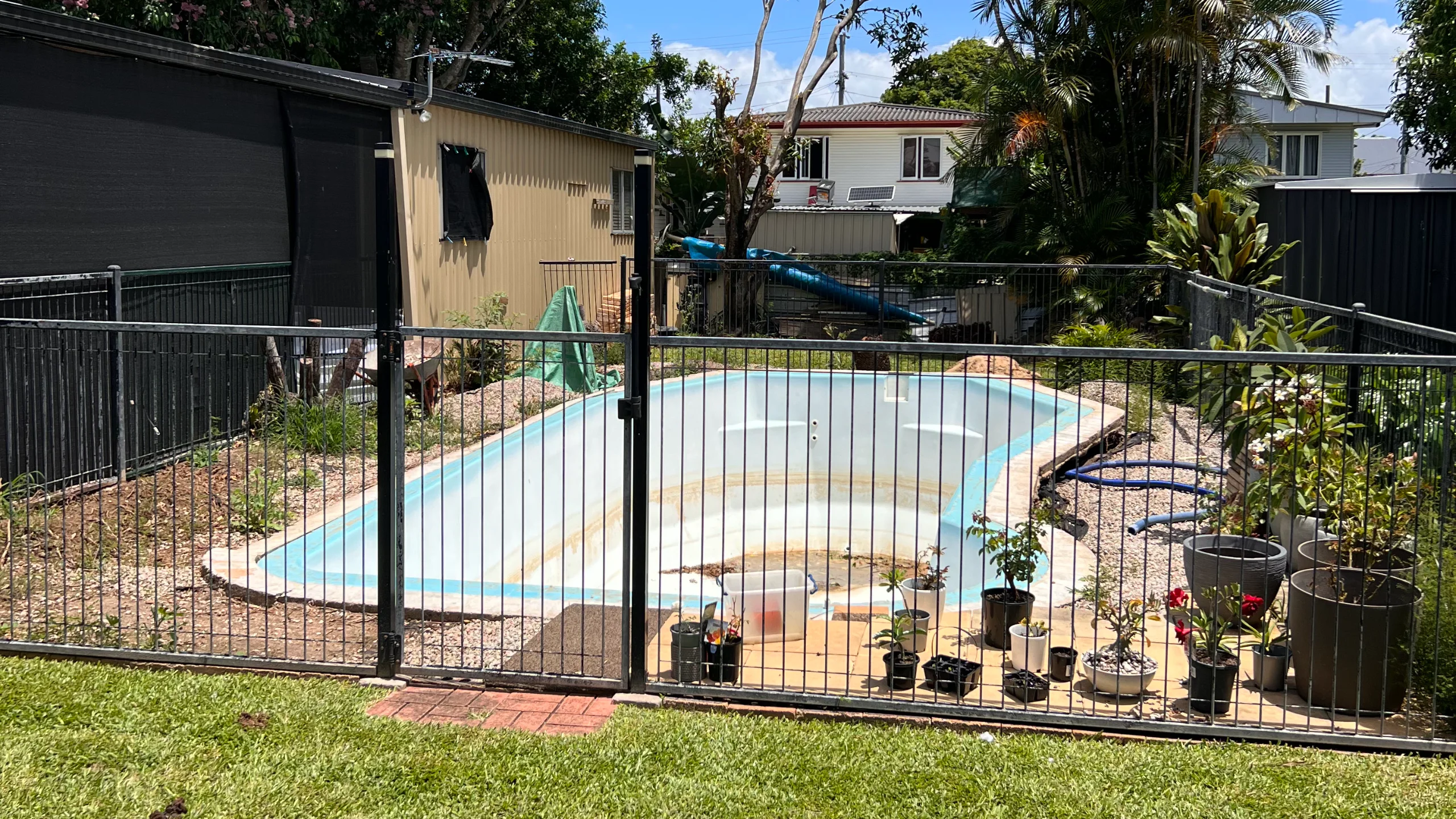
A fibreglass pool can usually be repaired. Fibreglass pool repair methods and costs depend on which layer is damaged.
Chips, scratches, and crazing affect the coloured gelcoat. These require surface repairs. Cracks in the glass-and-resin laminate are structural and can cause leaks.
Check whether the pool is losing water:
- If the pool maintains its operating level, the damage is likely limited to the gelcoat.
- If the pool requires regular topping up, contact a fibreglass repairer for an assessment.
According to Fibreglass Pool Check, repair costs are:
- Localised patch repair: $800 to $3,000
- Full interior resurfacing: $5,000 to $20,000 or more
- Osmosis remediation: an additional $4,000 to $8,000
A professional should lower the water level before starting repairs. Emptying the pool can cause the shell to move, crease, or crack.
Replace the pool if the laminate is compromised. A coating applied over failed laminate does not restore structural integrity.
Can a fibreglass pool be repaired?
Yes. Most fibreglass pool damage can be repaired. The repair method and cost depend on the damaged layer.
A fibreglass pool shell is a single moulded laminate made from glass fibre and resin. The gelcoat forms the visible surface. The structural glass and resin are behind the gelcoat.
Chips, scratches, and crazing usually affect only the gelcoat and require a surface repair. Cracks that extend through the laminate require a structural repair and can cause leaks.
The shell is manufactured as one piece and craned into the excavation. It does not have replaceable panels. The largest shell we install measures 11.48 m x 4.45 m and weighs 1,286 kg.
For widespread surface damage, consider renewing the entire interior finish instead of repairing individual areas.
“Don't write off a cracked shell too quickly. A pool that's been in the ground for years and developed a crack can very often be repaired by a fibreglass specialist, and it's a fraction of the cost people fear. The damage you can't come back from is a floated pool. When there's enough groundwater around the outside of the shell and not enough water inside holding it down, the shell lifts out of the ground, and at that point there's no saving it, you're into a replacement. It's the reason the golden rule exists: keep the water in your pool, and if it ever has to come down, get advice first.”

What damage does a fibreglass pool actually get?
Most fibreglass pool damage falls into seven categories. Damage can affect the gelcoat surface, the structural laminate, the bond between these layers, or a fitting that passes through the shell.
| Damage type | What it looks like | Which layer it is in | Urgent? |
|---|---|---|---|
| Gelcoat chips and scratches | Small areas where the coloured surface layer has been knocked or scraped off by impact | Gelcoat | No. Repaired as a surface job |
| Crazing and spider cracks | Fine hairline cracks in the surface, often hard to see | Gelcoat | No, provided the pool is not losing water |
| Structural crack through the laminate | A crack that runs through the shell rather than sitting in its surface | Laminate | Yes. A structural crack leaks |
| Osmotic blistering | Blisters raised by water that has worked in behind the gelcoat. They can go down again with time, so an inspection can miss them | Between the gelcoat and the laminate | Yes, for assessment |
| Delamination | Separation between the layers that make up the shell, rather than damage to the surface alone | Laminate | Yes. It must be repaired before any coating goes on |
| Wall bulging | A wall that has moved inwards, or a floor that has warped and pushed upward into a bubble in the surface | Laminate and the ground around it | Yes |
| Damage around fittings | Cracking, movement or water loss where the skimmer throat, the return and light fittings or the main drain pass through the shell | Fitting | Yes if the pool is losing water |
The location of the damage determines the required repair and its cost. Gelcoat damage is limited to the surface if the shell remains intact. Laminate damage is structural and must be repaired before applying a surface coating. Osmotic blistering affects the bond between the gelcoat and laminate. Water has entered behind the finish, so it is not only a surface defect. Fitting damage occurs where the skimmer throat, return and light fittings, or main drain pass through and are sealed into the shell.
Some surface problems do not involve a break in the shell. Bay Pool Interiors describes gelcoat wear as thinning of the finish until the fibreglass layers below become visible, making the surface appear grey or brown. It describes black spotting as mould penetrating porous gelcoat. Both conditions affect the surface of an intact shell and require resurfacing.
How do you tell a surface crack from a structural one?
Check whether the pool is losing water. Structural cracks leak. Gelcoat cracks do not.
Use the following steps:
- Check the water level. If the water level remains stable after allowing for evaporation, the crack is not leaking. If the level continues to drop and the pool requires regular topping up, water is leaking somewhere.
- Inspect the surrounding ground, paving and concrete. Sunken pavers or cracked concrete can indicate that water is leaking into the ground.
- Inspect the walls and floor. An inward-moving wall or a floor that has warped upward indicates a problem with the shell.
- Inspect the crack. Hairline and spider cracks are usually limited to the gelcoat. A structural crack extends through the shell.
If the pool holds its water level, the surrounding ground and paving have not moved, and the walls and floor retain their shape, the crack is likely in the gelcoat. This is a surface repair and is not urgent. You can schedule the repair separately or include it in a resurface if the rest of the interior is worn.
Contact a fibreglass repairer promptly if the pool is losing water, the surrounding ground has moved, or a wall or the floor is out of shape.
What causes a fibreglass pool to crack or degrade?
Most fibreglass pool damage results from six mechanisms. Each affects a specific part of the pool.
- Stress beyond the gelcoat's ability to flex. If the shell flexes too far, the gelcoat can develop hairline or spider cracks while the laminate remains intact.
- Ground movement. Bay Pool Interiors describes pool walls moving inwards when the ground behind them erodes. It also describes floors warping upwards and creating a surface bubble. Ground movement affects the whole shell, so fibreglass pool bulging is a structural problem.
- Movement in the backfill around the shell. River Pools describes United States installations where packed material supports the pool wall against the surrounding ground. If this material settles or shifts, the wall can move.
- Wear and porosity in the gelcoat. Gelcoat wear and black spotting affect only the finish layer. Both indicate that the gelcoat has reached the end of its useful life.
- Water behind the gelcoat. Osmotic blistering, also known as fibreglass cancer, occurs between the gelcoat and the laminate. Applying a new coating over the surface does not remove the trapped water.
- The shell being emptied. Water inside a full pool applies outward pressure and helps the shell retain its shape. When the pool is empty, the shell must carry the surrounding groundwater pressure without that internal support. A professional should lower the water level in a fibreglass pool.
Current shell construction affects whether these problems occur in new pools. The shells we install are moulded by Aqua Technics. An Aqua Technics shell with graphene reinforcement and the ColourGuard surface does not develop osmosis under normal operating conditions and does not need resurfacing.
How is a crack in a fibreglass pool repaired?
The repair method depends on the depth of the crack. A crack in the gelcoat requires a gelcoat repair. A crack through the laminate requires a structural repair.
Gelcoat is the coloured resin that forms the visible surface of the pool. It is sprayed into the mould before the structural fibreglass and resin are added. A gelcoat repair replaces finish that has been chipped, scratched or crazed. It does not repair the structural layers below.
Colour matching can be difficult. River Pools states that multilayer, metallic or flake finishes are factory-applied and cannot be reproduced accurately on site. It states that solid, single-layer colours are easier to match. Leak Inc advertises colour-matched repairs for pools of any colour. These claims differ.
Structural repair involves removing the damaged laminate and rebuilding the area with new fibreglass. Perth Pool Co states that this method provides a long-term repair. Because it involves the pool structure, it is more extensive and priced accordingly.
Does the pool have to be drained, or can it be repaired underwater?
Some fibreglass pool repairs can be completed underwater. An underwater patch can temporarily stop a leak. Repairs to the laminate or pool surface require the water level to be lowered or the pool to be drained. A professional should manage this process.
Controlled draining before structural repairs can damage the pool. SPASA Australia guidance published through Jim's Pool Care states that groundwater beneath an empty pool can cause it to pop, crease, crack or move out of the ground. This movement can also damage decking, paving, wiring, plumbing, lighting and in-floor cleaning equipment. Fibreglass and vinyl liner pools are at higher risk than concrete pools because they are lighter. Queensland Health advises against emptying a pool when the surrounding ground is saturated.
Before lowering the water level, a pool professional checks:
- The groundwater level around the pool. SPASA Australia recommends caution when groundwater is approximately 1.5 to 1.8 m below the surface. The shell can move or bulge at this level.
- The hydrostatic valve. According to SPASA Australia, builders install this valve at the lowest point of a new pool. Pressure from below opens the valve, allowing groundwater to enter through the floor instead of lifting the shell.
Perth Pool Co uses steel Acrow bracing to support the pool walls before draining. This bracing holds the shell in shape during the repair.
Underwater patches are temporary. They can reduce water loss until a full repair is possible. No Australian source identifies underwater patching as a permanent repair for a fibreglass shell. An underwater patch also does not repair a crack that extends through the laminate.
Do fibreglass pool repair kits actually work?
A fibreglass pool repair kit can repair a small gelcoat chip above the waterline. It cannot repair a crack through the laminate or match the surrounding finish.
Gelcoat manufacturing requires controlled application conditions that a hand-mixed patch cannot reproduce:
- Thickness. River Pools specifies three passes and a finished thickness of 25 to 30 mils. If the coating is too thin, it can cure incorrectly and blister. If it is too thick, it can crack.
- Catalyst ratio. River Pools specifies a catalyst ratio between 1 and 2%, adjusted for the conditions.
- Temperature. River Pools states that gelcoat and related resins spray best at 25°C.
- Dry air. Moisture in the spray air can prevent the gelcoat from curing correctly. River Pools notes that water in the compressor air line can enter the shell.
Use a repair kit only for minor gelcoat damage above the waterline. Do not use it for laminate cracks. If the pool is losing water, arrange an assessment.
Can cracked fibreglass pool steps be repaired?
Yes. Moulded fibreglass pool steps are part of the pool shell. Damage to the gelcoat requires a surface repair. A crack through the laminate requires a structural repair.
Check whether the pool is holding its water level. If it is, the crack is likely limited to the finish. If the pool is losing water, contact a fibreglass repairer to assess the step.
How do you find and fix a leak in a fibreglass pool?
A fibreglass pool may have a leak if it loses more water than expected from evaporation or requires regular topping up to maintain its operating level.
Water can leak through:
- The fibreglass shell laminate
- The skimmer throat
- Return fittings
- Light fittings
- The main drain
Fittings pass through openings in the laminate and rely on seals. A failed seal can cause water loss without a visible crack in the pool surface.
Leak detection and sealing require specialist assessment. Mr Fibreglass checks for leaks alongside other faults, including osmosis blistering, hydrostatic pressure damage, structural cracks and splits, and rust staining.
Repair suspected leaks promptly. Water escaping through a structural crack can affect the ground around and beneath the pool. This can cause pavers to drop and concrete to split.
What does fibreglass pool repair cost in Australia?
Fibreglass pool repair in Australia costs from $800 for a localised patch to more than $20,000 for a full interior resurface. The following figures are from Fibreglass Pool Check and hipages.
| Job | Typical Australian cost | Source |
|---|---|---|
| Localised patch repair, 1 to 3 small areas | $800 to $3,000 | Fibreglass Pool Check |
| Gelcoat replacement or repaint | $800 to $1,800, depending on pool size | hipages |
| Colour restoration | Roughly $700, standard pool size | hipages |
| Full resurface, 6 x 2.5 m pool (15 m²) | $2,100 to $3,200 | hipages |
| Full resurface, 9 x 4 m pool (36 m²) | $5,100 to $7,700 | hipages |
| Full resurface, Australian market range | $5,000 to $20,000+ | Fibreglass Pool Check |
| Osmosis remediation added to a resurface | Adds $4,000 to $8,000 | Fibreglass Pool Check |
| Difficult access | Adds $1,000 to $2,000 | Fibreglass Pool Check |
The resurfacing estimates use different scopes. hipages calculates costs based on the pool’s interior area, so its estimates differ for 15 m² and 36 m² pools. Fibreglass Pool Check provides an Australian market range without separating costs by pool size. For Brisbane, Rod Cameron Pools estimates that professional pool resurfacing costs from $8,000 to $15,000 or more.
Location affects labour costs. Fibreglass Pool Check estimates labour rates of $60 to $90 per hour in South East Queensland and $80 to $120 per hour in Sydney. Regional Queensland projects can include a travel premium of $500 to $1,500. Difficult access can add $1,000 to $2,000 because equipment, materials and workers are harder to move to the pool.
The condition of the existing laminate can also affect the result. Fibreglass Pool Check reports cases in which $12,000 resurfacing projects showed the original faults again within two years because the laminate beneath the coating was already compromised.
Should you repair it, resurface it, or replace the pool?
Repair the pool if the damage is limited to a few areas. Resurface it if the shell is structurally sound but the surface is worn. Replace it if the laminate is compromised. A coating cannot fix a failed shell.
Fibreglass Pool Check recommends localised patch repairs for damage in two or three identifiable areas. Examples include a crack beside a fitting, a cluster of blisters, or gelcoat impact damage in one area. These repairs cost $800 to $3,000.
According to hipages, resurfacing the interior of a 6 x 2.5 m pool costs $2,100 to $3,200. This overlaps with the cost of patch repairs. For a small pool, one patch repair can cost as much as resurfacing the entire interior. If damage affects most of the surface, resurfacing once can cost less than repeated repairs.
Fibreglass Pool Check states that resurfacing a structurally sound shell can add about ten years of service. Deep cracks, delamination, and structural damage must be repaired before applying a coating. This can determine whether a $12,000 resurface lasts or fails within two years. Mr Fibreglass estimates that resurfacing takes 5 to 10 days on site, weather permitting.
Replace the pool if the laminate has failed. In this case, compare the cost with the installed price of a new pool. MFP Easy builds and installs fibreglass pools in South East Queensland. The prices below are our installed prices, not market estimates.
| Pool size | Length | Depth | Installed from |
|---|---|---|---|
| 3m to 4m | 1.45m level | $45,847 | |
| 4m to 5.5m | 1.0m to 1.78m | $45,613 | |
| 6m to 7m | 1.0m to 1.88m | $54,443 | |
| 7.2m to 8m | 0.98m to 1.96m | $60,374 | |
| 8.5m to 11m | 1.0m to 2.0m | $72,535 |
Live all-inclusive installed pricing for standard site conditions in South East Queensland — updated straight from our quoting system.
Who repairs fibreglass pools?
A fibreglass repair specialist repairs the structure and surface of a fibreglass pool shell. This work can include crack repair, reconditioning, refurbishment, waterproofing, osmosis treatment, recoating, bulge repair, and leak repair. It is different from general pool servicing, such as water testing and equipment maintenance.
Confirm the following requirements before work begins:
- Licence. According to Fibreglass Pool Check, resurfacing work in Queensland valued above $3,300 must be completed by a licensed contractor.
- Home warranty insurance. The QBCC requires home warranty insurance for residential construction work valued above $3,300, including materials, labour, and GST. Coverage lasts for 6 years and 6 months. It starts from the earliest of the contract date, premium payment date, or date work began. The coverage remains with the property if it is sold. The QBCC provides coverage up to $200,000 for defective work, incomplete work, or subsidence or settlement of the ground beneath the pool.
FAQs
Can a crack in a fibreglass pool be repaired?
Yes. The repair method depends on the crack depth.
- Hairline or spider cracks: These affect the gelcoat and require a surface repair.
- Structural cracks: These extend through the laminate. The damaged section must be removed and replaced with new fibreglass laminate.
Water loss indicates the crack type. Structural cracks leak. Gelcoat cracks do not.
How much does fibreglass pool repair cost?
According to Fibreglass Pool Check, repairing one to three small areas costs $800 to $3,000. A full fibreglass pool resurface in Australia costs $5,000 to $20,000 or more.
Osmosis remediation adds $4,000 to $8,000 to the resurfacing cost. Difficult access adds $1,000 to $2,000.
Labour costs $60 to $90 per hour in South East Queensland and $80 to $120 per hour in Sydney.
Do fibreglass pools crack easily?
Fibreglass pool cracks vary in severity. Hairline and spider cracks affect only the coloured finish. They occur when the shell flexes more than the finish can tolerate, while the laminate remains intact.
Structural cracks extend through the glass and resin. A pool with a structural crack may continue to lose water below its normal operating level.
Can you repair a fibreglass pool without draining it?
Sometimes. An underwater patch can temporarily reduce water loss. It does not repair a crack through the laminate.
A fibreglass pool should be drained by a professional. When the pool is empty, groundwater pressure can cause the shell to move, crease, or crack. Queensland Health advises against emptying a pool while the surrounding ground is saturated.
What is the average lifespan of a fibreglass pool?
A modern fibreglass pool shell typically lasts 30 years or more. Under normal operating conditions, Aqua Technics’ graphene-reinforced shells with a ColourGuard finish are not expected to develop osmosis or require resurfacing.
If a shell develops osmotic blistering or a worn gelcoat, resurfacing can renew the interior without replacing the pool, provided the underlying laminate remains structurally sound.