Pool Skimmer Box and Main Drain: Fibreglass Pool Fittings
What the skimmer box, return fittings, main drain and hydrostatic valve do on a fibreglass pool, and where each one sits in the shell.
Written by Tehbyn Nova, Head of Operations & Growth · Technically reviewed by Caleb Druhan, General Manager (QBCC licence 15087383) on
Published
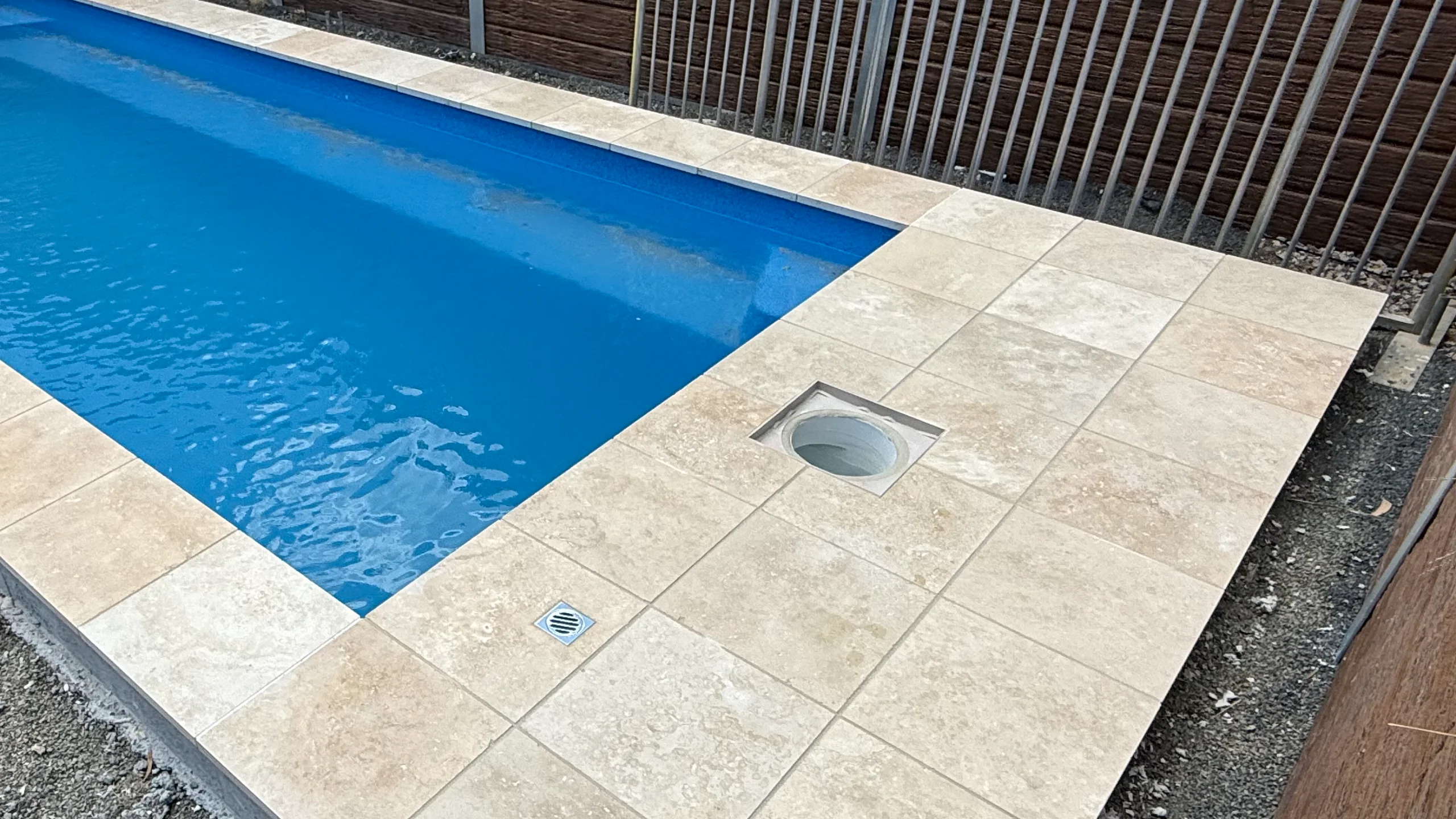
Direct answer
A fibreglass pool shell has four fittings. One is the pool skimmer box.
What fittings does a fibreglass pool shell have?
A fibreglass pool shell has four types of fittings:
- Skimmer box: Removes water from the surface.
- Return fittings: Return filtered water to the pool.
- Main drain or floor sump: Removes water from the pool.
- Hydrostatic valve: Connects to the ground below the pool.
The main drain and hydrostatic valve are installed in the floor of the shell.
The fittings are cut into the finished walls after the shell is removed from the mould. They are not installed during moulding.
The fittings use hardware for finished surfaces. This hardware includes a dress ring for the skimmer and a shell adapter for the hydrostatic valve. In Australia, these parts are available as a matched kit that contains a skimmer, dress ring, main drain stem, and hydrostatic valve. The components are also available separately.
What is the skimmer box on a fibreglass pool?
A pool skimmer box draws water from the pool surface, where debris collects before sinking. Water enters through the skimmer opening, called the throat, and flows into a basket inside the box. The basket captures debris before the water reaches the pump.
Skimmer boxes serve the same function in concrete and fibreglass pools, but their installation differs. In a concrete pool, the skimmer box is a separate unit installed in the wall as the pool is formed. In a fibreglass pool, the skimmer box is fitted to a prefabricated shell that is moulded off-site and delivered finished. This requires hardware designed for fibreglass pools.
The normal operating water level is within the skimmer throat, approximately one-third to halfway up the opening. If the water drops below this level, the fibreglass shell may be at risk.
When is the skimmer box position decided?
For fibreglass pools in South East Queensland, the skimmer box position is fixed on the day a fibreglass pool is installed, before backfilling. After material is packed against the outside of the pool shell, the position cannot be changed.
The vertical position determines the pool’s operating water level. After the pool is filled, the water level should sit between one-third and halfway up the skimmer opening.
What features does a fibreglass pool skimmer box have?
A fibreglass pool skimmer box is available as a matched system that includes the skimmer, dress ring, main drain stem, and hydrostatic valve. Each component is also available separately.
The Australian range includes these features:
- Large-capacity leaf basket. The basket holds 4.3 litres of leaves and debris.
- Low-profile lock-down vacuum plate. The vacuum plate locks into the skimmer box and sits low inside it.
- Flow-through weir. The flow-through weir is designed to reduce weir hammer.
The box is available in round or square designs, with or without a port. Colour options are white, grey, and beige. It is compatible with most suction cleaners.
What do the return fittings and jets do?
Water leaves the pool through the skimmer box and main drain. After filtration, it returns through the return fittings.
Australian manufacturers produce separate return fittings for fibreglass, concrete, and vinyl pools. Returns are available in 40 mm and 50 mm sizes. The fibreglass return is sold as a 40–50 mm fitting with a combined coupling.
The visible part of the return fitting is the eyeball. This round insert directs water as it enters the pool. On fibreglass returns, the eyeball can be locked to maintain the selected recirculation pattern.
What is the main drain in a fibreglass pool?
The main drain in a fibreglass pool is a suction fitting installed in a shallow well in the floor of the shell. It does not empty the pool. Do not empty a fibreglass pool to access this fitting. The water helps hold the shell in the ground.
The floor well also contains the hydrostatic valve. The valve sits high in the well, and main drain assemblies include it. Fibreglass pools use a shallow-base main drain cover designed for this layout.
Concrete-filled main drain covers are also available in Australia. These weighted, universal covers prevent suction cleaners from becoming stuck on the pool floor. They are not designed for main drains with active suction.
What is the hydrostatic valve in the floor of a fibreglass pool?
A hydrostatic valve is a one-way valve installed in the floor of a fibreglass pool shell. It allows groundwater to enter the pool when pressure builds below the shell. This reduces the risk of the shell lifting when the pool water level is low or the groundwater level is high. Water flows through the valve only into the pool.
Without a hydrostatic valve, groundwater pressure can bulge the pool walls or lift the pool out of the ground. For more information, see how hydrostatic pressure can move the shell.
Hydrostatic valves are standard on Australian fibreglass pools. They are made from impact-resistant ABS thermoplastic and are available in 40 mm and 50 mm sizes. Each valve is available in white or grey. It includes a shell adapter for connecting the valve to the pool floor and a dedicated removal tool.
Can a hydrostatic valve be replaced without draining the pool?
A builder must assess the pool before replacing a hydrostatic valve. The valve is located in the floor of the pool shell, so replacement requires lowering the water level. This is also the condition in which the valve protects the pool.
Do not lower the water level in a fibreglass pool to access a fitting. The water helps hold the shell in place. Lowering the water level is a structural decision for the builder, not a maintenance task.
A hydrostatic valve is not owner-serviceable. Removal and refitting tools are available for 40 mm and 50 mm valves and should be used by the person completing the assessment.
FAQs
Does a pool need a skimmer box?
Yes. Australian fibreglass pools use a skimmer box. It is one of four shell fittings, along with return fittings, a main drain or floor sump, and a hydrostatic valve. The skimmer draws water from the pool surface and collects floating debris in the skimmer basket.
How often should the skimmer basket be emptied?
Empty the skimmer basket when it contains debris. Do not wait for a scheduled day. A full basket restricts water flow to the pump. Check it more often during leaf fall and after storms.
Where should the water level sit in a fibreglass pool?
Keep the water level inside the skimmer throat, approximately one-third to halfway up the opening. Do not lower it below this range for cleaning or fitting access because this can damage the shell. Consult the pool builder before lowering the water level.
Is a hydrostatic valve standard on an Australian fibreglass pool?
Yes. The hydrostatic valve is included in the main drain assembly or the matched skimmer kit and is installed with the pool.
The one-way valve is located in the pool floor. It allows groundwater to enter the pool to reduce pressure under the shell. It is not owner-serviceable.
What is the main drain on a pool?
A main drain is a suction fitting in a shallow well on the pool floor. It is not used to empty the pool. In a fibreglass pool, the well also contains the hydrostatic valve.