Smart Pool Technology: Equipment, Benefits & Maintenance
Smart pool technology explained by a South East Queensland fibreglass pool builder: the chlorination, filtration, heating and lighting automation.
Written by Tehbyn Nova, Head of Operations & Growth · Technically reviewed by Caleb Druhan, General Manager (QBCC licence 15087383) on
Published · Updated
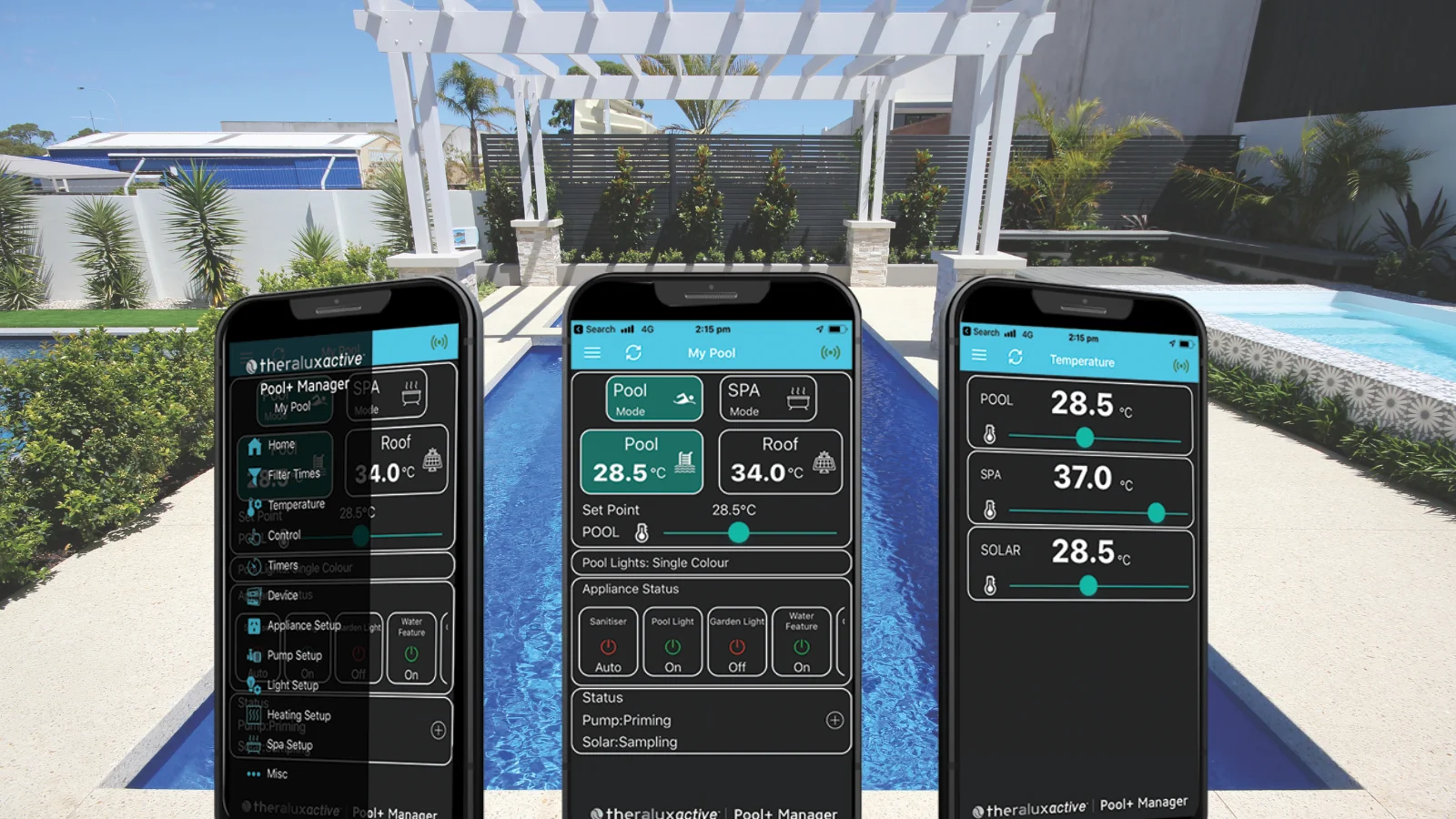
Smart pool technology automates a swimming pool's chemistry, filtration, heating, and lighting. The equipment runs on a schedule instead of requiring manual operation.
A pool qualifies as a smart pool when:
- Equipment generates the sanitiser instead of requiring manual dosing.
- The filtration pump runs on a programmed schedule.
- Heating and lighting are controlled through an interface instead of at the equipment.
A smart pool is a standard fibreglass pool fitted with equipment that meets these conditions.
MFP Easy installs this equipment during fibreglass pool construction across South East Queensland.
What types of equipment are included in a smart pool?
MFP Easy installs seven components in a smart pool. Six operate automatically after programming. The pool blanket and roller are operated manually.
This is MFP Easy's install list, not a general definition of a smart pool. Other providers may use different components while still meeting the three conditions above.
- Mineral or salt chlorinator. The chlorinator is installed in the circulation system after the filter. It passes pool water through an electrolytic cell, which converts dissolved chloride into chlorine while the filtration pump is running. In a mineral system, magnesium and potassium remain dissolved in the water and condition it. You adjust sanitiser output at the unit instead of adding sanitiser by hand.
- Variable-speed filtration pump on a programmed schedule. The pump circulates water through the filter and return jets. It uses programmed start times, stop times and speeds. Low-speed operation provides daily water turnover over a longer period. Vacuuming and backwashing use a higher speed. A variable-speed pump costs less to run than a single-speed pump because slower circulation uses less power for the same daily turnover. The schedule also controls when sanitation occurs because the chlorinator produces chlorine only while water is moving through the cell.
- LED lighting with a controller. LED lights are installed in the fibreglass shell below the waterline. The controller turns them on and off at programmed times. This removes the need to operate a wall switch manually.
- Heat pump with thermostat control. The heat pump is installed on the equipment pad. It extracts heat from the air and transfers it to the pool water through a heat exchanger. The thermostat cycles the unit on when the water falls below the set temperature. A heat pump uses more power than the filtration pump while operating. Pool heating running costs depend on the temperature setting, season and use of a pool blanket.
- Automatic or robotic pool cleaner. An automatic cleaner uses suction from the filtration pump. It cleans the pool floor while the pump is running. A robotic cleaner has its own motor and filter cartridge. It runs independently and cleans the walls and floor. Both types collect settled debris. Neither empties the skimmer basket.
- Actuator-controlled valves. An actuator is a motorised head attached to a diverter valve. It allows the controller to direct water through the heat pump or between separate return circuits. Manual valve adjustment is not required.
- Pool blanket and roller. The blanket is a floating cover stored on a roller at one end of the pool. It reduces evaporation and overnight heat loss. This can reduce heat pump operation and slow the loss of water and sanitiser. The roller is operated manually.
MFP Easy installs these components across the fibreglass pool types it builds, including round, small, medium, large and lap pools. The pump, chlorinator and heat pump are sized for the water volume of each model.
MFP Easy offers seven filtration packages based on pool size. A plunge pool and a lap pool use the same types of automation but require different equipment capacities.
MFP Easy does not install some products sold as smart pool technology. These include brand-specific app ecosystems, voice-assistant integration and automatic slatted covers. Pool equipment suppliers offer these products in Australia.
“We offer a range of filtration packages, including the 'Ultimate' range that includes automatic pH management, complete pool monitoring, and automatic chlorination. Our install team makes sure to wire and plumb your smart pool add-ons on the day, and everything is tested before handover.”

What are the benefits of smart pool automation?
Pool automation handles chlorine dosing and filtration pump scheduling. A mineral or salt chlorinator produces sanitiser while the pump runs. A programmed schedule starts and stops the pump, including when no one is home.
A thermostat-controlled heat pump maintains the selected water temperature automatically.
For a fibreglass pool, routine maintenance consists of testing the water, emptying the baskets, and checking that the equipment is running as programmed.
What maintenance is still required with a smart pool?
Pool automation does not replace water testing, physical cleaning, or equipment servicing. A chlorinator produces sanitiser at its set rate but cannot determine whether that rate is correct.
Test the water regularly. In South East Queensland, summer storms can dilute sanitiser and change the pH. Hot weather and increased swimmer use can consume chlorine faster than the chlorinator cell replaces it. Test the water before adjusting the chlorinator output.
Continue to clean the pool and its components. Remove leaves from the skimmer and pump baskets. Blocked baskets reduce water flow and can stop filtration and sanitiser production, even when the pump schedule shows that the pump is running. Clean the waterline separately because robotic cleaners may not reach it.
Service the equipment at the required intervals. The chlorinator cell can develop scale and eventually needs replacing. Filters require backwashing or cartridge cleaning. Heat pump air intakes must remain clear.
Should you retrofit a pool with automation, or include it in the pool build?
Pool automation can be included during construction or added to an existing pool. The main considerations are access to plumbing and power, equipment pad space, switchboard capacity, and installation timing. MFP Easy installs automation on the pools it builds and includes the required components in the quote for each pool model.
An existing fibreglass pool can be upgraded one component at a time if the equipment pad and switchboard have sufficient capacity. Where the plumbing connections are suitable, a variable-speed pump can replace a single-speed pump. A chlorinator can be added to the circulation system after the filter.
A pad designed for a pump and filter may have space for a chlorinator. Adding a heat pump later may require extending the pad, relocating equipment, and adding switchboard circuits. Accessing plumbing and conduit under a completed pool surround may also require removing sections of paving or garden.
Including automation during construction reduces the need for later excavation. Plumbing, conduit, and power can be installed while the trenches are open. Light conduit can be laid before the pool surrounds are completed, and actuators can be fitted while the valves and plumbing are assembled. The equipment pad and switchboard circuits can be sized for all equipment listed in the quote.
MFP Easy checks automation requirements during an on-site site assessment. The assessment covers the equipment pad location, switchboard capacity, and distance from the house. Have the pool model you are considering available so the specification can be prepared for that model.
FAQs
What is a smart pool system?
A smart pool system uses automated equipment to manage pool chemistry, filtration, heating, and lighting. The system automatically generates sanitiser, runs filtration on a schedule, and provides an interface for controlling heating and lighting. A pool with a chlorinator and a programmed filtration pump meets most of this definition.
What does "smart pool" mean?
A smart pool automatically controls sanitation, circulation, heating, and lighting based on user-defined settings. The term refers to the pool's equipment, not its construction. Fibreglass, concrete, and existing pools can all use smart pool equipment.
Which pool automation system is best?
There is no single best pool automation system. Select components based on the pool and site requirements:
- Size the pump and chlorinator for the pool’s water volume.
- Size the heat pump for the pool’s surface area and target temperature.
- Choose a controller that works with the existing equipment.
- Use actuator-controlled valves if the pool has separate water circuits. A single return circuit does not require them.
A small plunge pool and a lap pool require different specifications.
Are smart pool monitors worth it?
A smart pool monitor measures pH, sanitiser level, and temperature. It identifies changes in water conditions but does not correct them. MFP Easy includes monitoring in the Ultimate filtration package. The monitor works with automatic pH management and chlorination systems to adjust the water.
Can you convert an existing pool into a smart pool?
Yes, if the equipment pad has enough space and the switchboard has sufficient capacity.
Upgrade the components in this order:
- Install a variable-speed pump with a programmed schedule. The schedule controls filtration.
- Install a chlorinator. The pump schedule also controls sanitiser production.
- Install heating. A heat pump requires clear space on the equipment pad and a dedicated switchboard circuit.
How much does a smart pool cost?
A smart pool’s total cost includes the pool and the selected automation components. The price also depends on site conditions. The fibreglass pool cost calculator provides an installed price for the pool. Automation equipment is quoted separately after a site assessment confirms the equipment pad location and power supply. A variable-speed pump and pool blanket can reduce annual operating costs.