Pool Bond Beam: Collar, Backfill and Base Guide
What a pool bond beam is, how the concrete collar locks a fibreglass shell, what goes under it, and what backfill material Australia uses.
Written by Tehbyn Nova, Head of Operations & Growth · Technically reviewed by Caleb Druhan, General Manager (QBCC licence 15087383) on
Published · Updated
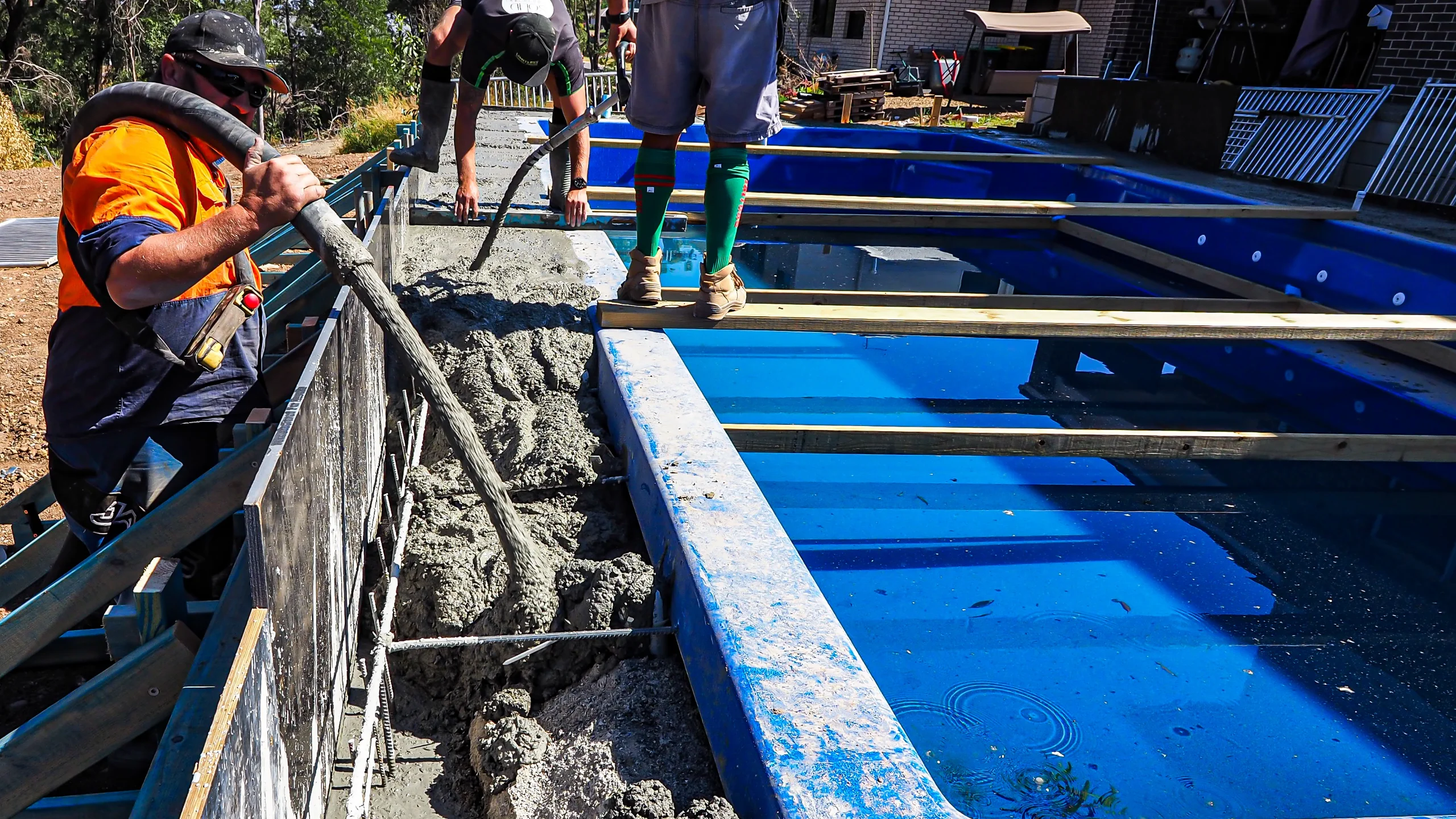
A pool bond beam is a reinforced concrete beam poured around the rim of an in-ground fibreglass pool shell. The pool bond beam and backfill are two of the three structural elements that hold the pool in position:
- A screeded granular bed under the shell
- Packed backfill against the outside walls
- A concrete bond beam under the coping
All three elements are required and are covered when the pool is complete. We install fibreglass pools across South East Queensland.
What sits underneath a fibreglass pool shell?
A fibreglass pool shell sits on a level bed of free-draining granular material, such as sand, crusher dust, or fine gravel. The bed is installed on the floor of an excavation that is wider than the shell and deeper than the finished pool floor.
A concrete base is not required. The shell should not be placed on undisturbed clay, topsoil, old fill, or organic material. These materials can move with changes in moisture or settle as they decompose.
The bed distributes the weight of the shell and pool water across the excavation base. It also allows water to drain from beneath the shell. It does not provide adhesion. The bed is screeded level before the shell is installed. The shell's level is checked again after placement.
The excavation is wider than the shell to provide working space for pipe connections and backfilling. It is deeper than the finished pool floor to allow for the granular bed. This additional excavation increases the volume of material removed from the site. We price earthmoving by the volume removed, at $69.93 per cubic metre, including GST.
Groundwater management is completed at the same stage. A hydrostatic relief valve installed in a standpipe through the pool floor releases groundwater pressure beneath the shell. AS 1839-2021 covers this arrangement and subsoil drainage. If the ground does not drain naturally, drainage is installed while the excavation is open. The area below the shell cannot be accessed after the pool is installed and backfilled.
What is a bond beam on a fibreglass pool?
A pool bond beam is a reinforced concrete beam poured around the perimeter of the pool. It supports the shell rim, coping, and paving. It also holds the top of the shell walls in position.
The bond beam is poured after the shell has been installed, levelled, and backfilled while the pool is being filled. At this stage, backfill supports the outside of the shell and water supports the inside.
Every in-ground fibreglass pool requires concrete around its perimeter. This concrete secures the top edge of the shell and supports the coping and adjacent paving. It is a required part of the installation, not an optional upgrade.
Two Australian Standards apply to fibreglass pools:
- AS 1838-2021 covers the design and manufacture of pre-moulded fibre-reinforced plastic pool shells.
- AS 1839-2021 covers installation, including excavation, bedding, backfilling, and concrete around the rim.
Pool barriers sit under a different standard again, the AS 1926 series, which governs the fence around the pool.
For a standard surround, the concrete and paving phase takes two to five days. Stamped concrete or large-format pavers can take longer.
Is a bonded pool the same as a bond beam?
No. A bonded pool and a bond beam are separate requirements. One does not satisfy the other.
Equipotential bonding is electrical work. It connects the metal around the pool, including the reinforcing steel inside the concrete bond beam and metal fixtures within 1.25 metres of the pool edge. Earthing and bonding a pool must be completed by a licensed electrician under AS/NZS 3000, the wiring rules. A homeowner cannot perform this work. A pool builder cannot approve it as part of the concrete work.
A bond beam is a reinforced concrete beam poured around the rim of the pool shell. Fibreglass pools require both equipotential bonding and a bond beam. Pouring the beam does not bond the pool. Bonding the steel does not create the beam.
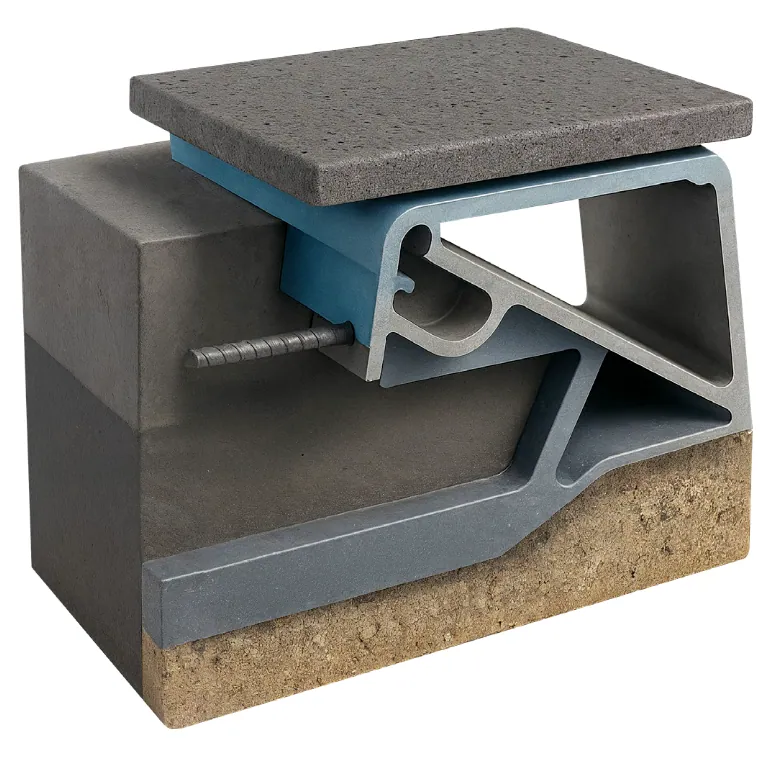
What does a fibreglass pool bond beam detail look like?
A pool bond beam is made from reinforced concrete. Steel bar or mesh is installed inside the beam. The beam connects to the underside of the shell's coping lip to prevent separation between the beam and the shell.
A licensed electrician also bonds the steel inside the beam.
Is a concrete collar the same as a bond beam?
A concrete collar and a bond beam refer to related parts of the concrete structure around a fibreglass pool. The concrete collar is the poured concrete surround that secures the shell in the ground and supports the pool edge. The bond beam is the reinforced beam at the rim of the surround. The collar refers to the concrete pour, while the bond beam refers to the structural beam within it.
The concrete surround and coping secure the shell in position. Coping is the hard capping along the rim of the shell. It can be made from poured concrete, natural or concrete pavers, timber, or composite decking. Coping supports the pool edge. The surround is a structural component, not a surface finish.
Does a fibreglass pool have to be backfilled?
Yes. Backfill is a structural part of a fibreglass pool installation. The pool shell is designed for pressure on both sides. Water inside the pool pushes outward, while the backfill outside pushes inward. The shell carries the difference between these forces.
Excavation creates a gap around the pool shell. Backfill fills this gap and supports the pool walls for the life of the pool. Without backfill, the walls must carry the full water load, which they are not designed to do.
The backfill material must remain stable after installation. Most materials do not meet this requirement.
What is the best material to backfill a fibreglass pool with?
Use clean, free-draining granular material to backfill a fibreglass pool. Do not use excavated clay, topsoil, or mixed site fill. Remove the excavated material from the site and replace it with clean backfill material.
| Clean granular backfill | Excavated site soil or clay | |
|---|---|---|
| Drainage | Allows water to drain away from the shell | Holds water against the outside of the shell |
| Movement | Does not swell or shrink as moisture levels change | Can settle and leave the wall unsupported; reactive clay swells when wet and shrinks when dry |
| Cost | Must be purchased and delivered by the cubic metre | Is already on site and does not need to be purchased or delivered |
In Australia, common backfill materials include crushed rock, crusher dust, and washed sand. These materials are clean, granular, and free-draining.
Do not use excavated site soil or clay. These materials can retain water against the shell and settle under their own weight. The pool builder specifies the appropriate clean granular material for the site.
How is backfill placed without bulging the walls?
The pool is filled with water while backfill is placed around the outside. The water level and backfill height are increased at the same rate. This balances pressure on both sides of the pool walls.
The work follows this sequence:
- Set the shell and confirm the level. The crew places the shell on the screeded bed, aligns it with the pool outline, and checks the level. No material is placed against the walls at this stage.
- Connect and pressure-test the pipework. The crew completes the pipework, filtration, and electrical connections while the outside of the shell remains accessible. The pipework is pressure-tested before it is buried. Repairing a leak after backfilling and paving would require demolition.
- Fill and backfill together. Water is added to the pool while clean granular backfill is placed outside the walls. Both are added in matched stages to balance the pressure on the walls.
- Pour the concrete surround. The bond beam and surrounding concrete are poured after the shell has been backfilled and filled with water.
Do not place backfill around an empty pool. Backfill against a dry shell applies inward pressure without balancing pressure from the water. This can cause the walls to deform.
What goes wrong when the concrete and backfill are done badly?
Common failures include bowed walls, an out-of-level shell, and ground movement around the pool. Installation controls can reduce these risks.
- Bowed and bulging walls. Poor backfill can leave gaps around the pool walls. Water pressure inside the pool can push the walls into these gaps as the backfill settles. What happens when external ground pressure wins describes bulging walls and identifies poor backfill as a cause. Use clean granular backfill and place it while filling the pool.
- A shell set out of level. An out-of-level shell produces an uneven waterline. Cantilevered decking or waterline tile can hide the difference but cannot correct it. Check and adjust the shell level before placing backfill.
- Ground movement on reactive clay. Reactive clay expands when wet and contracts when dry. This movement can shift the pool and damage nearby structures. AS 1839-2021 requires specific measures for reactive clay. Use free-draining backfill against the walls. Install subsoil drainage where the ground does not drain adequately.
Preventable faults during the install of a fibreglass pool include:
- Excavating without approval
- Failing to locate services
- Using an unstable or incorrect base
- Setting the shell out of level
- Omitting electrical bonding
- Using unlicensed workers
- Using incorrect backfill
- Backfilling against an empty pool
- Burying pipework before pressure testing
The installation crew must check these items before covering the work.
FAQs
What is a bond beam pool?
A bond beam pool has a reinforced concrete beam around the perimeter of the shell. On a fibreglass pool, the beam supports the rim, coping, and paving and holds the top of the walls in position. The beam contains steel bar or mesh and connects to the underside of the shell's coping lip to prevent separation.
Do I need a bond beam?
Yes. Every in-ground fibreglass pool requires a reinforced concrete bond beam around its perimeter. The bond beam secures the shell and supports the coping. It is not optional or based on regional preferences.
What goes under a fibreglass pool?
Install a level, screeded bed of free-draining granular material, such as sand, crusher dust, or fine gravel. Excavate the hole below the finished floor level to allow for the bed. Make the hole wider than the shell to provide working clearance around the walls.
A fibreglass pool does not require a concrete slab underneath. Do not install the shell directly on undisturbed clay or organic material.
What happens if a pool is not bonded?
A pool without equipotential bonding does not comply with AS/NZS 3000 wiring rules. Missing bonding, or bonding completed by an unlicensed person, is a preventable fault in pool construction.
The concrete bond beam does not provide the required bonding. Its reinforcing steel is one of the metal components that must be bonded.
Can I bond my pool myself?
No. A licensed electrician must perform equipotential bonding in accordance with AS/NZS 3000. This connects the metal around the pool, including reinforcing steel in the concrete bond beam and metal fixtures within 1.25 metres of the pool edge.
Does a pool need to be earthed under AS/NZS 3000?
AS/NZS 3000 requires equipotential bonding of metalwork around a pool. This requirement applies to fibreglass pools and other pool types.
The bonding must include:
- Metal fixtures within 1.25 metres of the pool edge.
- Reinforcing steel in the bond beam.
Pouring the concrete bond beam is pool-building work. Bonding the reinforcing steel is licensed electrical work.