Pool Earthing and Bonding: Fibreglass Requirements
A fibreglass shell does not conduct, but the metalwork around it must be bonded. What AS/NZS 3000 requires, who does it, and how it is signed off.
Written by Tehbyn Nova, Head of Operations & Growth · Technically reviewed by Caleb Druhan, General Manager (QBCC licence 15087383) on
Published · Updated
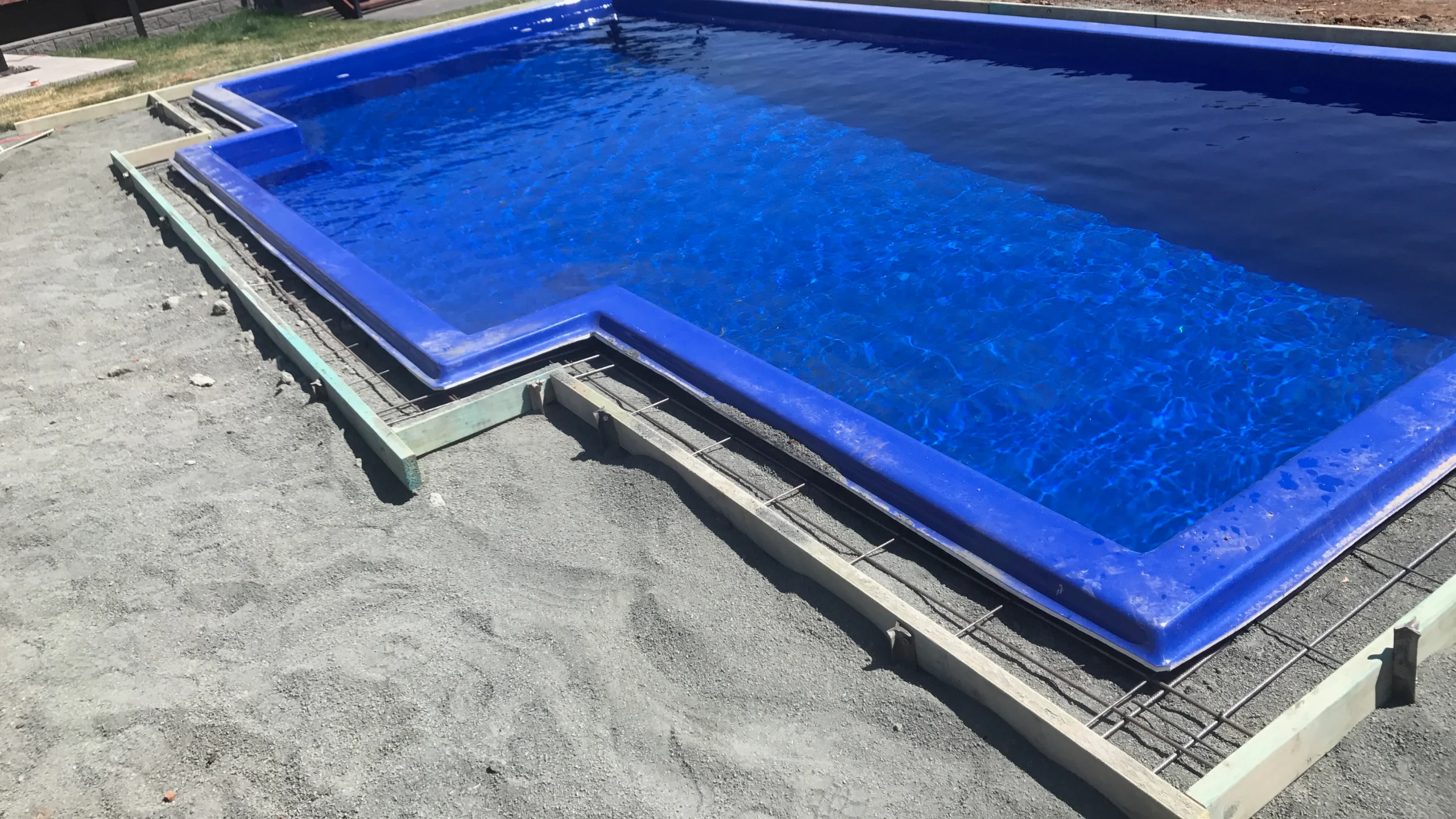
Pool earthing and bonding connects metalwork around a swimming pool and maintains it at the same electrical potential. It also connects the metalwork to the premises main earthing system.
Bonding connects conductive parts to each other. Earthing connects the bonded parts to the main earthing system. Grounding is the American term for earthing.
A fibreglass pool shell is non-conductive and contains no reinforcing steel. The shell does not require bonding, but surrounding metalwork does.
Does a fibreglass pool need to be earthed?
Yes. A fibreglass pool requires earthing and bonding when its electrical equipment includes exposed conductive parts.
The fibreglass shell is non-conductive and contains no reinforcing steel, so the shell does not require bonding. Under AS/NZS 3000:2018, the Wiring Rules, a non-conductive pool structure does not automatically trigger bonding requirements.
Clause 5.6.2.6 requires bonding when exposed conductive parts of electrical equipment are within arm’s reach of the pool or in contact with the pool water. Fibreglass pools usually include a filtration pump, underwater light and chlorinator, so this requirement applies.
Western Australia’s Building and Energy guidance defines arm’s reach as 1.25 m from the pool edge. Metal items within this area must be bonded to the premises main earthing system. These items can include fencing, gates, handrails, ladders, light fittings and diving-board structures.
A fibreglass pool is not exempt from Clause 5.6.2.6. The non-conductive shell removes the need to bond the shell, but conductive equipment and fixtures still require bonding. NECA Victoria also requires conductive materials within arm’s reach of the pool to be bonded.
What is the difference between earthing, bonding and grounding a pool?
Bonding and earthing are separate operations. Grounding is the American term for earthing.
Bonding connects conductive parts around the pool so they remain at the same or approximately the same electrical potential. This prevents a person who touches two conductive parts at the same time from becoming a current path.
Earthing connects the bonded system to the premises' main earthing system. Bonded pool metalwork must not remain as an isolated loop.
AS/NZS 3000:2018 defines equipotential bonding as an electrical connection intended to bring exposed conductive and extraneous conductive parts to the same or approximately the same potential. It is not intended to carry current during normal operation. In a correctly operating installation, a bonding conductor does not carry current. Its purpose is to prevent a potential difference between conductive parts that a swimmer can touch at the same time.
Online information from American sources is based on the United States National Electrical Code. These sources use "grounding" for what Australia calls earthing. Their installation requirements do not apply in Australia. Australian pool bonding is equipotential bonding under Clause 5.6.2.6 of AS/NZS 3000:2018.
What actually gets bonded around a fibreglass pool?
Bonding applies to metalwork within reach of the pool water and exposed conductive parts of the pool’s electrical equipment.
| Part around the pool | Why it is on the list |
|---|---|
| Metal pool fencing and gates | Fixed metal within 1.25 m of the pool edge. Western Australia’s Building and Energy guidance includes fencing and gates among the items bonded to the premises main earthing system. |
| Handrails and ladders | Fixed metal within 1.25 m of the pool edge. A person may touch these parts while wet and standing in the water. |
| The underwater pool light | An exposed conductive part of electrical equipment inside the pool zone. This means Clause 5.6.2.6 applies to a non-conductive shell. |
| Pump, filter, heater and chlorinator bodies | Exposed conductive parts of electrical equipment serving the pool. This equipment makes bonding applicable to a fibreglass pool. |
| Diving-board structures | Fixed metal structures within 1.25 m of the pool edge. Western Australia’s Building and Energy guidance includes these structures. |
| Reinforcing steel | Bonded when the pool structure is conductive. In a concrete pool, the reinforcement and conductive parts in contact with the ground within arm’s reach are bonded. A fibreglass shell has no reinforcement. Its reinforcing steel is in the concrete around the shell. |
A fibreglass shell has no reinforcement to bond. On our projects, bonding covers nearby metalwork and the exposed conductive parts of the pool equipment. This can include fencing, handrails, ladders, pumps, filters, heaters and pool lights.
Reinforcing steel is treated differently in concrete and fibreglass pools. A concrete pool structure is conductive, so its reinforcing steel is bonded as part of the structure. A fibreglass shell has no steel. The steel is in the reinforced concrete around the shell. An electrician earths this steel as part of a fibreglass pool installation.
NECA Victoria interprets the Wiring Rules as exempting some small fixed conductive parts from bonding. The exemption applies when the fitting is not part of electrical equipment and has no individual accessible dimension greater than 100 mm. Its worked example is a support clamp on a glass pool fence. Both conditions must apply. This interpretation is from an industry association, not a regulator. A licensed electrical contractor must determine whether a specific glass pool fence requires bonding.
Salt chlorination can increase corrosion of the metal anchors used for bonding. Overseas pool builders prefer brass anchors for handrails and ladders on salt-chlorinated pools. They report that galvanised anchors can fail after three or four years. This is a general practice reported by those sources. It is not an Australian requirement.
How is a fibreglass pool bonded?
A licensed electrical contractor connects the pool metalwork and equipment to a dedicated pool bond point. This bond point connects to the premises’ main earthing system.
NECA Victoria interprets Clause 5.6.2.6.3 as requiring the bond point to:
- Be accessible, with enough space to make connections after construction.
- Be identified by a marking on the switchboard that supplies the pool circuits.
- Be protected from mechanical damage and corrosion.
The electrical contractor selects the conductor and termination method under the Wiring Rules and confirms the requirements on site. Wire sizes, burial depths and termination methods in American articles follow a different electrical code and do not provide the Australian specification.
The bonding run is part of the fibreglass pool installation. The bond point and bonding run must be installed and accessible before surrounding construction covers them.
NECA Victoria also identifies the following Wiring Rules requirements for electrical infrastructure near or above a swimming pool:
- No overhead cables above the pool. Service mains, consumer mains and other overhead cables may not run above a swimming pool.
- No electrical equipment inside the pool zones. Switchboards, socket outlets, luminaires, appliances and switches are excluded from the pool zones defined by the Wiring Rules.
- No pool within 30 m of network assets. A pool may not be located within 30 m of electricity distributor or transmission assets.
Check overhead cables, pool zones and separation distances before designing the pool location. These requirements can prevent a pool from being installed in a proposed position.
Can you bond your own pool?
No. Pool bonding is licensed electrical work and must be completed by a licensed electrical contractor. The contractor is responsible for compliance with the Wiring Rules.
On our fibreglass pool builds, a licensed electrical contractor completes the bonding. The builder or owner cannot perform this work. Do-it-yourself instructions from other countries apply to different electrical codes and do not make owner-performed pool wiring lawful here.
The owner is responsible for retaining the documentation. The electrical paperwork is provided at the end of the build with other documents, including the council approval for a swimming pool.
What happens if a pool is not bonded, and how would you know?
Without bonding, an electrical fault can energise pool equipment and create a voltage difference between conductive parts. A person who touches both parts can receive an electric shock.
Western Australia’s Building and Energy guidance lists possible effects including tingling, muscle spasms, paralysis, drowning, and fatal heart effects.
A North American pool builder describes a similar fault as a nuisance shock of a few volts, comparable to static electricity. This description is based on a different code. In Western Australia, use the severity described by Building and Energy guidance.
A tingling sensation on a handrail, ladder, or wet coping may indicate a problem. Pool owners should not attempt to diagnose the cause. Keep people out of the water until a licensed electrical contractor confirms that the bond is intact.
FAQs
Do swimming pools need to be earthed in Australia?
Yes. Metal items within 1.25 m of the pool edge must be bonded to the premises’ main earthing system. Western Australia’s Building and Energy guidance includes fencing, gates, handrails, ladders, light fittings, and diving-board structures.
Swimming pool and spa bonding must comply with Clause 5.6.2.6 of AS/NZS 3000:2018, the Wiring Rules.
Does an AS3000 pool need to be earthed?
Yes. AS3000 refers to AS/NZS 3000:2018, the Wiring Rules. Clause 5.6.2.6 requires bonding for swimming pools and spas with exposed conductive parts of electrical equipment in the pool zone. This includes equipment such as pumps, underwater lights, and chlorinators.
Is bonding the same as grounding a pool?
No. Bonding connects the conductive parts around a pool so they remain at the same electrical potential. Earthing connects the bonded system to the premises’ main earthing system. “Grounding” is the American term for earthing.
AS/NZS 3000:2018 defines equipotential bonding as a connection that is not intended to carry current during normal operation.
Can you do the earthing on your own pool?
No. A licensed electrical contractor must perform pool bonding and ensure it complies with the Wiring Rules. The electrical documentation is included with the documents provided at the end of the pool build.
What happens if a pool is not earthed?
An electrical fault can energise pool equipment and expose bathers to electric shock. Symptoms can include tingling, muscle spasms or paralysis, which can lead to drowning. A shock that affects the heart can be fatal.
If you feel tingling when touching a handrail, ladder or wet coping, contact a licensed electrical contractor. They can check whether the electrical bond is intact.
Does a fibreglass shell need bonding if it does not conduct?
The fibreglass shell itself does not require bonding because it is non-conductive and contains no reinforcing steel. However, Clause 5.6.2.6 still applies.
The following parts require bonding:
- Metalwork within 1.25 m of the pool edge
- Exposed conductive parts of the pool’s electrical equipment
For a concrete pool, the reinforcing steel also requires bonding because the pool structure is conductive.