Fibreglass Pool Chemicals: Levels, Products & Safety
The chemicals a fibreglass pool needs, the levels to hold pH, chlorine, alkalinity and stabiliser at, and what is safe to put in a gelcoat shell.
Written by Tehbyn Nova, Head of Operations & Growth · Technically reviewed by Caleb Druhan, General Manager (QBCC licence 15087383) on
Published · Updated
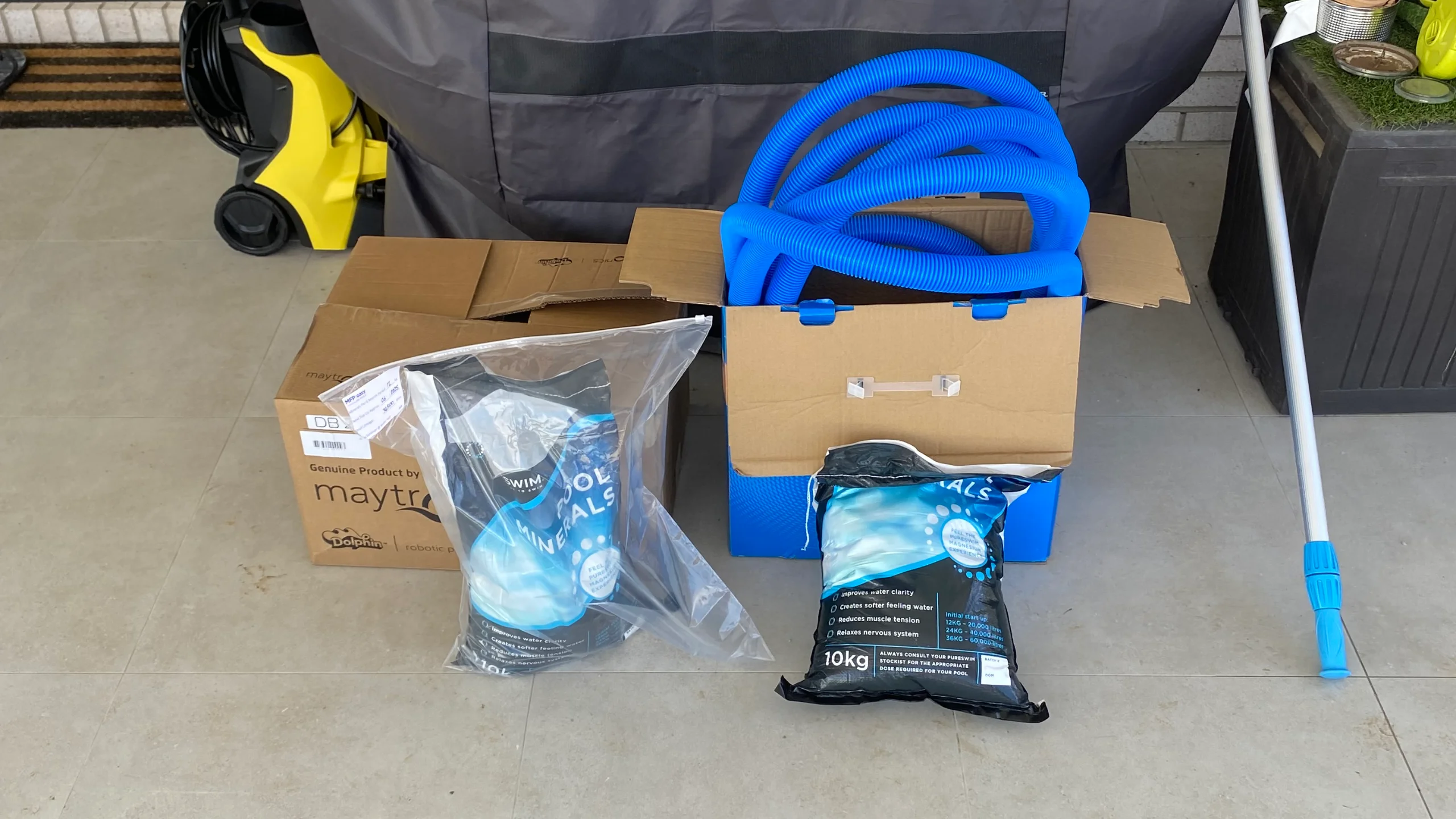
Fibreglass pool maintenance requires five chemical products:
- Sanitiser
- pH adjuster
- Alkalinity buffer
- Stabiliser
- Stain-and-scale control product
The sanitiser is chlorine. You can use liquid or granular chlorine, stabilised tablets, or chlorine generated from dissolved salt.
Maintain these water levels:
- pH: 7.2–7.6
- Free chlorine: 1–3 ppm
- Total alkalinity: 80–120 ppm
- Stabiliser: 30–50 ppm
Monitor calcium hardness, but do not add calcium unless required.
To protect the gelcoat:
- Do not leave undissolved chemicals on the pool surface.
- Do not pour concentrated chemicals directly onto the gelcoat.
Fibreglass pools have a smooth, non-porous gelcoat. Routine maintenance focuses on water balance and filtration rather than surface upkeep. Algae cannot attach to gelcoat as easily as it can to porous concrete.
We install fibreglass pools across South East Queensland.
What chemicals does a fibreglass pool need?
A fibreglass pool requires the following chemicals:
- Sanitiser. Chlorine controls bacteria and algae. Options include liquid chlorine, granular chlorine, stabilised tablets in a dispenser, and a salt chlorine generator.
- pH adjuster. Pool pH affects the gelcoat and pool equipment. Incorrect pH can cause etching or calcium deposits. Test the water and use an adjuster to raise or lower the pH as needed.
- Alkalinity buffer. Sodium bicarbonate raises total alkalinity and helps stabilise pH. Low alkalinity can cause pH changes that damage the gelcoat.
- Stabiliser (cyanuric acid). Cyanuric acid protects free chlorine from ultraviolet light. Without stabiliser, sunlight reduces chlorine levels and increases the risk of algae.
- Stain-and-scale control product. This product helps prevent metal stains and calcium deposits on pale gelcoat. Add it on a regular schedule.
Add chemicals to the water, not directly to the pool surface. The non-porous gelcoat holds less algae and dirt than porous plaster or concrete, but it still requires regular maintenance.
You can use an automated sanitising system instead of adding sanitiser manually. A salt chlorine generator produces chlorine from dissolved salt. A mineral system uses magnesium and potassium salts in a cell. Looking after a magnesium pool requires different readings from maintaining a manually dosed chlorine pool. Both systems are suitable for gelcoat shells and use chlorine to sanitise the water.
Calcium hardness is not normally included in this list because a gelcoat shell does not require calcium. Measure calcium hardness, but do not usually add calcium. Calcium levels can increase when you use calcium-based granular chlorine or calcium chloride. High calcium levels can cause deposits on the walls and floor. This is what happens when pH and hardness rise together.
What levels should a fibreglass pool be held at?
Maintain a fibreglass pool at pH 7.2–7.6, free chlorine at 1–3 ppm, total alkalinity at 80–120 ppm, and stabiliser at 30–50 ppm. For calcium hardness, use the target specified in the pool shell’s care document.
| Reading | Hold at | Why it matters |
|---|---|---|
| pH | 7.2–7.6 | Below about 7.0, acidic water can etch and corrode the gelcoat, pool equipment, and PVC pipework. It also consumes sanitiser faster. Most equipment warranties exclude low-pH damage. Above about 7.6, chlorine becomes less effective, scaling risk increases, the water can become cloudy, and heaters work harder. Above 7.8, calcium can form deposits on the surface. |
| Free chlorine | 1–3 ppm | Free chlorine kills bacteria and algae. Below this range, the water is under-sanitised and algae can grow. Very high levels can permanently oxidise or bleach the gelcoat. |
| Total alkalinity | 80–120 ppm | Total alkalinity buffers pH. Below this range, pH can fluctuate between doses and damage the gelcoat. Above this range, the water can become cloudy. |
| Stabiliser (cyanuric acid) | 30–50 ppm | Stabiliser protects chlorine from ultraviolet light. Without enough stabiliser, sunlight reduces the chlorine level and algae can grow. |
| Calcium hardness | No target published here | Above 600 ppm, calcium can form scale on gelcoat walls and floors. Calcium-based granular chlorine (cal-hypo) and excessive calcium chloride dosing can raise calcium hardness above 600 ppm. Use the value specified in the pool shell’s care document. Home test kits generally cannot measure calcium hardness, so take a water sample to a pool shop. |
| Salt (salt-chlorinated pools only) | The salt level the chlorinator manufacturer specifies | The chlorinator cell converts dissolved salt into chlorine while the pump runs. Excessive salt can cause the chlorinator to shut down. |
Test the water at least once a week using a home test kit or test strips. Test it again after heavy rain, heavy use, or a large water addition. Heavy rain can change the pH and dilute the sanitiser.
Each month, run a full test that includes pH, total alkalinity, calcium hardness, and stabiliser.
How do you raise or lower pH and alkalinity in a fibreglass pool?
Use the following products to adjust pH and total alkalinity:
- Sodium bicarbonate raises total alkalinity.
- Soda ash (sodium carbonate) raises pH.
- Dry acid (sodium bisulphate) or hydrochloric acid lowers pH.
Adjust total alkalinity before adjusting pH. Total alkalinity buffers pH and should be within 80–120 ppm.
To raise total alkalinity and pH. Dissolve sodium bicarbonate in a bucket of pool water. With the pump running, distribute the solution around the pool. Retest the water before adding another dose. After the alkalinity is stable, use soda ash to raise the pH. Soda ash can make the water cloudy while it disperses.
To lower pH. Use dry acid or hydrochloric acid. Dissolve dry acid in a bucket of pool water before adding it. Dilute hydrochloric acid and pour it into moving water with the pump running. Keep it away from the pool walls and floor.
Dissolve all powdered additives before adding them to a fibreglass pool. Sodium bicarbonate or alkalinity increaser added directly to the pool can form a white film on the gelcoat. Keep the pump running to distribute the dissolved product through the pool.
Calculate the dose using the product label and the water volume specified for the pool model.
Is muriatic acid safe to use in a fibreglass pool?
Hydrochloric acid, also sold as muriatic acid, can be used to lower the pH in a fibreglass pool. Dilute it and disperse it through the pool water. Do not pour it directly onto the fibreglass shell or use it to wash the surface.
Acid washing is intended for concrete pools. It removes a thin layer of the pool’s sacrificial render. Fibreglass pools have a gelcoat instead of render. Acid can damage and weaken this coloured, waterproof layer. Do not acid wash a fibreglass pool or use acid to remove chalking.
Clean fibreglass with soft, non-abrasive methods. The gelcoat is non-porous and does not require the stripping methods used on concrete render.
Undiluted chemicals can damage gelcoat through direct contact. Hydrochloric acid is safe when diluted in circulating pool water to control pH. Pouring undiluted hydrochloric acid onto the pool wall can chemically burn the surface.
“Undissolved chlorine sitting on gelcoat is the fastest way to wreck a good shell, and most of the damage we get called to isn't bad luck, it's granules tipped straight in. Dissolve it first, keep the pH between 7.2 and 7.6, and the surface will outlast the fence around it.”

What is the best chlorine to use in a fibreglass pool?
All forms of chlorine can sanitise a fibreglass pool. Choose a form based on the chemicals it adds and how it is dosed.
| Chlorine form | What it adds to the water | Watch for |
|---|---|---|
| Liquid chlorine (sodium hypochlorite) | Chlorine in solution | Add it while the pump is running. Distribute it around the pool. Do not allow it to collect against a wall. |
| Granular calcium hypochlorite (cal-hypo) | Chlorine and calcium | It increases calcium hardness. Test the calcium level. Undissolved granules can bleach and blister the gelcoat. Dissolve the granules in a bucket of pool water before adding them. |
| Stabilised tablets (trichlor) | Chlorine and stabiliser | Tablets can bleach and blister the gelcoat on contact. Put them in a floating dispenser or the skimmer basket. Do not put them on the pool floor. Test the stabiliser level monthly. |
| Salt chlorine generator | Chlorine produced from dissolved salt | The cell produces chlorine while the pump is running. Free chlorine depends on the filtration time and cell output setting. |
Do not allow undissolved chlorine to contact the gelcoat. Disperse chlorine in the water. Maintain free chlorine at 1–3 ppm. Very high free chlorine can permanently oxidise or bleach the gelcoat. A strong chlorine smell usually indicates chloramines, not excessive free chlorine.
A salt water pool also uses chlorine. As described in How a salt system produces chlorine, the cell uses electrolysis to convert dissolved salt into chlorine while the pump runs. The chlorine forms hypochlorous acid, which kills bacteria and algae. Salt water, magnesium and chlorine pool systems use different methods to add chlorine to the water. All are suitable for a gelcoat shell.
Can you shock a fibreglass pool, and with what?
Yes. Shocking a fibreglass pool involves adding a high dose of chlorine to remove algae, bacteria, and organic matter. Shock the pool after heavy use, when the water is murky, or when the free chlorine level is low. Shock at least once a month, or more often if the pool is heavily used.
Use a chlorine shock product. Dissolve granular shock in a bucket of pool water, then distribute it around the pool while the pump is running. Do not allow undissolved granules to rest on the pool floor because they can bleach or blister the gelcoat.
Treat algae in a fibreglass pool with standard chlorine shock and correct water balance. It usually clears within 24 hours. Mustard algae requires a higher shock dose and daily brushing for several days.
Run the filtration system for at least 24 hours after treatment. This circulates the chlorine throughout the water and removes dead algae through the filter.
Why is the water in a fibreglass pool cloudy, and how do you clear it?
Cloudy water in a fibreglass pool is usually caused by water chemistry or filtration. Test the water and check the filtration run time to identify the cause.
Common causes include:
- pH above the recommended range. High pH increases scaling risk and can cause calcium to leave the solution, making the water cloudy.
- Total alkalinity above 120 ppm. High total alkalinity can make the water cloudy even when the pH is within range.
- A recent soda ash dose. Soda ash can temporarily cloud the water while it disperses.
- Fine particles in the water. Small suspended particles remain in the water until the filter removes them. If the pump runs for too few hours, it may not filter the full volume of the pool.
Use the following process:
- Test the water.
- Adjust total alkalinity to 80–120 ppm.
- Adjust pH to 7.2–7.6.
- Run the filtration system to circulate the corrected water and remove suspended particles.
- Check the filter if the water remains cloudy.
If the cloudiness started after adding soda ash, allow the filtration system to clear it before treating it as a separate problem.
Cloudiness is more visible against a pale gelcoat interior than a dark one.
Should you use copper-based algaecide in a fibreglass pool?
No. Copper-based algaecide can cause permanent blue-green stains on pale gelcoat.
Copper can enter pool water from:
- Copper-based algaecide
- Corroding household pipework
- A corroding heater heat exchanger
Dissolved copper from these sources can stain the gelcoat blue-green.
Use chlorine shock instead of copper algaecide to treat algae in a fibreglass pool:
- Correct the water balance.
- Apply a standard chlorine shock.
- If needed, use a copper-free algaecide.
Diagnosing the mark before adding treatment is important because metal and organic stains require different removal methods.
How do you balance a brand new fibreglass pool at handover?
Balance the pool in the following order. Each step affects the next.
- Test the fill water. Test the source water before adding any chemicals. Use the results to determine the required adjustments.
- Set total alkalinity. Adjust total alkalinity to 80–120 ppm. This helps stabilise the pH.
- Set pH. Adjust the pH to 7.2–7.6 after setting the total alkalinity.
- Add stabiliser. Adjust the stabiliser to 30–50 ppm before adding sanitiser. Stabiliser reduces chlorine loss from ultraviolet light.
- Bring the sanitiser up. Adjust free chlorine to 1–3 ppm. For a salt pool, add salt to the level specified by the chlorinator manufacturer, then start the chlorinator.
- Run the filtration and retest before anyone swims. Run the filtration system to circulate the chemicals throughout the pool. Retest the water after it has mixed.
Use the published water volume for the pool model to calculate each chemical dose.
| Model | Water volume |
|---|---|
| Verona | 10,300 L |
| Oxford | 26,230 L |
| Kensington | 51,700 L |
Our shell range covers volumes from 3,800 litres to 52,780 litres. Chemical quantities therefore vary by model. Calculate each dose using the product label and the published volume for the pool.
FAQs
Do fibreglass pools use less chemicals than concrete pools?
Yes. Fibreglass pools generally require less sanitiser and scrubbing than concrete pools. Their non-porous gelcoat is less likely to support algae growth than a porous concrete surface.
Both pool types use the same five chemical products. Water readings must remain within the required ranges.
How often should you test the water in a fibreglass pool?
Test the water weekly. Test it again after heavy rain, heavy use, or a large top-up.
Once a month, test pH, total alkalinity, calcium hardness, and stabiliser. Use a home test kit or test strips for weekly checks. The monthly test checks readings that change more slowly.
Can too much chlorine damage a fibreglass pool?
Very high free chlorine levels can permanently oxidise or bleach the gelcoat. Undissolved chlorine tablets or granules can also bleach or blister the shell if they rest on the surface.
Australian Standard AS 1838:2021 requires a fibreglass pool’s gelcoat to withstand more than 100 times the normal chlorine level for 24 hours without losing colour.
Over-chlorinated water can irritate the skin, eyes and lungs. It can also aggravate asthma, psoriasis, dermatitis and eczema.
How often does a fibreglass pool need to be cleaned?
Skim the surface and lightly brush the walls and waterline as needed, based on the amount of leaves and debris in the yard. Remove settled debris when it appears. For cleaning frequency, vacuuming, filtration run times, and equipment servicing, see the fibreglass pool maintenance routine. Manage water chemistry separately by monitoring what is added to the water and maintaining the required levels.
What is the best pool cleaner for a fibreglass pool?
Choose a cleaner designed for smooth, non-porous surfaces. A fibreglass pool has a gelcoat interior, so dirt and algae have less grip than on porous concrete. The cleaner mainly needs to remove settled debris. Use a soft brush to clean the waterline between runs.
Do not use abrasive cleaners or tools. They can damage the coloured, waterproof gelcoat layer.